
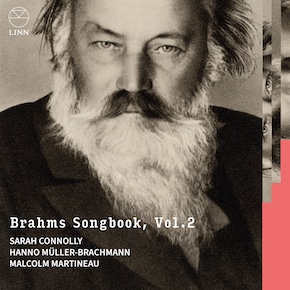
 The second disk in pianist Malcolm Martineau’s project to record all the Brahms songs will soon be available. It features twenty nine songs for low voice with, as far as i could tell, no theme. All the works have titles like Fünf Gesänge Op.72 which actually starts the disk.
The singing is shared between mezzo-soprano Dame Sarah Connolly and baritone Hanno Müller-Brachmann. Both are wonderful singers with terrific artistry and sensitive treatment of text. With Martineau at the piano it’s hard to imagine these relatively little performed songs getting better performances.
 Rooms of Elsinore is a new CD of music related to
 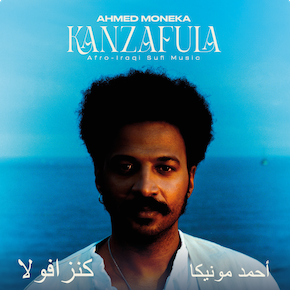 What I’m going to do here is use a review of a new CD by Toronto based musician/actor Ahmed Moneka as a means to explore some ideas about listening to music. But first the CD itself. It’s called Kanzafula and it contains nine tracks rooted in an unusual musical tradition; that of the Afro/Iraqi Sufis of Basra. These are descendants of people originally from the East coast of Africa who wound up in Basra in the 8th century CE and have maintained a rich musical tradition combining Arabic and African influences.
 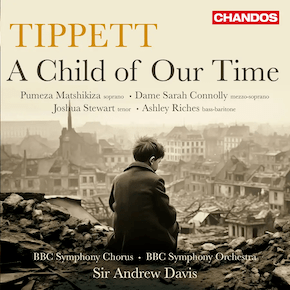 The late Sir Andrew Davis was a life-long advocate for the music of Sir Michael Tippett so it’s fitting that one of his last recordings (perhaps the last?) should be of that composer’s A Child of Our Time. It’s an unusual piece in many ways. It’s an oratorio for solo quartet, chorus and orchestra and its structure reflects both Messiah and the Bach Passions. The subject matter is anti-Semitism in Germany as a specific example of “man’s inhumanity to man” more generally.
 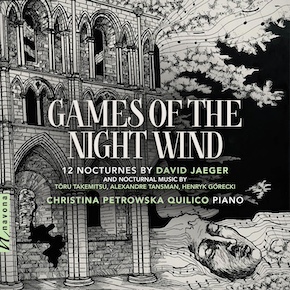 Games of the Night Wind is a record of nocturnally inspired piano music played by Christina Petrowska Quilico. Much of the record is taken up by twelve nocturnes from Ontario composer David Jaeger. They are interspersed with pieces in similar mood by Polish composers Alexandre Tansman and Henryk Górecki and there is also a solitary piece by Tōru Takemitsu.
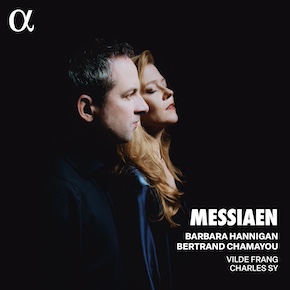 Barbara Hannigan’s latest recording project is a CD of Messiaen’s vocal music with pianist Bertrand Chamayou. It’s very much an equal partnership with some superb musicianship on display. It starts off with two cycles written for/inspired by Messiaen’s first wife. Chants de Terre et de Ciel celebrates the marriage and the birth of their young son. There’s some very dramatic singing here but what really stood out for me was Hannigan’s ability to float a note with perfect control and apparent ease. It works beautifully with the more delicate parts of the piano part.
 Project Earth: The Blue Chapter is the first in a projected series of CDs from the Iris Trio (Christine Carter – clarinet, Anna Petrovna – piano, Zoë Martin-Doike – viola) dealing with environmental issues. This one blends music by Florian Hoefner with poems by Don McKay. The longest piece on the CD is the multi-movement Bird Island Suite inspired by the bird life of nesting islands around Newfoundland but really dealing with broader issues of how we interact with and influence the natural world for good or ill. Usually the latter.
  Les Génies ou les Caractères de l’Amour is an opera/ballet of 1736 by one Mademoiselle Duval who was 22 at the time. Almost nothing is known about Duval except that she was at one time a chorus member at the Royal Opera in Paris. It seems reasonable to deduce that she was from a family of professional musicians and that’s how she got her training. FWIW Les Génies was only the second opera by a woman to be produced by the Royal Opera. It’s recently been recorded for CD under the auspices of Château de Versailles Spectacles.
  Saint-Saëns Déjanire, of 1911, was his last opera. The plot is basically the same as Handel’s Hercules. Déjanire is infuriated by Hercule’s infatuation with Iole so he gives him a poisoned robe; itself a gift from the Centaur Charon, which kills him. There are a few plot tweaks. Iole is in love with Philoctète and agrees to marry Hercule to save his life. But, basically classic, simple plot.
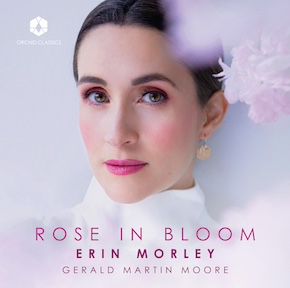 Rose in Bloom is a new recital CD from coloratura soprano Erin Morley accompanied by Gerald Martin Moor. It’s a bit of a mixed bag. There’s some really nice singing and playing but some of the music choices leave me a bit cold.
 operaramblings