Best of 2014

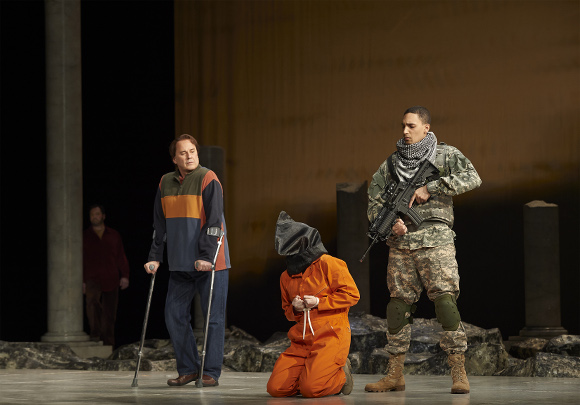
Well not so much “best of” as the good stuff that really made my year.  It was a pretty good year overall.  On the opera front there was much to like from the COC as well as notable contributions from the many smaller ensembles and opera programs.  The one that will stick longest with me was Peter Sellars’ searing staging of Handel’s Hercules at the COC.  It wasn’t a popular favourite and (predictably) upset the traditionalists but it was real theatre and proof that 250 year old works can seem frighteningly modern and relevant.  Two other COC productions featured notable bass-baritone COC debuts and really rather good looking casts.  Atom Egoyan’s slightly disturbing Cosí fan tutte not only brought Tom Allen to town but featured a gorgeous set of lovers, with Wallis Giunta and Layla Claire almost identical twins, as well as a welcome return for Tracy Dahl.  Later in the year Gerry Finley made his company debut in the title role of Verdi’s Falstaff in an incredibly detailed Robert Carsen production.  I saw it three times and I’m still pretty sure I missed stuff.

Hercules2a Continue reading

Toronto Operetta Theatre and Toronto Masque Theatre 14/15

handbagToronto Operetta Theatre and Toronto Masque Theatre have announced their respective 2014/15 season line ups.  TOT will present three shows.  The first is a zarzuela; Federico Chueca’s La gran via.  Jose Hernandez conducts and the cast includes Margie Bernal, Fabian Arciniegas, Pablo Benitez and Diego Catala. There’s one performance on November 2nd.  The Christmas show will be Gilbert and Sullivan’s The Mikado.  Singers include Lucia Cesaroni, Mia Lennox, David Ludwig and Giles Tomkins with Derek Bate conducting.  There are six performances scheduled between December 27th and January 4th.  Finally, and perhaps most exciting, is a revival of Victor Davies’ 2008 piece Ernest, the Importance of Being.  It’s based on the Wilde play and will star Jean Stilwell as Lady Bracknell.  Larry Beckwith conducts.  There will be four performances on April 29th and May 1st to 3rd.  All three shows will be directed by Guillermo Silva-Marin and will be staged at the St. Lawrence Centre for the Arts. (www.stlc.com)

Continue reading

Autocorrect Opera

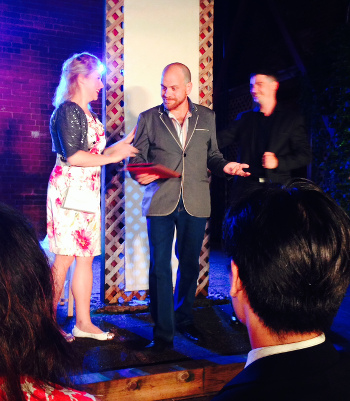
trioLoose TEA Theatre’s new show Autocorrect Opera opened last night on the steamy outdoor patio of Atelier Rosemarie Umetsu.  It’s a double bill of one acters adapted for the age of the smartphone and the text message.  The first piece; Sravinsky’s Mavra was played fairly straight.  The young girl Parasha does open the piece with a lament about her boyfriend not texting her and the final denouement is brought on by a missed text but otherwise the plot isn’t much altered though we get a neat updating to the home of a contemporary, status conscious bourgeois with references to the price of Ferrari tyres etc.  Good performances all round with Morgan Strickland as a well sung, angsty Parasha, Greg Finney, with his characteristic power and comic timing, as the rich and rather obnoxious father.  Keenan Viau, coming in at short notice for an indisposed Daniel Wheeler, was the convincingly annoying neighbour and Justin Stolz was excellent as the extremely unconvincing cross dressing pizza boy, boyfriend, maid.  So, good fun but maybe not taking the theme of the evening as far as it might have gone.

Continue reading

WTF SRSLY!

autocorrectlogoThe latest offering from Loose Tea Theatre is a show called AuroCorrect Operas.  Basically it’s Mozart’s Bastien et Bastienne and Stravinsky’s Mavra updated for the internet age.  I seem to have seen a lot of internet themed opera recently ranging from cyberbullying to screaming goats.  Perhaps it’s a meme?  The show runs August 21st to 24th at the Navillus Gallery on Davenport.  Loose Tea’s previous effort; La tragédie de Carmen, was well worth seeing so this is probably one to see.

More details and tickets here.

Philanthropists in Music

salon1Yesterday afternoon saw the final concert of the season for Off Centre Music Salon; the concert series organised by Boris Zarankin and Inna Perkis at the Glenn Gould Studio.  This one, as the title suggests, celebrating philanthropy in music by putting together a concert of works by composers who were supported by patrons.  It was very much salon style with many short sets by various combinations of performers.  There was some instrumental music; an impressive performance of Khachaturian’s Toccata in E flat minor by twelve year old William Leathers, reprised later on accordion by Michael Bridge.  Jacques Israelievitch and Boris Zarankin collaborated on a bravura rendition of Stravinsky’s Suite Italienne and Zarankin and Perkis gave their traditional one piano/four hands performance, this time an arrangement of Beethoven’s Egmont overture, which was received with enthusiasm.

Continue reading

One acters

There a quite a few operas that are too short to make up a full evening’s entertainment. Most of these are one acters but there’s the occasional on that’s not such as Dido and Aeneas.  In any event they pose the problem of what to combine with what.  For example, I’ve seen Gianni Schicchi paired with Zemlinsky’s A Florentine Tragedy, Rachmaninov’s The Miserly Knight and even with Salome as well as with its original partners in Il Trittico.  I suppose there are a few almost canonical combinations like  Duke Bluebeard’s Castle and Erwartung but mostly I think the shorter works get neglected because it is hard to find good combinations that make aesthetic sense and are marketable.  So that’s my question for today; what combination of shorter operas would you like to see at your local opera emporium?

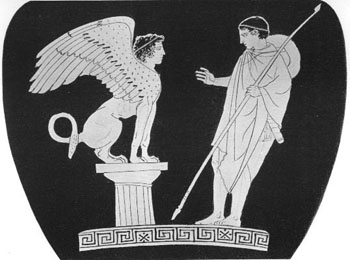
My contribution would be Stravinsky’s Oedipus Rex and Golijov’s Ainadamar.  I’ve never seen either staged and both interest me musically a lot.

There’s the Moral to Draw

Robert Lepage’s 2007 Brussels production of The Rake’s Progress is fascinating on many levels.  I think all good opera productions start with the music and this is no exception.  Lepage sees a crucial relationship between Stravinsky at the time the work was written (1948) and film and television.  It was an era when insubstantial visual imagery was being supported emotionally by pretty impressive music.  Lepage works with that idea; setting the work in the 40s and incorporating film and film making imagery extensively.  I think this decision also frees up the music.  By taking the piece out of the 18th century it becomes possible to take the 18th century out of the piece.  For instance, there are elements in the libretto that mimic 18th century street ballads but Stravinsky absolutely avoids writing the kind of phrasing one might expect and quite deliberately breaks up the line.  That phrasing is respected here whereas I have often heard a false legato imposed on some of those phrases. In a way, the production is helping the viewer to hear the music differently which is perhaps the highest compliment one can pay an opera production.  There are other intriguing relationships between Lepage’s vision and Stravinsky’s.  Lepage sees Stravinsky as playing with time in a cinematic way i.e. rendering it non-linear.  Lepage seeks to mirror this in the spatial dimension by using some odd perspectives and some cinema devices; notably Anne driving her car in front of a moving backdrop just like a studio movie of the period.  There’s a lot going on and it would be tedious to describe it in detail.

Continue reading

Hockney’s Rake

Having watched quite a few opera recordings from the 70s and 80s recently I can well see why David Hockney’s designs for Stravinsky’s The Rake’s Progress at Glyndebourne were such a big deal back in the day. They look they were designed by an artist rather than being lifted from an expensive department store furniture catalogue. And, of course, they are still in use. Beyond the design issues, this has a kind of transitional feel as a production. Occasionally some acting breaks out and quite imaginative use is made of the chorus but there is a lot of “park and bark”; perhaps somewhat inevitable on the old, small Glyndebourne stage but very noticeable. It’s hard not to feel that director John Cox could have done a lot more with a neat staging and a talented cast.  Continue reading

Zodiac Trio

Yesterday’s free concert was given by the Zodiac Trio. They are a young group consisting of Kliment Krylovsky (clarinet) Vanessa Mollard (violin) and Riko Higuma (piano). The programme was titled Music from a Silenced Nation: Soviet Composers and it was presented, appropriately enough, on the greyest, dreariest day of the season so far. They brightened it up considerably. The programme opened with a virtuosic rendering of Stravinsky’s L’Histoire du Soldat followed by the first movement of Denisov’s Sonata for Solo Clarinet. This latter is a very strange work for its time and place. It experiments with quarter tones and is generally the sort of thing that would get one sent to the gulag. Next came the Allegretto from Shostakovich’s Sonata for Violin and Piano, Op 134, composed for David Oistrakh. This piece places huge physical and technical demands on the players which Mollard and Higuma really came through on. The final item on the programme was Galina Ulstvolskaya’s Trio. This I must listen to again. Why is this woman not better known? She was a pupil of Shostakovich and her work has many of the qualities that make her teacher so great. It was played beautifully with special props to Higuma who was required to get a very wide range of effects out of the piano. They encored with an uncredited tango of considerable bravura.

I would say that the Zodiac Trio are exceptionally committed to what they do and show great musicianship and serious musical erudition. Go see them if you get a chance.