
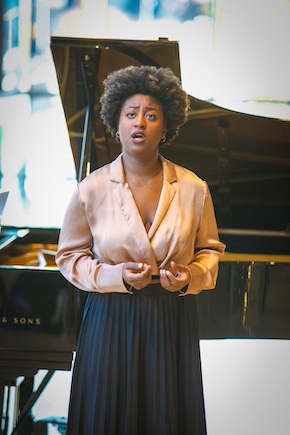
 Tuesday’s RBA concert with members of the Ensemble Studio was themed around composer rivalries though not the really toxic ones. No Mozart/Salieri or Wagner/Meyerbeer here! The most convincing as a rivalry was the first; Berlioz vs Rossini. So Queen Hezumuryango sang “Le spectre de la rose” with some sensitive handling of the text and a pretty fiery “Cruda sorte” from L’Italiana in Algeri with plenty of emotion. I definitely like her voice more when she’s going for drama as she’s got plenty of power and expressiveness.
Next up was Duncan Stenhouse with four pieces that illustrated the complex relationship between Brahms, Wagner and Dvořák. “Der Tod, das ist die kühle Nacht” from the Vier Lieder Op. 96 and “Při řekách babylonských” from the Biblické písně were sung with excellent control and expressiveness but if there’s a connection it’s not obvious to me. The two operatic pieces though; “Běda!, Běda!” from Rusalka and “Abendlich strahlt der Sonne Auge” from Das Rheingold have, I think, more obvious affinities; both dramatically and musically. Both were very well sung. It’s so good to have a genuine bass in the Ensemble again! Continue reading
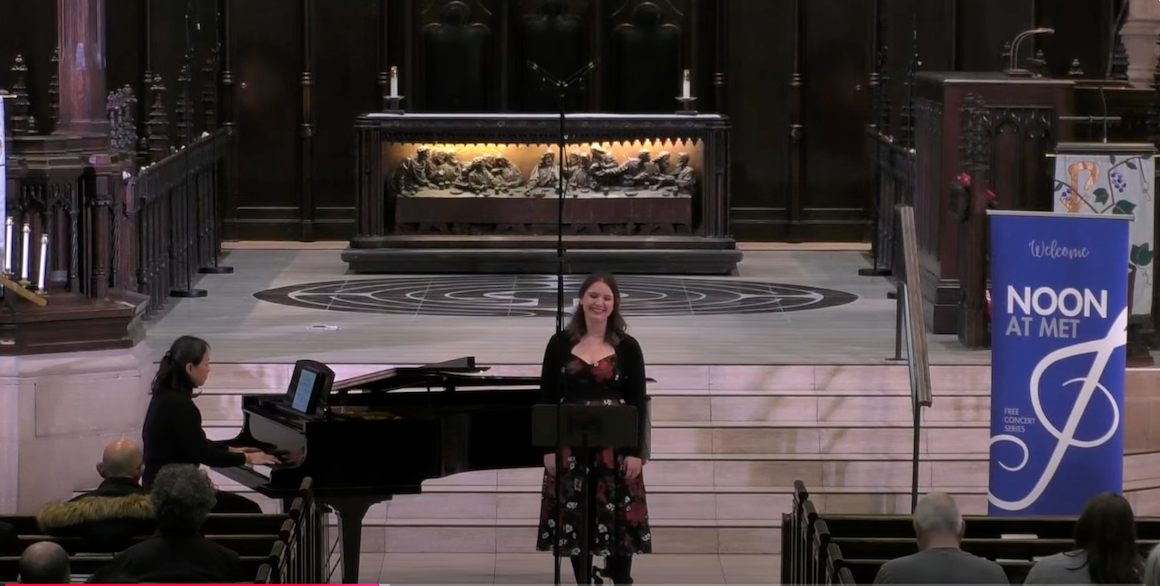
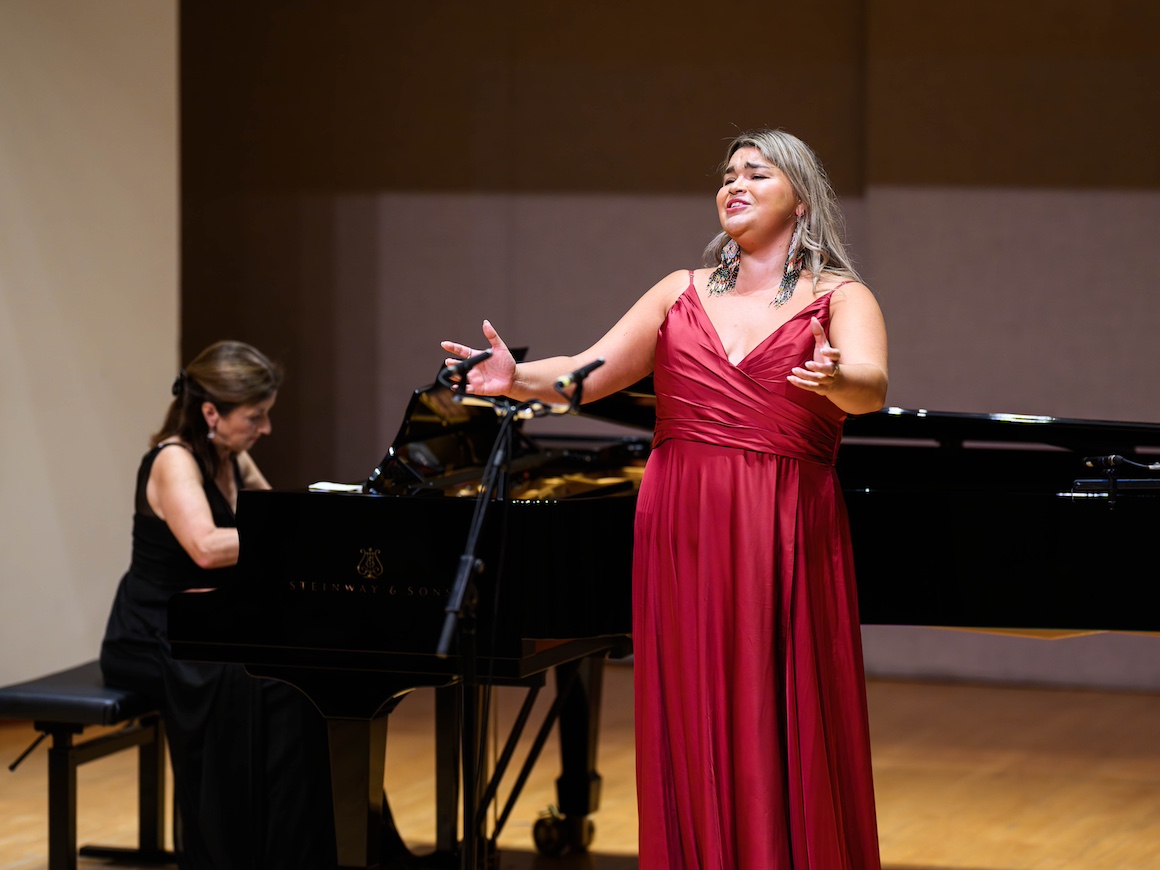
 Wednesday’s lunchtime recital in the RBA featured Simone Osborne; currently appearing as Norina in Don Pasquale, and pianist Rachael Kerr. It was a well curated selection of songs apparently, at least partially, inspired by sleep deprivation singer and pianist both have small children!). There were three sets of four songs. One in each set was by a Canadian composer backed up by two others that were thematically related.

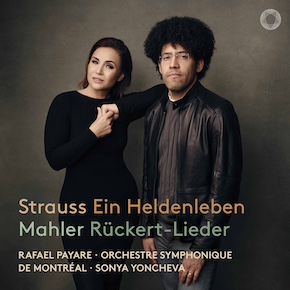 It’s an interesting idea for a CD to couple an exuberant early Strauss tone poem with a extremely introspective Mahler song cycle and that’s what L’Orchestre Symphonique de Montréal have done for their upcoming release with conductor Rafael Payare. I’m not especially familiar with Richard Strauss’ Ein Heldenleben Op. 40 but it sounds suitably Straussian and it gets a full blooded treatment from Payare with the solo violin part played quite beautifully by Concertmaster Andrew Wan.
  It’s an interesting idea for a CD; couple the well known (and original) orchestral version of Richard Strauss’ Vier letzte Lieder with the less well known piano version (the first three songs are arranged by Max Wolff and Im Abendrot by John Gribben). It’s exactly the sort of bold, slightly off the wall idea one might expect from Asmik Grigorian. So how well does it work?

 operaramblings