tripudiis sonis variis

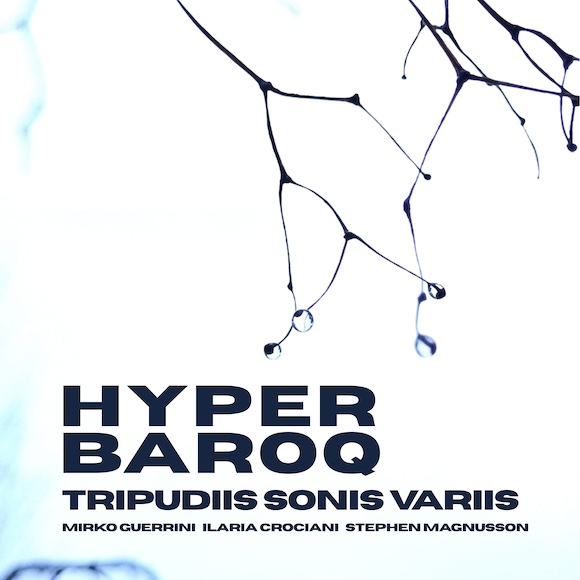
I don’t often listen to CDs released on Australian jazz labels but I did come across tripudiis sonis variis from the Melbourne trio Hyperbaroq and was quite intrigued. It’s a set of performances of, mainly, Italian baroque music. Composers such as Monteverdi, Scarlatti and Strozzi feature but there are also a couple of earlier pieces in Latin and Galician and two English songs; one by Henry Purcell and a Robert Johnson setting of Ben Jonson.

This is not your typical HIP baroque performance. Hyperbaroq’s style is highly improvisatory and incorporates a lot of atypical instruments as well as pre-recorded electronics. The results are interesting but the dominant style seems to be a kind of cool jazz sound. This is very evident in their version of Scarlatti’s O Cessate Di Piagarmi; which features saxophone and electric guitar along with vocals. Some other tracks are rather different though. Monteverdi’s Lamento Della Ninfa gets a much more experimental feeling treatment with lots of electronics and the 13th century Galician Ay Ondas Que Eu Vim Veer makes interesting use of nature sounds and electronic effects. There’s also a weirdly boppy but rather enjoyable version of Purcell’s Music for a While. It’s pretty varied though I think I could have used more up tempo, high energy material as it mostly feels pretty relaxed.

Continue reading →
Honour is satisfied

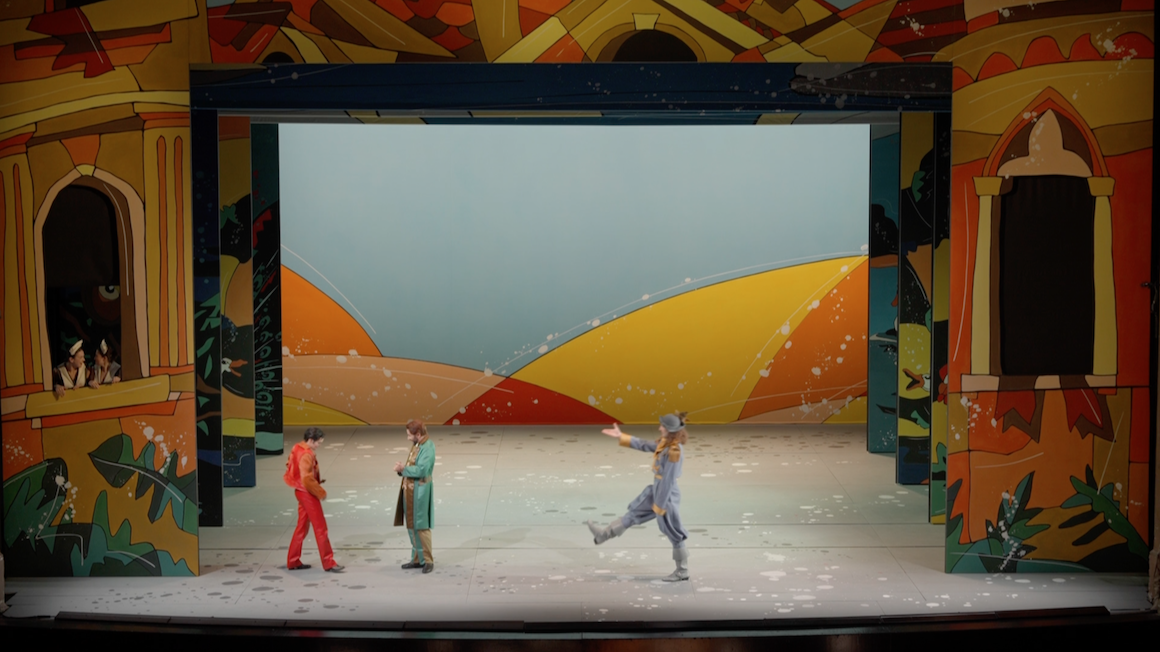
Alessandro Scarlatti wrote at least sixty operas but only one of the extant ones is a comedy; Il Trionfo dell’Onore which premiered in Naples in 1718.  Cunningly Scarlatti insisted on an Italian, rather than Neapolitan, libretto so it soon got productions further north.  It’s a piece of its time.  It had only just become allowable to produce operas that weren’t based on classical myth or history.  Even Cavalli’s most tongue in cheek works like Il Giasone had roots in the classics!  But here we have an opera whose characters are quite ordinary though clearly based on the typical types of the commedia dell’arte.

Continue reading →

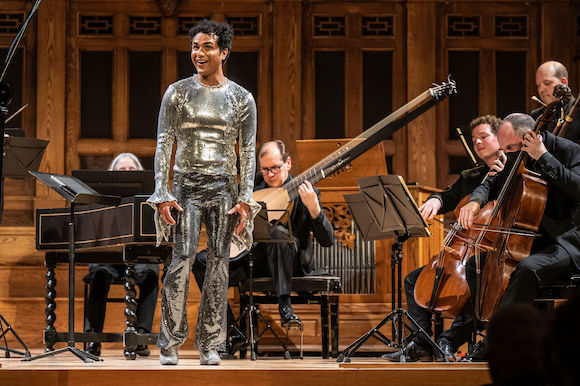
Samuel Mariño with Tafelmusik

Yesterday I saw the second of two performances by Venezuelan male soprano Samuel Mariño with Tafelmusik at Trinity St. Paul’s. The programme was a mixture of virtuoso baroque arias by various composers interspersed with relatively short instrumental pieces.

Samuel Mariño with Tafelmusik Baroque Orchestra. Photo by Dahlia Katz.

Continue reading →

Virtue not blood

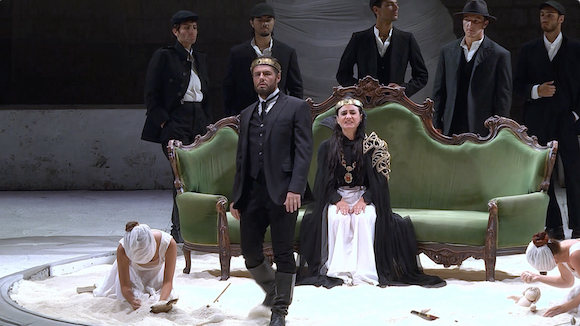
Scarlatti’s Griselda is based on a story from the Decameron.  Gualtiero, king of Sicily, has married Griselda, a shepherdess.  The people are upset that the king has married beneath him and are getting stroppy.  Gualtiero sets out to prove Griselda a worthy consort by testing her constancy.  He repudiates Griselda and sends her back to shepherding while arranging to marry an Apulian princess Constanza, who both he and Corrado, duke of Apulia, know to be his daughter by Griselda.  It’s complicated by one Ottone who is infatuated by Griselda and Roberto, son of Corrado, who is in love with Costanza, who returns his feelings.  Griselda is put through various humiliating trials in which she repeatedly shows her devotion to Gualtiero.  Eventually the people recognise her virtue and all is restored.  One notable thing, unlike his predecessor Cavalli, Scarlatti doesn’t inject any incongruous or comic passages into the opera.  It’s all deadpan serious.

1.gualtierogriselda

Continue reading →

Dove è Amore è Gelosia

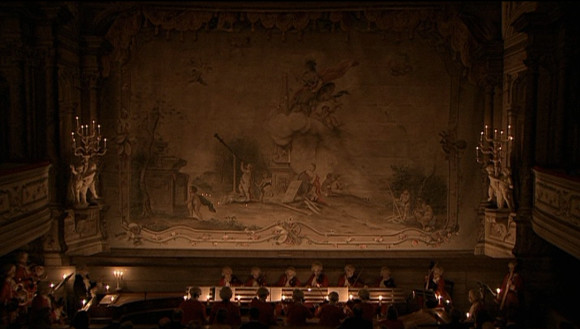
Dove è Amore è Gelosia is a 1768 comic opera by Giuseppe Scarlatti, probably the nephew of the more famous Domenico.  It was written for wedding celebrations at Krumlov Castle where Scarlatti was music teacher to the children of the Duke of Krumlov.  It was performed and recorded in the newly restored theatre at Krumlov using the original stage machinery and lighting.  Krumlov is, along with Drottningholm, one of only two baroque theatres preserved as they were in the 18th century.

1.stage Continue reading →