Blistering Jeanne d’Arc au bûcher

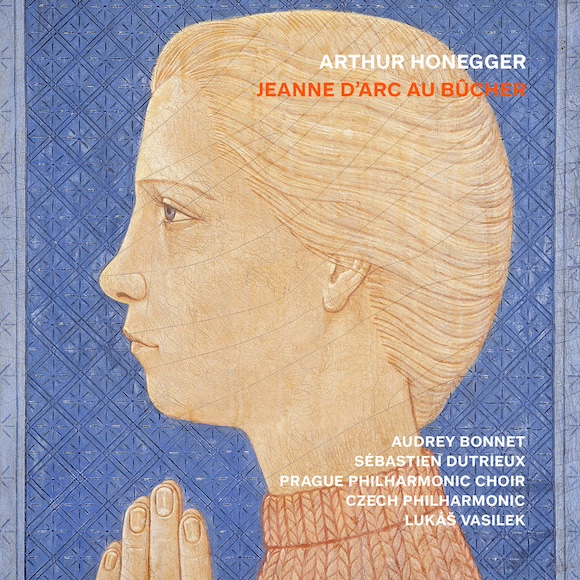
Honegger’s Jeanne d’Arc au bûcher is a rather peculiar work. It’s scored for orchestra, adult and children’s choruses, solo singers and actors. There’s a lot of spoken word, usually accompanied by the orchestra or interleaved with singing. It’s important too, as Jeanne and her confessor, Brother Dominic, are both spoken roles. The text is a mix of French and Latin and the mood varies wildly from sombre, to grand, to liturgical, to reflective, to farcical. Each scene (there are eleven plus a prologue) is very much it’s own thing. The music is basically tonal, with some chromaticism, but it varies widely in mood to suit the needed atmosphere for each scene.

Continue reading →

The Spectre’s Bride

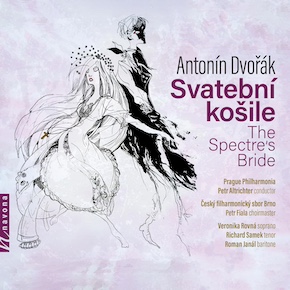
Dvořák’s Svatební košile (The Spectre’s Bride) is a dramatic cantata for three soloists, chorus and orchestra.  It tells the story of a pious young woman  who is surprised while praying by her thought-to-be-lost fiancé.  He takes her on a breakneck journey during which he progressively divests her of her prayer book, rosary and cross.  She’s a bit slow to catch on but when he invites her to join him in a graveyard she decides to make her escape.  Her place of refuge turns out to be a morgue with a fresh corpse in it.  The inhabitants of the graveyard call on the corpse to open the door and give the girl up but just in time she remembers to pray to the Virgin and a chorus of cocks announce the dawn driving the dead back into their graves.  It just needs Vincent Price or Christopher Lee!  Musically it’s very Dvořák; skilful high Romanticism with some folky touches, especially in the vocal writing.  It lasts about eighty minutes and it’s well worth hearing. Continue reading →