Tuesday’s concert in the RBA was given by students from the France-Canada Academy of Vocal Arts currently being hosted by the UoT Faculty of Music. The music was a range of mélodies, all in French, by French and Canadian composers.
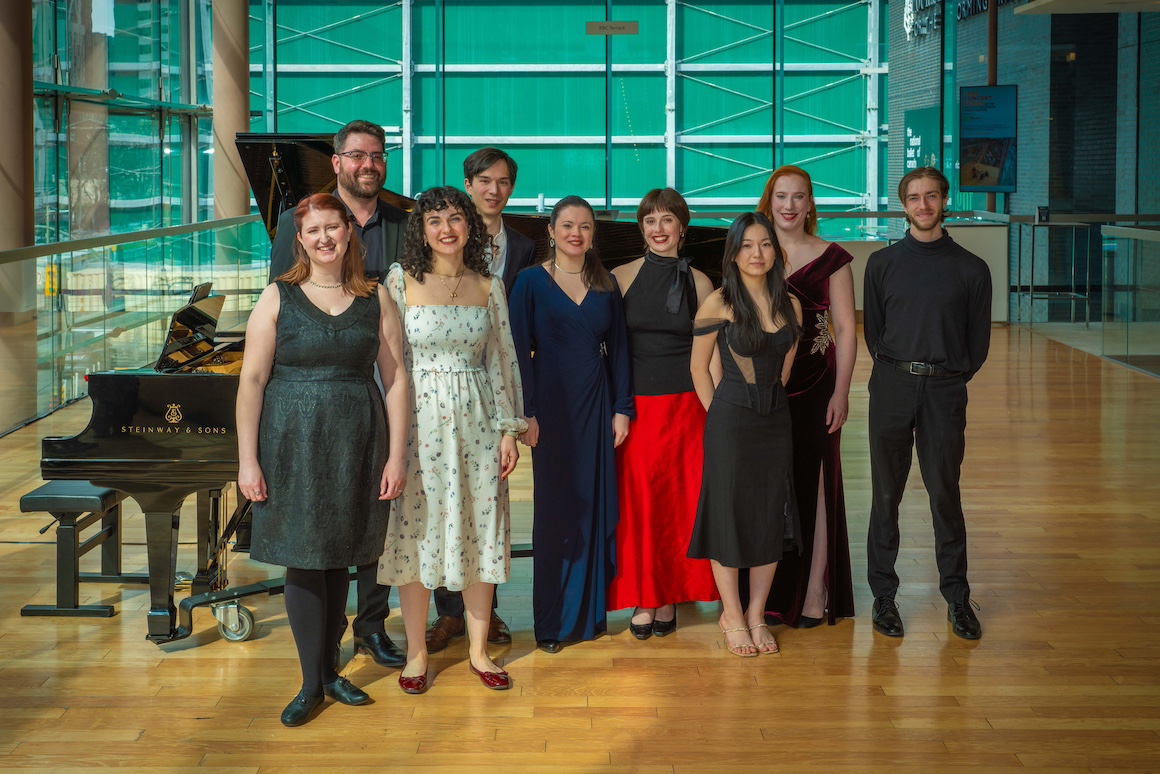

Tuesday’s concert in the RBA was given by students from the France-Canada Academy of Vocal Arts currently being hosted by the UoT Faculty of Music. The music was a range of mélodies, all in French, by French and Canadian composers.
Last Wednesday’s concert in the RBA was a showcase for the collaborative pianists of the McGill-UdeM Piano Vocal Arts programme. Each of the five pianists on show got to accompany mezzo Julie Boulianne for a set of songs. Or put another way, Julie got to perform for an hour with five pianists.
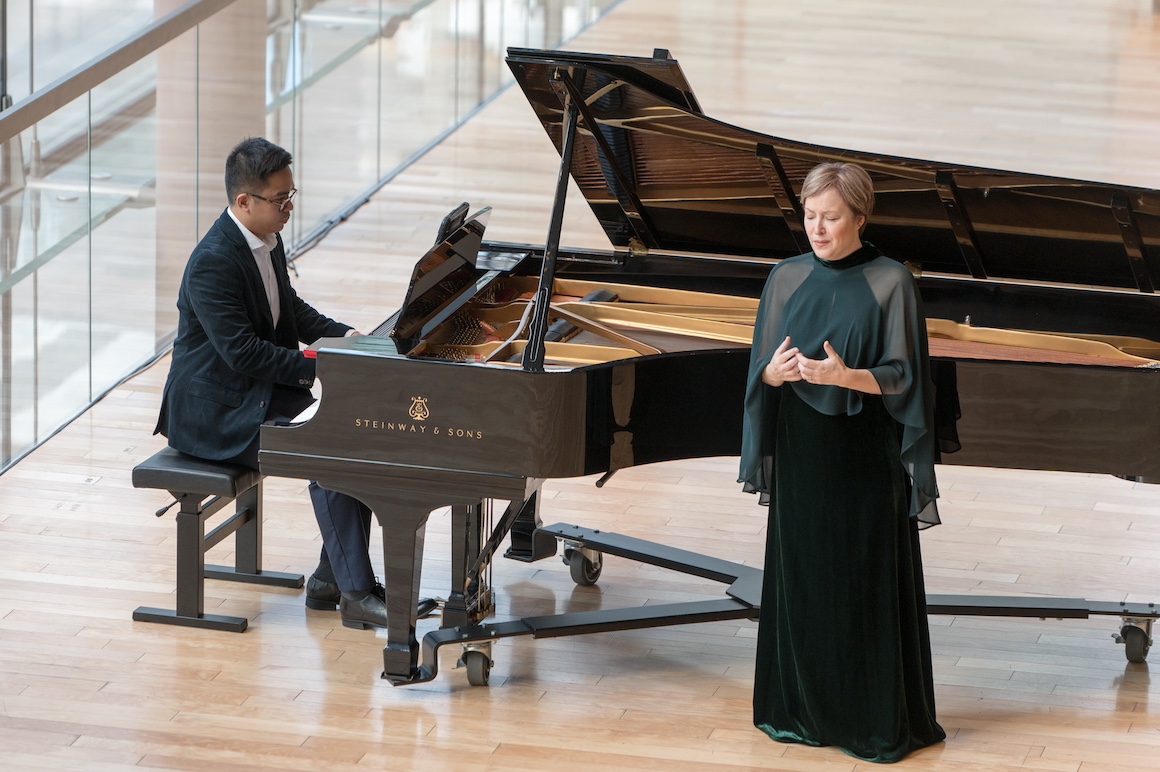
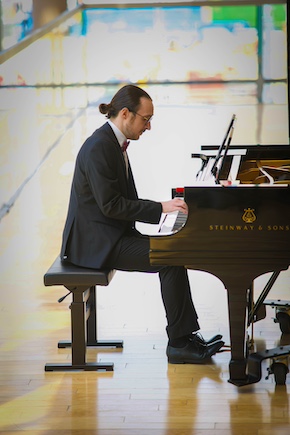 The first of this year’s Les Adieux concerts for departing members of the Ensemble Studio took place Tuesday lunchtime in the RBA. It was supposed to feature Brian Cho, Mattia Senesi, Korin Thomas-Smith and Karoline Podolak but Karoline was indisposed so Emily Rocha (not leaving) jumped in at the last minute.
The rearranged programme worked pretty well with maybe a bit more opportunity for the pianists. Sio, Mattia played the Intermezzo from Brahms’ Op 118. No. 2, which was very nicely done and Brian closed things out with just the piano part from Schumann’s Widmung which works surprisingly well, at least if one is familiar with the song. Continue reading
 I’ve enjoyed the music of Drew Jurecka and Rebekah Wolkstein in a variety of genres and formats; Payadora Tango Ensemble, Schmaltz and Pepper etc, but I’ve never heard their string quartet; the Venturi SQ. But now I’ve had a chance to listen to their debut album which is due to be released next year on Leaf Records. It features a new quartet by Drew Jurecka plus the Ravel String Quartet in F. Besides Jurecka and Wolkstein the Venutis comprise Shannon Knights on viola and Lydia Munchinsky on cello. Continue reading
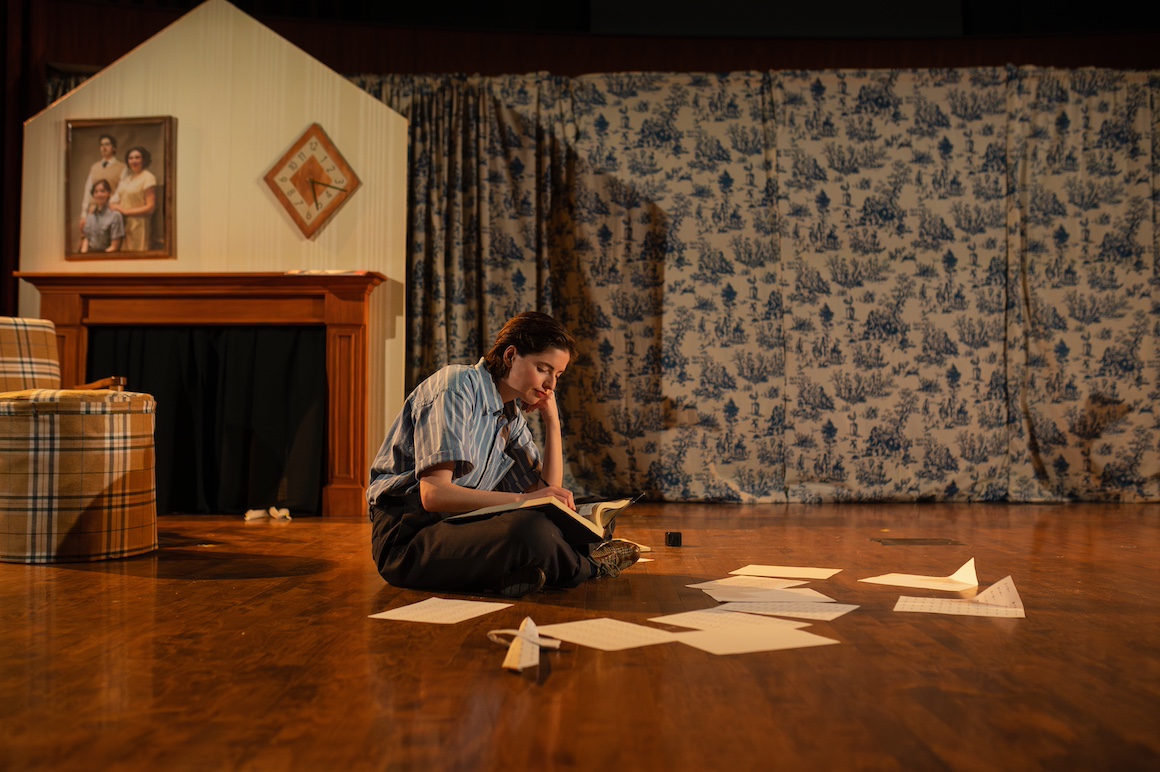
Friday night the Glenn Gould School presented a pair of French chamber operas in Mazzoleni Hall. The pieces were Ravel’s L’enfant et les sortilèges and Debussy’s Prodigal Son with a new English language libretto by Ashley Pearson. Pearson’s libretto concerns a gay man estranged from his family so director Mabel Wannacott’s linking idea is that the principal character in both is the same person as a child and twenty years later.
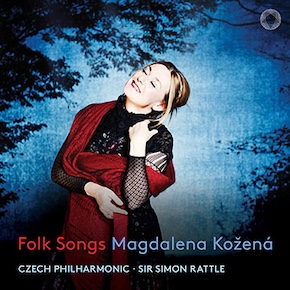 The new CD from husband and wife team Magdalena Kožená and Sir Simon Rattle consists of four sets of folk songs arranged for mezzo-soprano and orchestra; all of them pretty well known. There are the Five Hungarian Folk Songs of Bartok, Berio’s Folk Songs (all eleven of them), Ravel’s Cinq mélodies populaires grecques and Montsalvatge’s Cinco canciones negras.
They all get really good performances. There some extremely fine and idiomatic singing from Kožená with excellent diction in seven different languages from Occitan to Armenian and a real sense of what each cycle is about. For example, she really catches the Latin American rhythms and feeling in the Montsalvatge. But what’s really even more impressive is that she is so perfectly at one with the orchestra. The rapport is more like what one expects with a really good collaborative pianist. And the Czech Philharmonic is a really good orchestra as witness their playing of the very complex Berio settings. It’s an extremely satisfying album on all counts.
It’s well recorded too. The recordings were made in Dvořàk Hall at the Rudolphinium in Prague at various times between 2020 and 2023 and they are spacious, detailed and well balanced. There is a booklet with full texts and translations plus other information. Available formats are physical CD, MP3 and CD quality and 96kHz/24bit FLAC. I listened to CD quality digital.
Catalogue number: Pentatone PTC 518707
Sondra Radvanovsky was due to give a recital in Koerner Hall on Thursday night but she cancelled due to illness. Toronto Summer Music did extremely well to find a replacement of the calibre of American mezzo J’nai Bridges at such short notice. While many people turned their tickets in for refunds and others, it seems, just didn’t show up, those who did were treated to a performance by Ms. Bridges, accompanied by the ever reliable Rachel Kerr, that most certainly did not disappoint.

Last night’s concert at Trinity Saint Paul’s by the Amici Ensemble and friends. was titled From Strauss to the Orient. Unsurprisingly, the first half of the concert was Strauss. The first piece was the Duett Concertino for clarinet, bassoon, strings and harp; arranged by Serouj Kradjian with piano replacing harp. Besides the Amicis (Serouj – piano, Joaquin Valdepeñas – clarinet and David Hetherington – cello) were guests Kathleen Kajioka and Timothy Ying – violins, Barry Shiffman – viola, David Lalonde – bass and Michael Sweeney – bassoon. It’s an interesting piece. The clarinet and bassoon basically carry on a conversation across three movements with the strings and piano as a sort of “backing band”. The overlapping ranges but very different colours of the two woodwind instruments are both pleasing and intriguing. It was nicely done. It’s always a delight to watch a chamber ensemble that is obviously communicating and having fun!

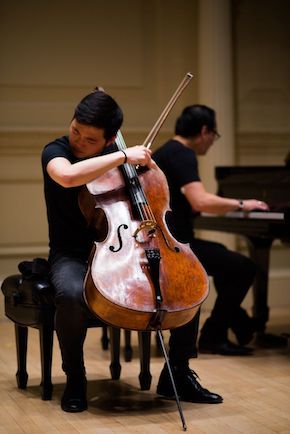 I found out quite late about OPUS Chamber Music and their current short concert series so I was only able to attend the last show on Sunday evening at Grace Church on-the-Hill. Pianist Kevin Ahfat is the driving force behind these concerts and he was able to marshal an impressive line up including recent Indianopolis Violin Competition gold medallist Serena Huang.
The first half of the programme was essentially French. Brannon Cho joined Kevin for Poulenc’s Sonata for Cello and Piano. It has a lively first movement with jazzy dance rhythms and lots of interaction between the players which showed excellent mutual understanding. The second movement is more limpid and languorous and drew some rather elegantly beautiful sounds from both cello and piano. The third movement is marked “Ballabile” which was new to me. Apparently it refers to a dance by the corps de ballet. I can see that. It’s fast and intricate with lots of pizzicato from the cello. The finale is almost like back to the beginning with more playful interaction between the instruments. Lovely playing in both the livelier and the more lyrical passages with an appropriate sense of Frenchness. Continue reading
Toronto Summer Music opened on Thursday night at Koerner Hall with a concert called Inspirations featuring chamber and vocal music drawn from folk influences. It began with Schumann’s Five Pieces in Folk Style Op. 102 for piano and cello played by Rachael Kerr and Matthew Zalkind. The folk roots are pretty clear here and since the pieces were written with amateur performance in mind those roots aren’t over elaborated and the result is satisfying. Not that they got an amateurish performance. Quite the opposite.
 operaramblings