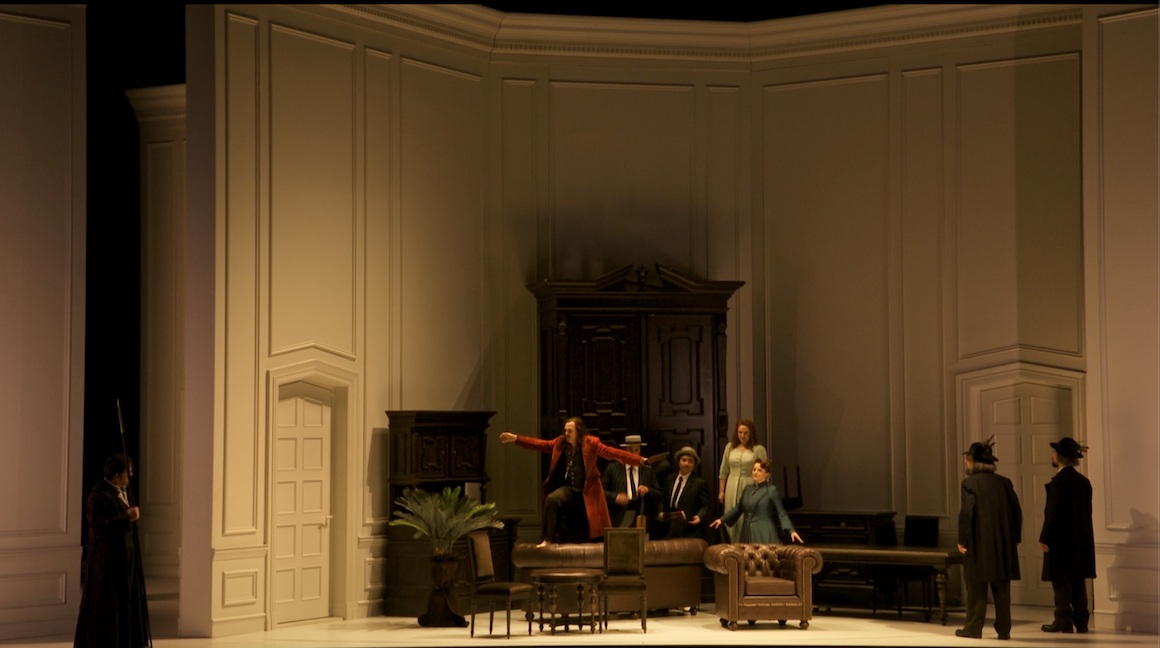
Final thoughts on the Zürich Ring

Overall I rate this cycle very highly.  Andreas Homoki’s production is unusual in that it’s really not conceptual and is often very literal.  That’s rare in Wagner productions in major European houses.  But it’s also not cluttered up with superfluous 19th century “stuff”.  When a thing is essential, it’s there as described.  If it’s not essential more often than not it’s omitted.

Continue reading

Zürich Ring – Götterdämmerung

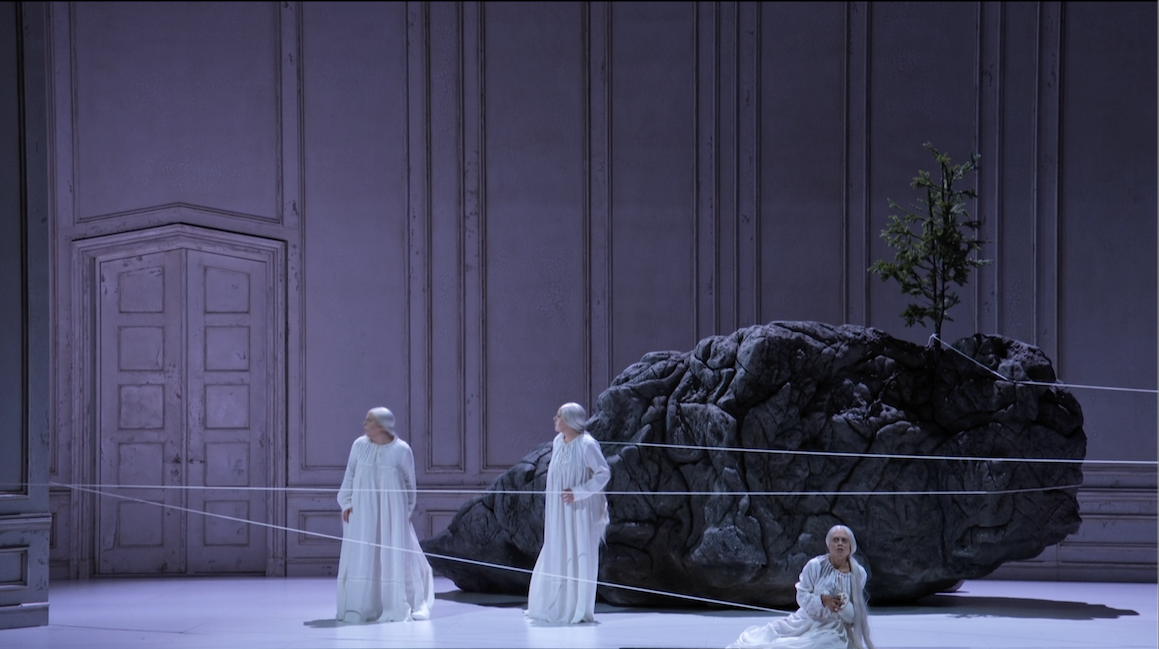
And so to the final instalment… We open with the Rock but now the background room; while still the same 18th/19th century mansion, looks a bit the worse for wear with peeling and cracked paint. The Norns, predictably, are all in white.  It’s all pretty conventional but done well.

Continue reading

Zürich Ring – Siegfried

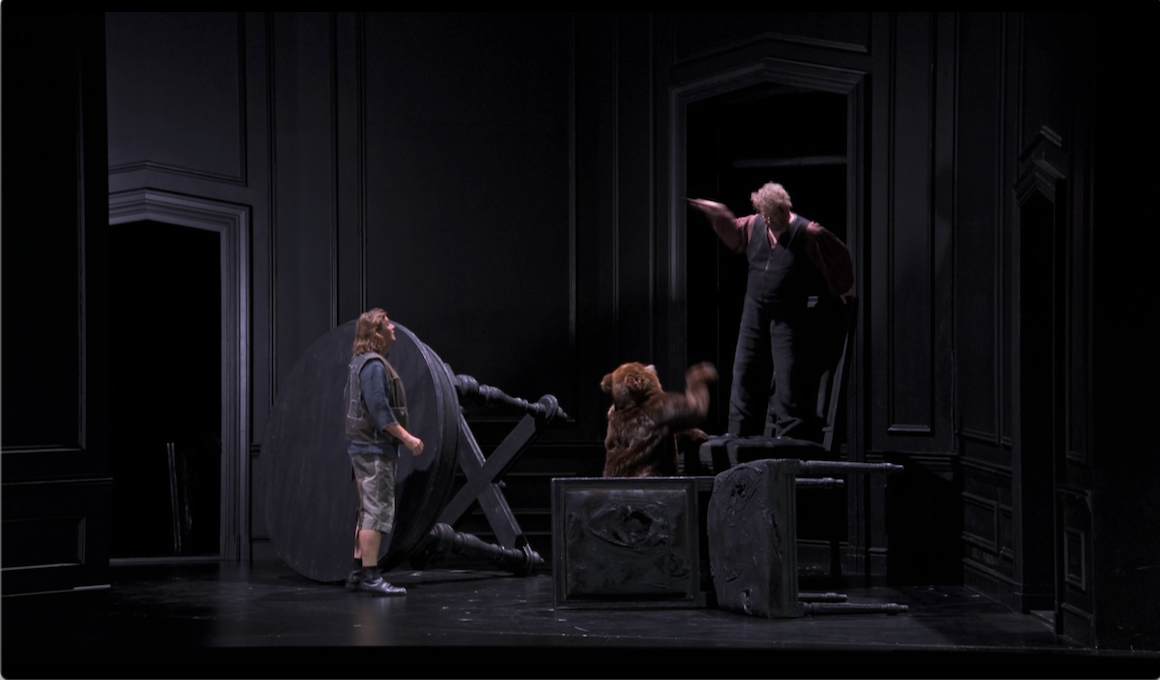
Siegfried has been described as the scherzo of the Ring cycle and Andreas Homoki seems to have at least partly run with that.  There are quite a few places, including some less obvious ones, where he seems to be going for laughs.  The obvious ones are obvious enough.  You can’t really have a bear in the first scene without it being comic but there were also times when Wanderer was camping it up a bit.  We’ll come back to that.

Continue reading

A new Ring from Zürich – Das Rheingold

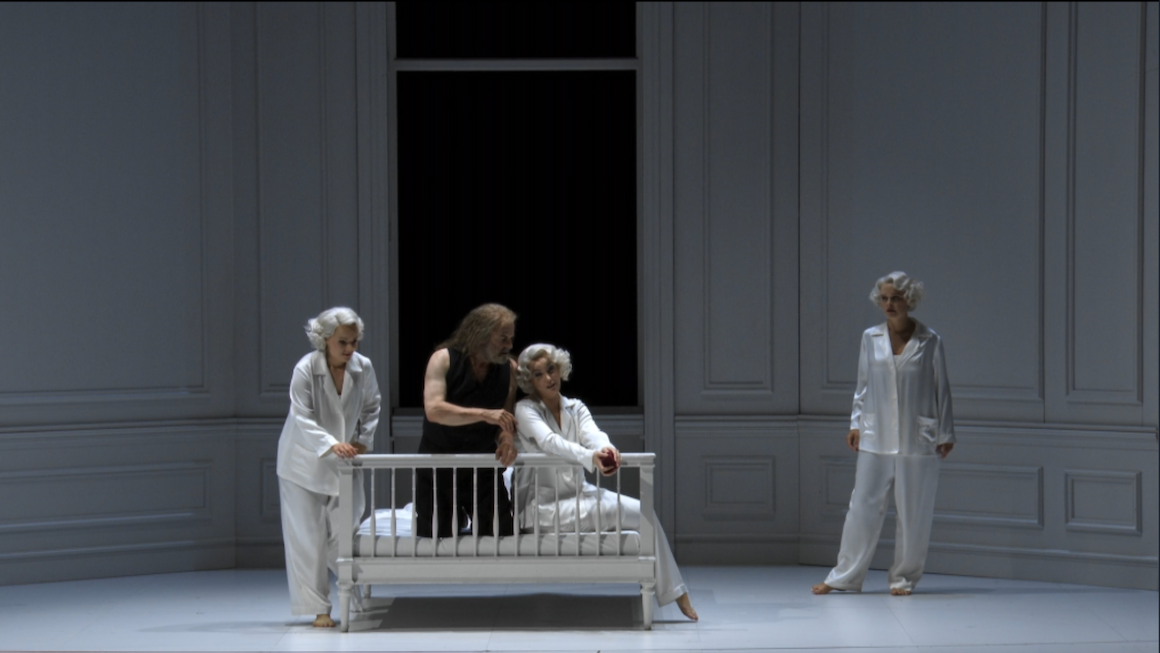
A new production of Wagner’s Der Ring des Nibelungen is always a bit of an event and all the more so when it’s in the city where the work was composed.  Andreas Homoki’s production premiered and was recorded for video at Opernhaus Zürich in 2024.  I’ll be working my way through the whole cycle but here are my initial thoughts based on Das Rheingold.

Continue reading

Cunning Little Vixen at the COC

Sometimes the Canadian Opera Company gets it right and the current production of Janáček’s Cunning Little Vixen is a good example.  It’s got all the things that might help boost a flagging audience.  It’s not over familiar.  Nobody is going to be complaining that they have seen the same old boring production five times already.  It’s a brilliant score.  The production is intelligent with enough for those who want more than a costume drama while not doing anything to shock the pearl clutchers.  It’s well sung; with a goodly quantity of local talent, and the orchestral playing and conducting is exemplary.  What more could one ask for?  One could I suppose add that it’s an opera one could happily take children to.

clv1

Continue reading

The clutter of bodies

The latest Handel oratorio to be given the operatic treatment by Glyndebourne is Saul, which played in 2015 in a production by Australian Barrie Kosky.  It’s quite a remarkable work.  The libretto, as so often the work of Charles Jennens, takes considerable liberties with the version in Samuel and incorporates obvious nods to both King Lear and Macbeth as well as more contemporary events.  David’s Act 3 lament on the death of Saul, for instance, clearly invokes the execution of Charles I.  What emerges is a very classic tragedy.  Saul, the Lord’s anointed, is driven by jealousy and insecurity deeper and deeper into madness and degradation and, ultimately, death.  This is the basic narrative arc of the piece.

1.head

Continue reading

Vecchio Chris

Richard Jones chose to set his 2009 production of Verdi’s Falstaff in Windsor in 1946.  I suspect it’s driven by similar reasoning to Robert Carsen’s 1950s production.  Falstaff plays out very nicely as a conflict between an older order of things and a more thrusting kind of bourgeoisie and 1940s/50s England works well for that.  The “just after the war” setting also allows Jones to present Fenton as a G.I. which adds another twist to Ford’s distrust of him.  Although the jumping off point for Jones and Carsen is the same the results are quite different.  Jones seems to be operating in the traditions of English farce, à la Brian Rix, or maybe Carry on films,which works pretty well.  Falstaff is a farce rather than a comedy of manners.  So, besides the obligatory entrances and exits, couples caught in flagrante etc we also get a certain geometric precision in the blocking that borders on choreography.  In Act 1 Scene 2, for instance, the ladies rather military perambulation in a garden of very precisely aligned cabbages is doubled up by Brownies and a rowing four countermarching.

1.cat

Continue reading

Christopher Purves in the RBA

British baritone Christopher Purves was the lunch special at the Four Seasons Centre today.  Along with the amazing Liz Upchurch he gave us a most enjoyable program of Handel, Duparc and Mussorgsky.  The two Handel arias were drawn from Handel’s two very different takes on Ovid’s Acis and Galatea.  The first from the later (1718) English version “I rage, I melt, I burn!… O ruddier than the cherry tree” is a mostly comic furioso recitative and aria sung with great drama and not a little comedy by Chris but it was rather eclipsed by the next number taken from the earlier (1708) Aci, Galatea e Polifemo.  Polyphemus’ aria “Fra l’ombre e gl’orrori” is just nuts but very beautiful.  It ranges from the D below the bass staff to the A above it and is a continuous series of insane intervals accompanied by a really simple and very beautiful piano part.  It’s amazing anybody can sing it all let alone as well as it was done here.

purves

Continue reading

Week of 7th February

salThis week kicks off with a concert performance of a rarity; Salieri’s Falstaff.  It’s a concert performance by Voicebox:Opera in Concert.  Larry Beckwith conducts the Aradia Ensemble and a cast of Voicebox stalwarts.  You can catch it at 2.30pm today at the Jane Mallett Theatre.

There are two free events on Tuesday.  Chris Purves, Alberich in the COC’s Siegfried, has a lunchtime recital in the RBA with Liz Upchurch at the piano.  The programme includes Mussorgsky, Handel and Duparc.  At 8pm in the Victoria College chapel you can catch Dean Burry’s graduate recital as he finishes up his PhD.  Soon perhaps Canada’s most performed composer will no longer be a lowly TA.  Oh the joys of credentialism!

Continue reading

Heil dir, Sonne!

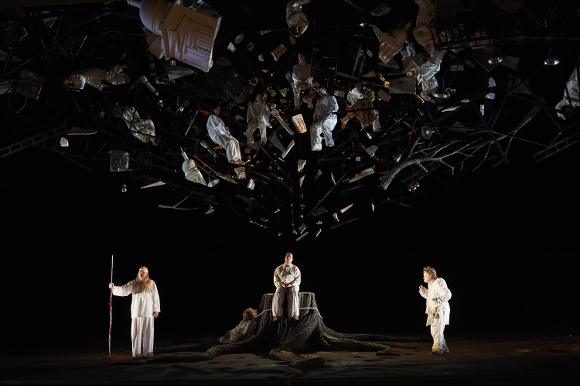
François Girard’s Siegfried, a revival of his 2006 production, opened last night at the COC.  Despite using the same basic set concept as Atom Egoyan’s Die Walküre, Girard’s Siegfried, has a rather different look and feel.  The fragments of Valhalla and the remains of Yggdrassil are still there but they are supplemented in imaginative fashion by a corps of supers and acrobats who play a key role in shaping the scenes.  For example, in the opening scene we have Yggdrassil festooned with bodies, as if some enormous shrike were in residence.  Some of these are dummies and some aerialists who come into the drama at key points.  The flames in Siegfried’s forge are human arms.  Acrobats make a very effective Fafner in the Niedhöhle scene and the flames around Brünnhilde’s rock are human too.  Most of the characters are dressed in sort of white pyjamas which makes for a very monochromatic effect on the mostly dark stage.  The one visual incongruity is the “bear” who is present, tied to Yggdrassil, throughout Act 1.  Frankly it looks less like a bear than John Tomlinson after a night on the tiles.  Still, all in all, the production is effective without being especially revelatory.
Siegfried-0629

Continue reading