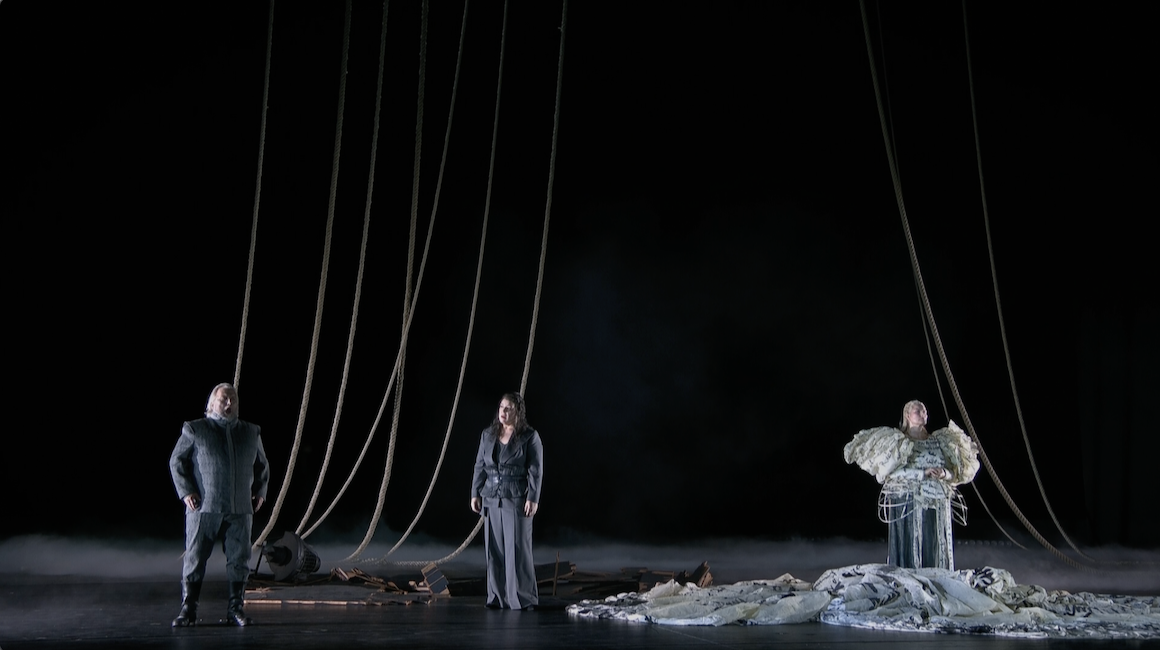
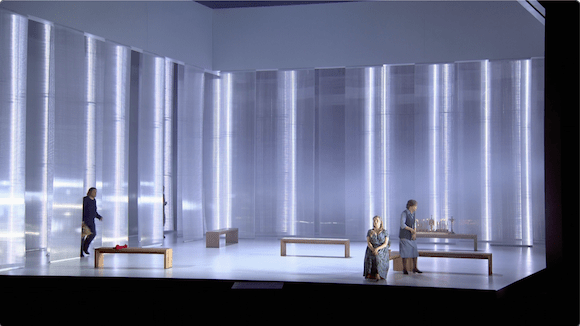
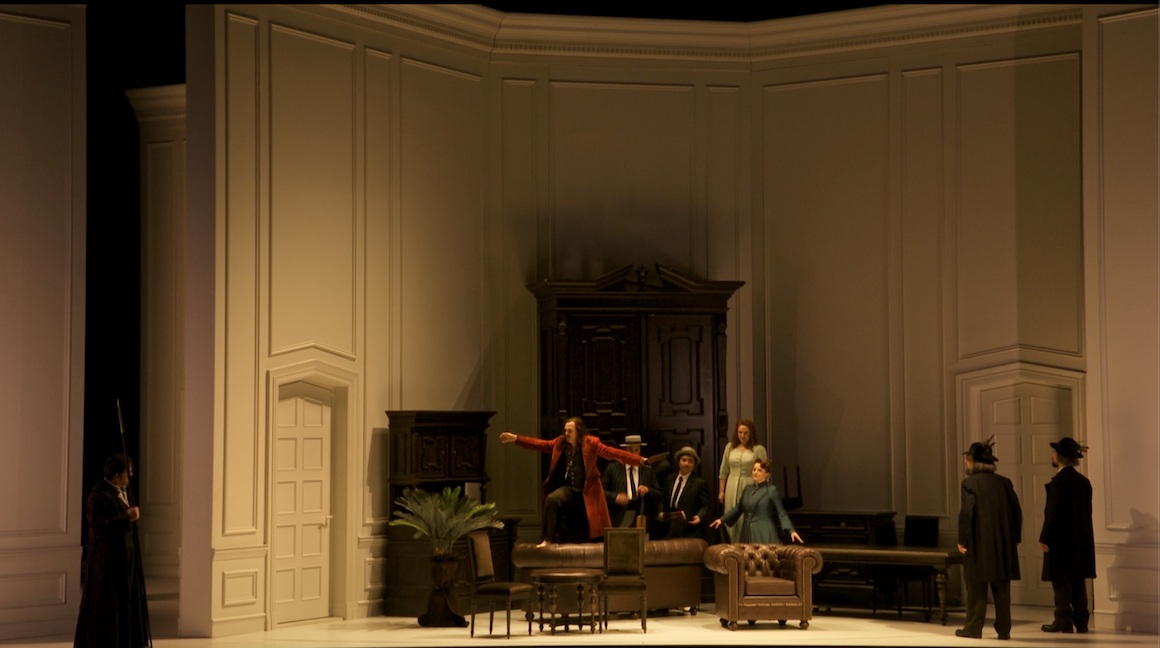
Overall I rate this cycle very highly. Andreas Homoki’s production is unusual in that it’s really not conceptual and is often very literal. That’s rare in Wagner productions in major European houses. But it’s also not cluttered up with superfluous 19th century “stuff”. When a thing is essential, it’s there as described. If it’s not essential more often than not it’s omitted.
Tag Archives: nylund
Zürich Ring – Götterdämmerung
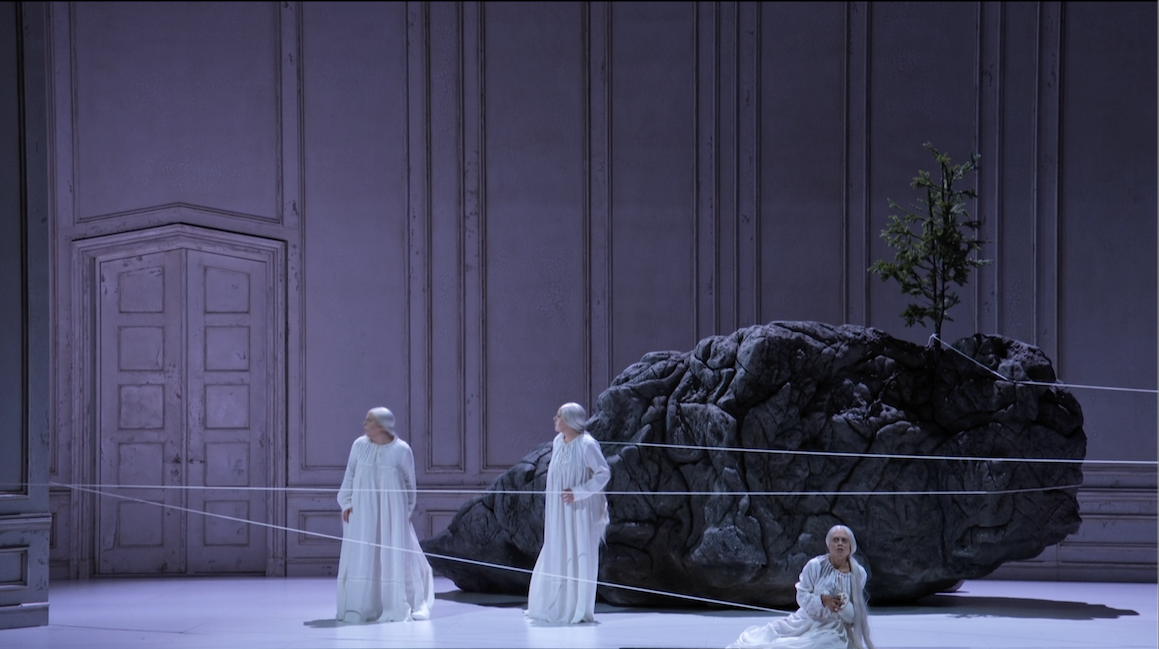
And so to the final instalment… We open with the Rock but now the background room; while still the same 18th/19th century mansion, looks a bit the worse for wear with peeling and cracked paint. The Norns, predictably, are all in white. It’s all pretty conventional but done well.
Zürich Ring – Siegfried
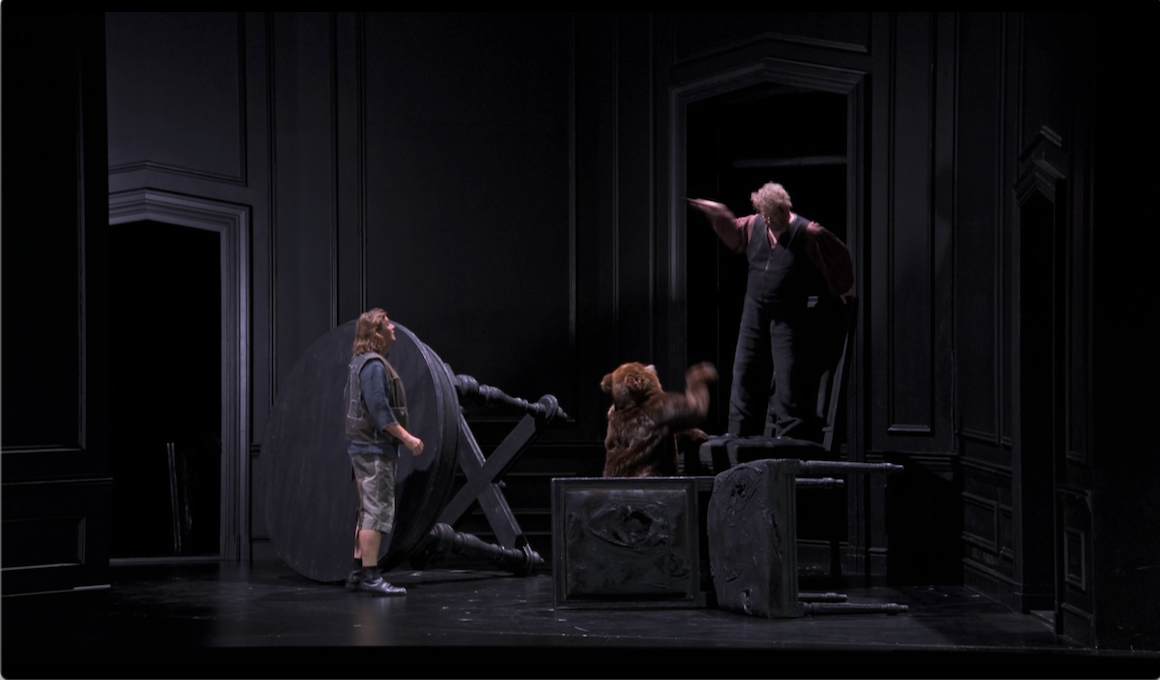
Siegfried has been described as the scherzo of the Ring cycle and Andreas Homoki seems to have at least partly run with that. There are quite a few places, including some less obvious ones, where he seems to be going for laughs. The obvious ones are obvious enough. You can’t really have a bear in the first scene without it being comic but there were also times when Wanderer was camping it up a bit. We’ll come back to that.
Zürich Ring – Die Walküre
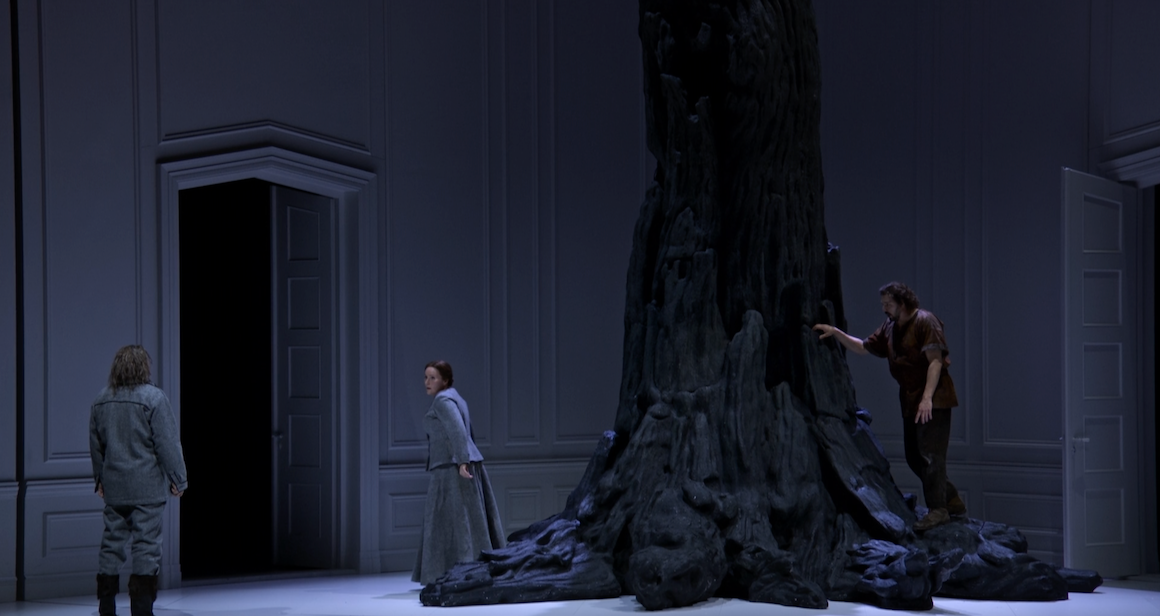
Continuing on from Das Rheingold we come to Die Walküre. There’s a lot of continuity with the earlier work. It’s basically the same rotating set though in some scenes one of the “rooms” becomes a forest. Another thing we see is characters who aren’t canonically “there” appearing in scenes. So right at the beginning, when Siegmund and Sieglinde meet, Wotan is lurking and doing things like handing drinks to Sieglinde. We’ll see more of this with Hunding’s henchmen appearing in various places, Wotan and the henchmen appearing when Sieglinde is describing her wedding and the Valkyries showing up at the start of Act 2.
Intriguing Tristan from Bayreuth
The latest release from Deutsche Grammophon in their collaboration with the Bayreuth Festival is a video release of the 2024 Tristan und Isolde. It’s interesting both as a production/performance and for some technical innovations.
Intense Jenůfa
Janáček’s Jenůfa was staged and recorded at the Staatsoper unter den Linden in 2021 under COVID conditions. There’s no audience and the chorus members, in black, are distributed all around the auditorium. Even without a live audience it’s extremely dramatic and intense.

Decomposing Der Freischütz
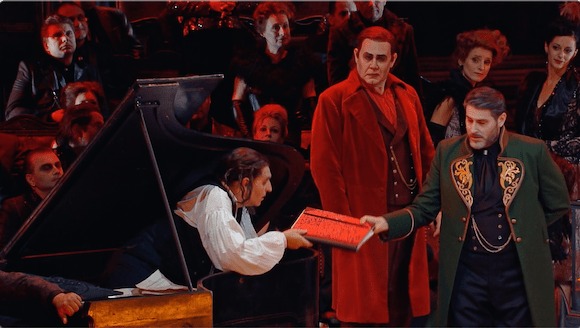
There’s been a lot of talk recently about whether or not it’s legit to change text, music or dramaturgy for problem operas like Madama Butterfly. I get pretty frustrated by this because it happens all the time in Europe, especially in the German speaking countries, a fact which seems to escape the notice of many involved in this debate. Usually it’s the dramaturgy that gets changed. Changes to the music are rare indeed and, traditional playing with operetta dialogue aside, the libretto usually doesn’t change. And, of course it’s not just “problem operas” that get the treatment. Today I’m going to write about a “concept” production of Weber’s Der Freischütz recorded at the Vienna State Opera in 2018.

A weirdly eclectic Fidelio
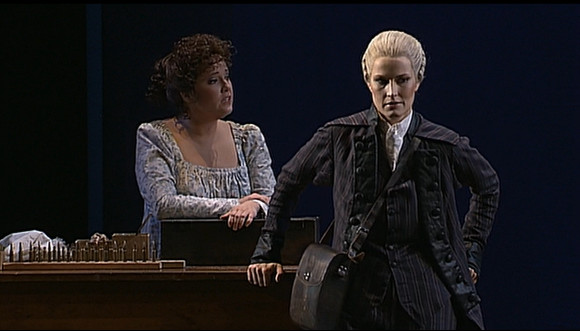
I’m really not sure what to make of Jürgen Flimm’s 2004 production of Fidelio for the Zürich Opera House. It’s not offensive and it doesn’t really get in the way of the story but it seems quite devoid of originality beyond mixing styles in a way one might describe as anachronistic if one could figure out when synchronistic would be. Rocco wears a sort of frock coat with, apparently, goatskin pants, Marzellina’s dress looks probably 20th century, bolt action magazine fed rifles are apparently muzzle loaded and metal cartridge cases filled by hand. Then to cap it off when Don Fernando shows up he looks like he’s stepped straight out of a Zeffirelli production of Der Rosenkavalier. So “nul points” for coherence. For once one rather appreciates that so much of the action takes place in the dark.
Vogt and Nylund bring dead city to life
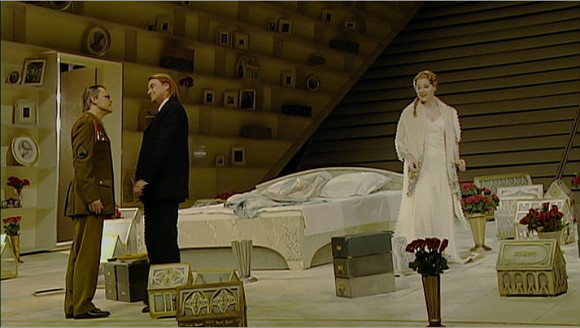
Kasper Holten shows his customary inventiveness in his production of Korngold’s Die Tote Stadt, recorded at Finnish National Opera in 2010. He places the whole opera inside Paul’s “Marie museum” with a chaotic, higgledy, piggledy model of the the city of Brugge as a back wall. He emphasises the dream elements of acts 2 and 3 through devices such as having the troupe of players and their boat emerge through Paul’s bed or assorted ecclesiastics popping up randomly in the “city model”. He also inserts a non-speaking Marie who is present throughout the piece, often to very interesting effect.