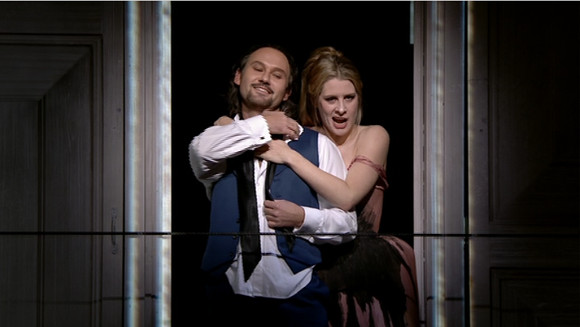
Kasper Holten’s Royal Opera House production of Don Giovanni, seen in cinemas, is now available on DVD and Blu-ray. It’s a visually and dramatically complex production so it’s probably as well that there’s plenty of explanatory material on the disks and in the booklet. Es Devlin’s set is a two storey structure that rotates and serves as a screen for a heavy use of video projections by Luke Halls. These start wth the 2065 names of the women Don Giovanni has seduced and seem to be mostly about what’s going on in Don Giovanni’s head. The sequence during Fin ch’han dal vino calda la testa is particularly spectacular.
Tag Archives: haswell
Ballet/Opera Fusion
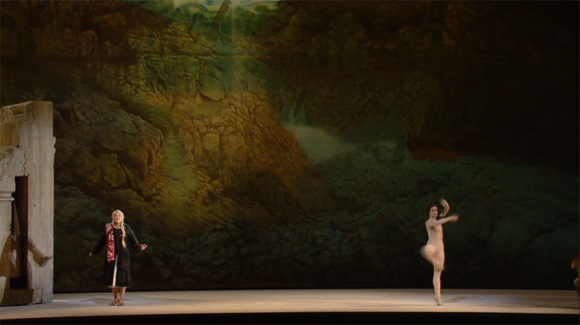
Handel’s Acis and Galatea is a peculiar piece in some ways. It was written to be performed at Cannon’s, the Edgware residence of the then Earl of Caernavon, presumably for his guests. Apparently the performance style was to have the singers sing from music stands in front of a painted backdrop. So, a sort of oratorio with curtains. It’s not uncommon to stage Handel oratorios as opera these days. Theodora is done quite often and even Messiah has been staged so it’s no great surprise that Acis and Galatea should be given a similar treatment. In fact Wayne McGregor’s 2009 Covent Garden production stages it as an opera and a ballet simultaneously combining the resources of the Royal Ballet and the Royal Opera.
Zambello’s Carmen
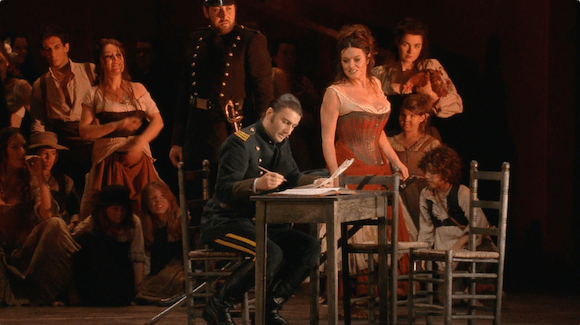
Francesca Zambello’s Carmen for the Royal Opera House has more going for it than is immediately apparent. On the face of it it’s a very traditional, conservative production; period costumes, literal sets, hordes of kids in Acts 1 and 4, live animals, but a close look reveals rather more. Zambello reveals her intentions during the overture where we see a manacled, distraught Don José dragged to execution by a masked executioner. This is going to be Don José’s story rather than one that focuses almost exclusively on the title character. What we see here is a stark contrast between what Don José really wants; respectability, an obedient wife, conformity with the Church, honour and what key choices, accidents and conflicts drive him to; criminality, liminality, execution and, we may suppose, damnation. The staging subtly highlights each of the key moments in Don José’s descent; his arrest and demotion in Act1, the fight with Zuniga in Act 2 and the realisation, in Act 3, that Carmen will never be the women he really wants reinforced by Micaëla’s aria that ironically offers him the choice he can no longer make and does so unmistakeably in terms of Catholic eschatology. There is so much more going on here than a sexy woman and some pretty tunes.