More upcoming events

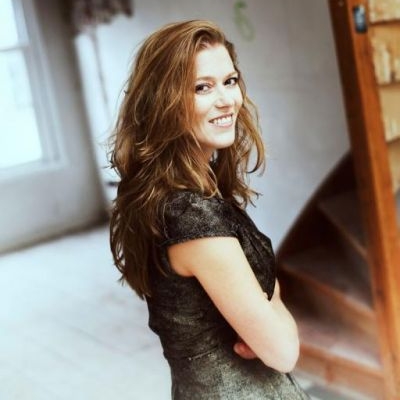
1097-4243-Barbara-Hannigan-High-Res-7---credit-Elmer-de-HaasThere’s a 15% off offer for Christian Gerhaher’s 26th February recital at Koerner Hall.  Use Code CHRISTIAN15 on line or at the box office.

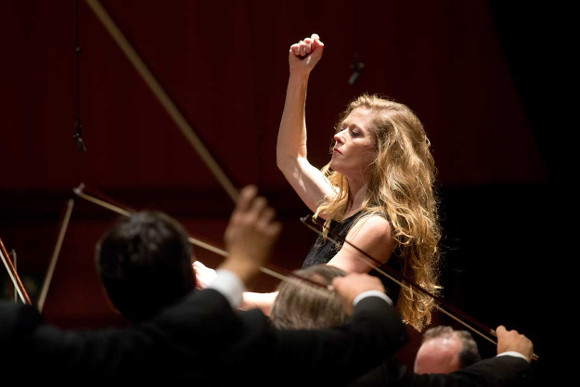
March 2nd at 2pm Barbara Hannigan is doing a workshop at UoT focussed on Hans Abrahamsen’s new work Let me tell you.  It’s at Walter Hall and it’s free.  The work itself will get its North American premier on March 4th with Barbara and the TSO at Roy Thomson Hall.

Continue reading

Beating the blahs

GroundhogThere’s 20cm of snow on the ground and more forecast.  The groundhog consensus is a long winter.  So, here are a few upcoming concerts and other events that may help get you through the rest of the winter.

On February 17th mezzo Janina Baechle, violist Keith Hamm and pianist Rachel Andrist are performing works by Mahler, Brahms and Leoffler in the Richard Bradshaw Amphitheatre at noon.  Also in the RBA at noon on the 19th there is the annual concert featuring artists from the Ensemble Studio and Montreal’s YAP the Atelier lyrique.  And on the 24th, but at 5.30pm Barbara Hannigan and others are presenting works by Chausson and Schoenberg.  All these concerts are free.

Continue reading

Toronto Symphony 2015/16 season

The Toronto Symphony announced its 2015/16 season line up this morning.  From a choral and vocal music perspective the items of most interest were:

  • A “semi-staged” Mozart Requiem to be directed by Joel Ivany.  That’s scheduled for January 21st to 23rd next year with soloists Lydia Teuscher, Allyson McHardy, Frédéric Antoun and Philippe Sly.  Bernard Labadie will conduct.  I’m very curious to see what Joel does with this.
  • Handel’s Messiah in the extremely non-baroque Andrew Davis orchestration.  He will also conduct.  The soloists are Erin Wall, Liz DeShong, Andrew Staples and John Relyea.  This one is being recorded live for the Chandos label.  It runs December 15th to 20th this year.
  • Barbara Hannigan appears as both soprano and conductor.  On October 7th and 8th she has a program of Nono, Haydn, Mozart, Ligeti and Stravinsky.
  • Russell Braun shows up with Erin Wall for a performance of Vaughan-Williams Sea Symphony on October 21st and 24th and again during the New Creations Festival where he will sing Brett Dean’s Knocking at the Hellgate.
Barbara Hannigan 05 - copyright Musacchio Ianniello Accademia Nazionale di Santa Cecilia

Barbara Hannigan – copyright Musacchio Ianniello Accademia Nazionale di Santa Cecilia

Continue reading

Make him cry blood

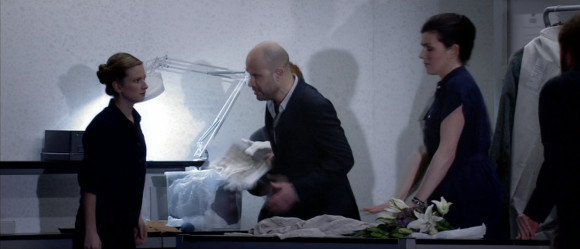
Written on Skin; music by George Benjamin, text by Martin Crimp, was first seen at the Aix en Provence festival in 2012.  The following yewar it was given, in the same production by Katie Mitchell and with substantially the same cast, at Covent Garden. Both versions were televised and now the ROH version has been released on DVD and Blu-ray.  It’s an unusual, complex and rewarding work.  21st century angels decide, for reasons not entirely clear, to return to the 13th century to create and participate in a human drama.  The medieval humans are The Protector; a rich man of mature years utterly confident of his privileged position and his own righteousness, and his wife Agnès; younger, illiterate, downtrodden.  Into their world comes The Boy; one of the angels in fact, who will create for The Protector an illuminated book; a precious object celebrating his wealth and worthiness.  Inevitably, The Boy and Agnès fall in love and The Protector’s revenge, whipped up by the angels, is quite revoltingly violent.  It’s essentially a simple and classic plot but Crimp shapes it skilfully with carefully placed anachronisms and by using the device of having the characters, sometimes, narrate their own actions in the third person.  Benjamin’s score is in a modern idiom.  He’s not afraid of atonality and he uses a very wide range of colours to create a score that ranges from meditational to almost unbearably violent.  Certainly words and music work together here to great effect.
1.angels Continue reading

This season’s free concerts in the RBA

rbaThe Canadian Opera Company has just announced the 14/15 line up for the free lunchtime (mostly) concerts in the very beautiful Richard Bradshaw Amphitheatre at the Four Seasons Centre.  Highlights, from my point of view, include recitals by Jane Archibald, Krisztina Szabó, Lauren Segal, Colin Ainsworth, Joshua Hopkins, Robert Gleadow, Barbara Hannigan and Ekaterina Gubanova.  There will also be ten concerts by the Ensemble Studio plus the Quilico competition.  The Canadian Art Song Project will showcase Allyson McHardy in a new song cycle by Marjan Mozetich.  There’s also a themed series of concerts  to commemorate anniversaries of the First and Second World Wars, and the fall of the Berlin Wall. This will comprise six concerts drawn from the Vocal, Chamber Music and Piano Virtuoso programs.

That’s just the tip of the iceberg.  There are vocal, chamber, piano, dance, jazz and world music programs to suit a very wide range of tastes.  And it’s all free.  Full details at http://www.coc.ca/PerformancesAndTickets/FreeConcertSeries.aspx

Bard of sex and Eros kinky

The sudden death of Italian opera has always intrigued me.  Works, by Italians or to Italian libretti, dominated opera houses, at least in the English speaking world, for centuries.  The Metropolitan Opera even commissioned new work in Italian (Puccini’s La Fanciulla del West, 1910).  But after Turandot (1924) new works in Italian pretty much dried up.  I can’t think of a single one that could be considered a repertory staple and even more recherché pieces like Pizzetti’s Assassinio nella Cattedrale are few and far between.  Indeed, since WW2 at least, the dominant language for new operas has been English with German some way behind and the odd work in French or something more obscure.  So, I was intrigued to get my hands on a recording of Luca Mosca’s 2007 work Signor Goldoni; a commission for Venice’s La Fenice inspired by the 18th century Venetian playwright and librettist Carlo Osvaldo Goldoni.  What’s really surprising is that the libretto (perhaps we should say “book”) by Italian writer Gianluigi Melaga, is in English!  Apparently librettist and composer consider that English is better adapted to the kind of word play they were aiming for than Italian.

1.rafael Continue reading