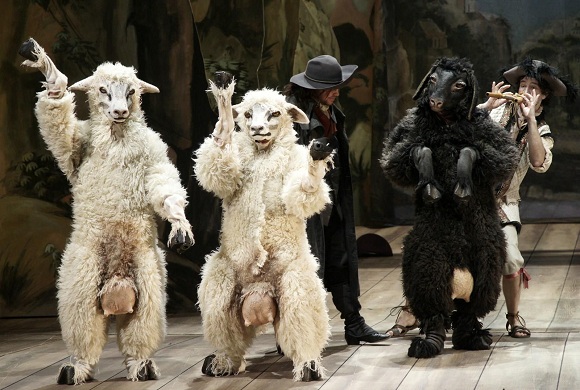
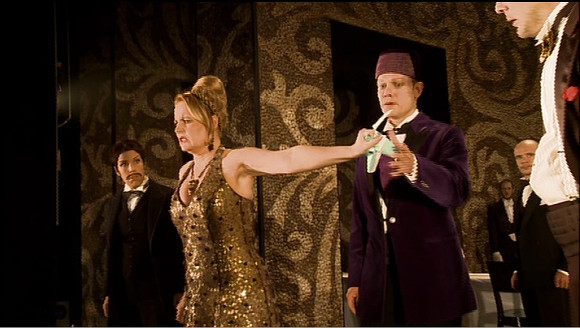
Handel’s Partenope is a bit unusual. It feels lighter than a lot of Handel’s Italian operas and it is basically a romcom, albeit one that still has a vaguely classical setting. Handel also plays with opera seria conventions by, for example, writing “heroic” arias for non-heroic texts and putting accompagnato in odd places. The number of potential match ups that need to be tracked is fairly staggering. Basically everybody is in love with, or pretending to be in love with, Partenope, queen of Partenope aka Naples. These include the invading prince of Cumae, Emilio; Arsace, prince of Corinth; Armindo, prince of Rhodes and Eurimene, an Armenia who is really Rosmira, princess of Cypress and formerly betrothed to Arsace. The only character who isn’t in love with Partenope is the philosophical captain of the guard, Ormonte, who is easy to spot as he’s a bass. At the start of the piece Partenope is in love with Arsace but Eurimene/Rosmira isn’t having that and engineers a duel with Arsace. This takes most of two acts but it’s the only essential bit of plot. In Act 3 Arsace, who really doesn’t want to fight his former fiancée finally comes up with the wizard wheeze of demanding that the duel be fought bare chested. Apparently this was perfectly normal under Neopolitan duelling conventions. maybe it’s what gave Patrick O’Brian the idea of having Stephen Maturin always duel bare chested? Anyway the modest Rosmira isn’t about to do any boob flashing (somewhat ironically as Inger Dam-Jensen, in the title role, has been bosom heaving with the best since the overture) so confesses to being, shock horror, female. Arsace and Rosmira are reunited and Partenope awards herself as a consolation prize to Armindo. Got that?
Tag Archives: handel
A second look at Hercules
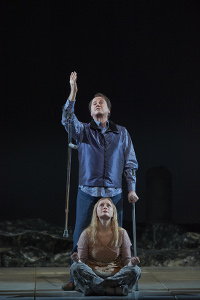
Back to the Four Seasons Centre last night for a second look at Peter Sellars’ production of Handel’s Hercules. This time we were sitting lower down in the house, in the front, left of the orchestra ring. As predicted the set wasn’t as effective as when seen from higher up but in some ways the lighting effects were more successful. Given the house’s acoustic properties favour the rings I’d say this is definitely one to see from somewhere other than the orchestra.
What did I particularly notice compared to opening night? First off, Richard Croft. I think I was so wrapped up in Lucy Crowe and Eric Owen’s singing the first time around that I almost failed to notice what a fine performance he gave. His voice is very mature for a tenor now but he’s a terrific interpreter of text and has flawless technique. His intensity remains remarkable. And the schtick with the crutches? It turns out he recently had hip surgery.
Rival Queens
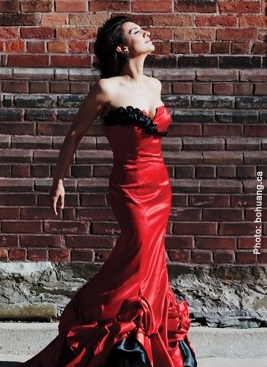
Rival Queens is a collaboration between Tafelmusik and Isabel Bayrakdarian showcasing music written for Faustina Bordoni and Francesca Cuzzoni; star divas of the 18th century who fought out a bitter rivalry on stage in London in 1726-28. The great composers of the sage, most notably Handel, all composed for them and wrote works that brought out their respective, and quite contrasted, strengths.
In the first half of the program Bayrakdarian focused on works for Bordoni. There were arias from Handel’s Alessandro (one of the works both divas performed in), Bononcini’s Astianatte and Hasse’s Cajo Fabricio. These are pieces requiring extremely secure technique. They lie fairly low in the soprano range (maybe modern mezzo territory) but have long, long, intricate coloratura runs which Bayrakdarian navigated with apparent ease. The arias were rounded out with orchestral pieces by Handel and Zelenka.
Sellars does it again
There’s a unit set; some marble flags, a few broken columns surrounding a “fire pit”. Even this is stripped down for much of Act 2 which takes place on the stage apron in front of a plain curtain. There are five singers, a chorus and an orchestra. That, plus Peter Sellars, is all it takes to produce an extraordinary piece of music drama.
Upcoming events
There’s quite a lot happening before the COC season kicks off again with the opening of Handel’s Hercules on April 5th. Here are some of the highlights including several rarities.
On March 22nd at 7:30pm and 23rd at 3pm the Cantemus Singers are putting on a concert performance of Purcell’s The Fairie Queene at the Church of the Holy Trinity. The cast includes Iris Krizmanic, soprano (Juno); Maria Soulis, soprano (Mopsa); and Michael Pius Taylor, tenor (Phoebus). Tickets are $20; $15(sr/st); $10(child).
Just for fun 7/n
Opera Atelier announces 14/15 season
Opera Atelier announces its usual two production season. The fall 2014 production will be Handel’s Alcina with Meghan Lindsay in the title role. She will be joined by Allyson McHardy as Ruggiero, Marie Lenormand as Bradamante, Mireille Asselin as Morgana, Krešimir Špicer as Oronte and Olivier Laquerre as Melisso. Despite the absence of Curtis Sullivan, the advance publicity suggests that the trend to ever increasing amounts of bare flesh will continue.
The spring 2015 production will be Gluck’s Orphée et Eurydice in the Berlioz orchestration. This will push Tafelmusik even further into 19th century romantic rep. Is Tannhäuser on the cards? Mireille Lebel will sing Orpheus, Peggy Kriha Dye appears as Eurydice with Meghan Lindsay as Amour.
In many ways this is the most interesting season OA have offered for some time and the venture into Handel is very welcome. More details and tickets can be found here.
Best of 2013
So what was I most impressed with on the opera and related scene in in 2013?
Big house opera
The COC had a pretty good twelve months. I enjoyed everything I saw except, maybe, Lucia di Lammermoor. Making a choice between Christopher Alden’s probing La Clemenza di Tito, the searing opening night of Peter Sellars’ Tristan und Isolde; the night when I really “got” why people fly across oceans to see this piece, Robert Carsen’s spare and intensely moving Dialogues des Carmélites or Tony Dean Griffey’s intense and lyrical portrayal of the title character in Peter Grimes is beyond me. So, I shall be intensely disloyal to my home company and name as my pick in this category the Metropolitan Opera’s production of Die Frau ohne Schatten. Wernicke’s production is pure magic and Anna Schwanewilms was a revelation.
Some images from AtG’s Messiah
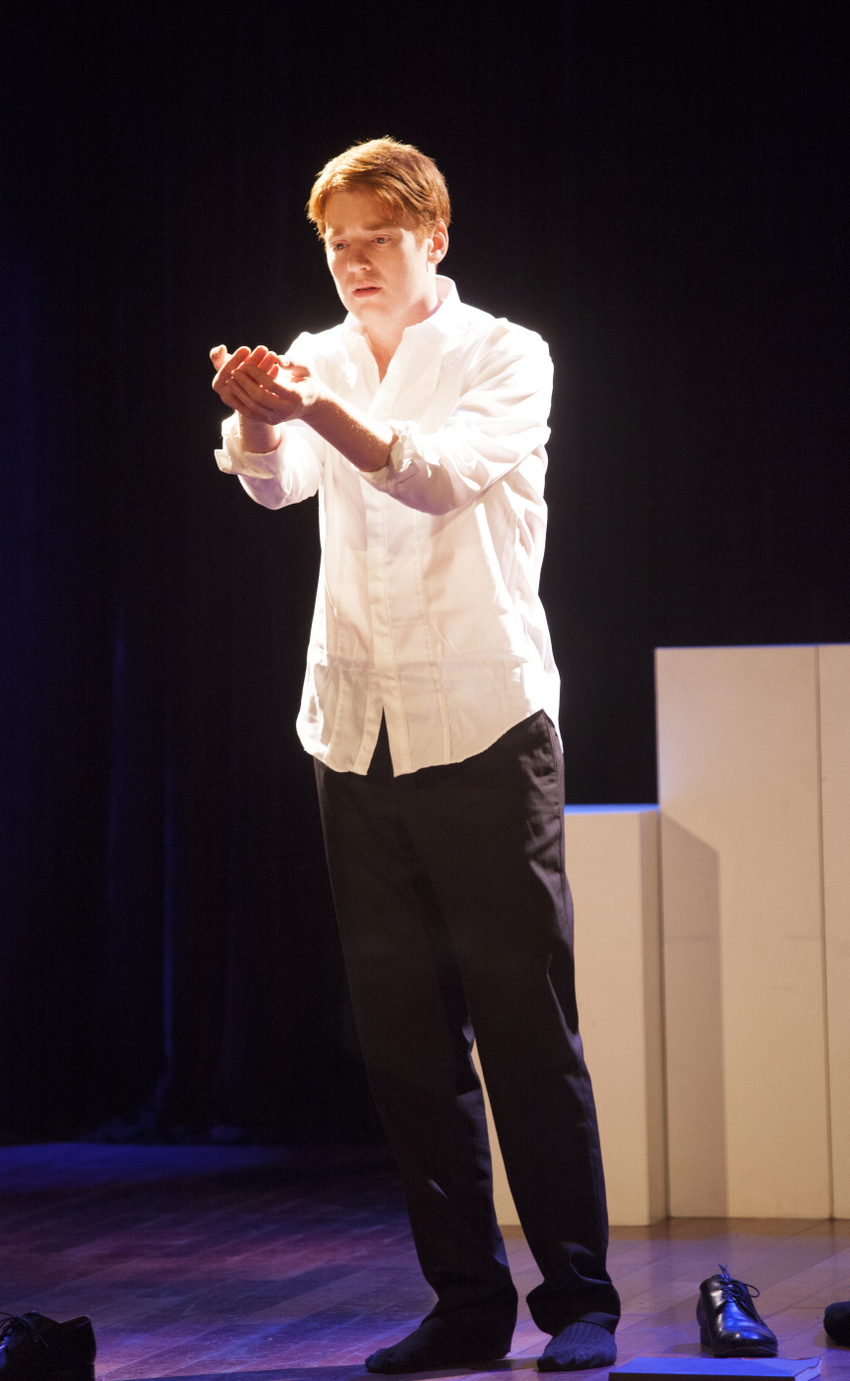
Here are a few images of the Against the Grain Messiah reviewed earlier. They are all from the final dress rehearsal. Photo credits – Darryl Block.
AtG’s Messiah
Expectations could hardly have been higher for last night’s first performance of Against the Grain’s new production of Handel’s Messiah. By and large they were met. It’s become quite the thing to stage Handel’s oratorios and, for the most part, that’s fine. They are really operas in disguise and work well when liberated from the concert setting. Messiah is trickier. Rather than a linear narrative there are a series of Biblical texts selected by librettist Charles Jennens to promote a literal and conservative evangelical Christianity. There is no obvious staging solution. One possibility is to invent a narrative and spin the story around it as Claus Guth did at Theater an der Wien in 2009. AtG’s Joel Ivany’s solution is to stage it as a choreographed performance and use movement to bring depth to the words. Here he is aided and abetted by choreographer Jennifer Nichols who has created a movement language tailored to the abilities and limitations of the singers.