Farewell Ileana

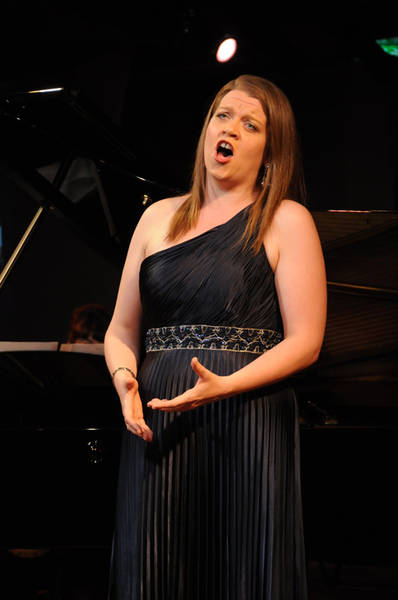
Ileana at the Stella Maris competition

It’s that time of year again. With a few months left in the opera season in Toronto today saw the first “farewell” concert by a departing member of the COC Ensemble Studio. It was a solo recital by dramatic soprano Ileana Montalbetti, quite possibly the best sounding thing ever to come out of Saskatoon. Ileana is the only full on dramatic soprano I’ve seen in the few years I’ve been following the Ensemble Studio and, as ES boss Liz Upchurch pointed out, they are rare so it’s always interesting to see another one come along. Fair to say too, I think, that it’s not the voice type that is treated most kindly by a piano recital in a fairly intimate space. That said, it was a very enjoyable performance.

Ileana kicked off with O Sachs! Mein Freund! from Die Meistersinger. Any reservations I have about dramatic sopranos and piano recitals come redoubled in spades where “big” opera arias are concerned. The kind of volume and tone needed to sing against a large orchestra in a big theatre tends not to sound too lovely when throttled back with only a piano for support and, honestly, I don’t think this piece was a great idea.

Things improved enormously in the next section though. This was the song cycle Ekho Poeta; Pushkin texts set by Benjamin Britten and written for the Rostropoviches. It’s a rarity; a Britten song cycle I don’t recall hearing before, and it’s very good. It was a much better vehicle for Ileana who displayed plenty of power, well controlled vibrato and pleasing and varied tone colours especially in the middle register. Her high end was much sweeter here than in the Wagner too. Where she needed a lot of attack, as in the rather spiteful Epigramma she could certainly produce it. Being Britten, the piano part in these pieces was really quite demanding too so kudos to pianist Rachel Andrist for excellent and sympathetic musicianship.

The second half of the programme was all Strauss. It started with Arabella’s final aria, which I enjoyed more than the Wagner but about which I have similar reservations as a recital piece.  Then we got a selection of songs from Op. 37, Op. 48 and Op. 32 before finishing up with Zueignung from Op. 10. This was all good stuff with more excellent control and very good German diction. The final number was particularly lovely. For an encore we got a spirited rendering of Sweet Polly Oliver in the Britten setting.

I think Ileana is a very considerable talent and I’m sure she’ll do well in the wider operatic world.  Liz Upchurch and the COC certainly seem to think so.  Liz  “leaked” that Ileana will be back in an as yet unannounced major role. Putting two and two together and making something like e^iπ and adding in a dose of wishful thinking I’m wondering if there is any connection between Ileana’s first piece today and the long rumoured Toronto debut of a certain ex-pat Canadian baritone.

Also, à propos not much, it was nice to see a certain world famous dramatic soprano in sneakers and sans make up watching from the standing room section.

Canadian Opera Company season announcement 2012/13

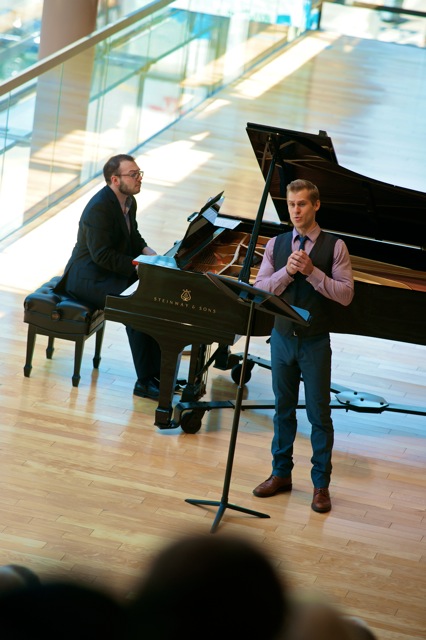
So this morning I was at the Four Seasons Centre for the press conference to announce the COC’s 2012/13 season.

Board President Philip Deck started off with a strong statement about continuing to improve the quality of the product on the Four Seasons Centre stage and striving for “uncompromising and inspiring” programming with a goal of becoming “one of the world’s great opera houses”. There are crucial words here. If General Director Alexander Neef is to meet these goals he will need a supportive Board. It looks like they are there with him at least for now and that’s very good to hear.

There was a very good “teaser video” with contributions from the many Canadians who will feature next season. I guess this will be available on line at some point. Then we got to the main business with Alexander presenting the line up. It’s pretty exciting so here it is in all its glory and with my commentary.  Continue reading

COC Ensemble Studio – Works by female composers

It feels good to be back listening to live music after a bit of a drought. Today I was at a lunchtime recital in the Richard Bradshaw Amphitheatre given by members of the Canadian Opera Company Studio Ensemble. It was very good indeed. I want to start with the undoubted highlight; Jacqueline Woodley‘s performance of Judith Weir’s piece for unaccompanied soprano, King Harald’s Saga. It’s a complex, fascinating and very difficult piece requiring the singer to switch between voices and to pull off a range of singing styles. Woodley was awesome. I’ve heard her now in quite a few contemporary pieces, though perhaps none as hard as this, and she has always impressed.

Almost as impressive was Ileana Montalbetti’s performance of Libby Larsen’s Donal Oge. It’s a work that requires considerable power from the singer and Ileana, unsurprisingly delivered. She’s got a big voice and she knows how to use it. Neil Craighead gave us two songs by Cecile Chaminade. He sounds a good deal more powerful than last time I heard him. He has a lovely tone and now the power too. He hasn’t quite got the knack of throttling it back yet but that will come I expect. We also got some fiendishly difficult Alma Mahler songs which clearly taxed tenor Chris Enns. They would have taxed anyone I think. Mireille Asselin gave a pleasing unaccompanied performance of a piece from Hildegard von Bingen and the programme was rounded out by two duets by Fanny Hensel sung by Asselin and Craighead and Montalbetti and Enns.

The pianists were the excellent Jenna Douglas and the even more impressive Timothy Cheung. All in all, this was as good a concert as I have heard in the COC’s free lunchtime series.

Curious about young artists programmes

A lot of opera companies have young artists programmes. They seem to vary a lot and so I’m curious to know more about them and what opera goers think about them. I’m no expert but I do have quite a lot of exposure to my local YAP; the Canadian Opera Company Ensemble Studio. I know a couple of the singers. I’ve seen many of them perform both in COC sponsored ventures and otherwise. I’ve seen many graduates of the programme perform too and I’ve been enormously impressed. One of the things about the Ensemble Studio that I really like is that it provides lots of performance opportunities. I don’t really understand how one can grow in a performing art without performing. I’m not sure though that this emphasis on performance is universal with YAPs. The Met programme for instance seems to offer few performance opportunities (please disabuse if I am wrong!). Here in Toronto our young performers get frequent opportunities in the free lunchtime concert series at the Four Seasons Centre, they do an annual schools tour with works geared for kids, they do a special performance with full orchestra on the Four Seasons centre Stage of one of the COC productions that year and they, crucially, take on many of the lesser, and sometimes not so lesser, roles in the COC’s productions. For example in the two productions mounted so far this season three members of the Ensemble Studio sang in Robert Carsen’s production of Iphigenia in Tauris alongside Susan Graham, Russell Braun and Joseph Kaiser and the roles of Marullo, Countess Ceprano and two other roles in Rigoletto were sung by ES members not to mention that the Gilda in four performances was also an ES member. How does it work in your local company?

And so it begins again

Today was the opening concert of the season for the free concert series in the Richard Bradshaw Amphitheatre at the Four Seasons Centre. As has become standard practice it was a recital by the artists of the COC Studio Ensemble. All the members sang except for Ambur Braid who was ill and Ileana Montalbetti is singing in Elektra in Rome at the moment. I have to say it was great to be listening to live, unamplified singing again after a summer of mostly DVDs. I was most interested to hear newcomer Philippe Sly who I had not heard before. He sang one of the Count’s arias from Figaro. He has a very pleasant voice with plenty of power though I think he lacks a bit of variety and drama. He’ll learn that quickly enough in the Ensemble Studio program. The other newcomer was Mireille Asselin, who I had heard before. She sang a rather weird aria from Poulenc’s Les Mamelles de Tiresias. No lack of drama or humour in her performance! The other standouts for me were Adrian Kramer and Simone Osborne. Adrian sang “Mein Sehnen, mein Wähnen” from Die tote Stadt. His diction and acting are superb and he managed an absolutely gorgeous floated pianissimo on the final “Zurück”. Simone gave us one of Norina’s arias from Don Pasquale. She just gets better. She has quite a powerful, rich voice with really strong, sweet high notes. The progress from even a year ago is obvious. She can act too. There is no question that she is one to watch on the opera scene. Fortunately, that’s exactly what I will be doing in ten days time when I shall see her role debut as Gilda in the COC’s production of Rigoletto. The season is off to a good start.

Les adieux

Today’s lunchtime concert at the Four Seasons Centre was the farewell recital for three departing COC Ensemble Studio members; Michael Uloth (bass), Wallis Giunta (mezzo) and Anne Larlee (piano).

Michael started the show with Brahms’ Vier Ernste Gesänge, accompanied by Liz Upchurch. The piece is a bit of a downer but it was nicely, expressively sung. A bit of an odd choice for this sort of recital though I thought. Wallis picked a fairly eclectic mix of songsranging from Gretchen am Spinnrade to Send in the Clowns via some rather odd Spanish pieces but all very stylishly sung.

Perhaps surprisingly, the two of them had managed to find a couple of duets for mezzo and bass; As-tu souffert? from Thomas’ Mignon and Iradier’s El Arreglito, which apparently, was what gave Bizet the idea and most of the music for the Habañera in Carmen. Both pieces were really good though it has to be said that Wallis acted Michael (admittedly suffering from a bad neck) off the stage.

Michael is off to the young artists programme at Seattle Opera and Wallis is joining the Lindemann Young Artists program at the Met in New York. I expect Wallis to do really well. She has a more than adequate voice, can act, is good looking and has tremendous stage presence; in short, the modern opera package.

News is that their replacements will be soprano Mireille Asselin and baritone Philippe Sly.

Ensemble Studio – end of season concert

Yesterday lunchtime was the last opportunity to see all the members of the COC Ensemble Studio before the season ends and some of them move on. It’s always interesting to see the Ensemble members as they are growing as singers so fast and, invariably, one hears a new and interesting side of someone that one hadn’t heard before. The programme material ranged from the 16th to the 20th century but it was all Italian and predominantly art song rather than opera. For me, the highlights were Ambur Braid singing a madrigal by Giulio Caccini; I think she’s so much better when she’s being lyrical rather than bravura, and, real eye opener, Rihab Chaieb singing Rossini’s Anzoleta avanti la regata with beautiful control, real feeling and rich, dark mezzo tone. I’ll be seeing Rihab tonight as one of the ugly step sisters in La Cenerentola and Ambur as Amore in Orfeo ed Eurydice next week.

Multiple short operas at the RBA

This was a fun concert. Six members of the COC Studio Ensemble presented, more or less fully staged, three very short operas to piano accompaniment. First up was Ana Sokolovic’s Dring, Dring which was performed by Ileana Montalbetti, Rihab Chaleb, Neil Craighead and Chris Emms. It consisted of the singers weaving intricate patterns while making telephone noises and short “wrong number” type conversations in multiple languages. I quite enjoyed it. It’s the first thing by Sokolovic I’ve heard and i was interested as I’m planning on attending the premiere of her new opera in June. Next, the same cast did Barber’s A Hand of Bridge. It’s a melodic little piece about repressed middle class fantasies. I was a bit distracted by the stage direction which appeared to have been done by someone who had never seen, let alone played bridge but then I’m fussy that way. The highlight was definitely Neil Craighead’s recitation of his character’s fairly bizarre sexual fantasies. Finally, Adrian Kramer and Jacqueline Woodley performed Menotti’s The Telephone; a piece about a man who can’t propose to his girlfriend because she is always on the telephone. Performed by the Ensemble’s two best comedians this was predictably funny and very well sung. Liz Upchurch, as ever, was a first class accompanist on the piano.

Quilico Awards

Last night we went to the Quilico Awards competition. The prize was set up in honour of Canadian baritone Louis Quilico to support various aspects of vocal competition and performance and it has been competed for and awarded in different ways over the years. This year it was a vocal competition featuring the ten young singers of the COC Ensemble Studio. It was held in the Richard Bradshaw Amphitheatre at the Four Seasons centre and Alexander Neef (COC), David Spears (Opera Hamilton) and John Hess (Queen of Puddings Music Theatre) were the judges. It was a free gig but held at 5.30pm with minimal publicity on a week day so it perhaps wasn’t surprising that the audience was a bit thin. The format was that each singer prepared three arias. S/he sang one of his/her choice then the jury selected one of the other two. The third was held in reserve in case of a tie (which didn’t happen). Liz Upchurch was the accompanist throughout which was rather impressive in itself.

The standard was really very high. I’ve heard all these singers before, either in recital and/or on stage at the Four Seasons Centre. They are all good and getting better. Repertoire was quite varied. There was lots of Mozart (unsurprising since the Ensemble Studio’s last two productions have been Idomeneo and Die Zauberflöte) but we also got Barber, Purcell, Tchaikovsky, Stravinsky, Handel, Verdi, Wagner, Floyd, Smetana, Korngold, Britten and Barber. Quite a variety really.

One of my top picks would have been Met bound Wallis Giunta (mezzo) who sang “Parto, parto” from La Clemenza di Tito which I’ve heard her do before and the very different “Nobles seigneurs, salut!” from Meyerbeer’s Les Huguenots. Wallis’ musicality (as well as technical ability) was very evident in the way she tackled the tricky rhythmic flexibility of the piece. (You can check out what I mean about tricky rhythms here).

The other would have been baritone Adrian Kramer who goes from strength to strength. He gave us “Pierrot’s Tanzlied” from Korngold’s Die tote Stadt and what has rather become his party piece, Sid’s aria “Tickling a trout” from Britten’s Albert Herring. Watch out for this guy. He has a very good voice and wicked comic timing but showed he also has a lyrical side in the Korngold.

Had I been a judge I would have found picking a third winner close to impossible. There was so much to like. So what did the judges decide?

In third place they had tenor Chris Enns (a fine Tamino earlier this season). Last night he gave us Lensky’s aria from Eugene Onegin and “Here I Stand” from Stravinsky’s The Rake’s Progress. I particularly liked the Tchaikovsky which showed off a nicely developing lyrical tenor voice very well.

Second was dramatic soprano Ilieana Montalbetti. Ileana is a bit of an anomaly. The other girls in the programme are your modern lyric, look the part, sort of modern soprano/mezzos (one of them moonlights as a fashion model). Ileana is the one truly dramatic voice and can we say she looks a bit more like the popular image of a dramatic soprano (actually she’s not really that big but…). She gave us “Come in quest’ora bruna” from Simon Boccanegra and “Einsam in trüben Tagen” from Lohengrin. The RBA is not a huge space and it was piano accompaniment so I don’t think she was close to maximum power (I’ve heard her sing much louder!) but the impression of lots of gas in the tank was definitely there along with a good deal of control and attractive tone colour.

The winner was Adrian Kramer. No surprise there.

Fortunately for us we will get to see most of these singers next month on stage in various roles. Ambur Braid is singing Amore in Orfeo ed Euridice, where Simone Osborne is understudying Isabel Bayrakdarian’s Euridice. Rihab Chaleb will sing Tisbe and Ileana will sing Clorinda in La Cenerentola. Ariadne auf Naxos has a slew of Ensemble Studio members in the cast. Simone Osborne sings Naiad, Adrian Kramer is the Wigmaker, Chris Enns is Scaramuchio and Michael Uloth is Truffaldino and it seems like everyone is understudying something!

There are good things in Toronto. How many places can you see ten first rate singers perform for two hours in a beautiful, acoustically excellent setting, for free?

Nature or nurture?

The Canadian Opera Company’s Ensemble Studio; its young artists training programme, has an exchange with the equivalent in Montreal. This week the Montrealers are in town and there was a lunch time concert featuring four singers from each programme. Being a big fan of the Ensemble Studio I went along to see how the products of the two programmes compared. I don’t know whether the Toronto programme is harder to get into or provides a more rigorous experience or, likely, both, but in terms of musicianship, stage presence and generally readiness to meet the world, the Toronto singers outclassed the Montrealers. I don’t want to write negatively about young singers who are working really hard so I’m only going to talk positives. The best of the Montrealers was soprano Chantale Nurse. She has a dramatic voice with a pronounced vibrato that was heard to good effect in a Massenet aria; “Il est doux, il est bon” from Herodiade and she was fine in the Mozart ensemble pieces. If her voice continues to develop and gain power she could do very well. I just can’t see the other three progressing to major professional careers. Of the Toronto based perfomers, one of the stand outs, unsurprisingly, was mezzo Wallis Giunta, who is heading for the Met next season. She will likely be a great success in mezzo trouser roles and today did very well with some of Dorabella’s music from Cosi as well as as Annio in La Clemenza di Tito. The other star was Adrian Kramer who continues to develop as a baritone with a leaning to comedy. He’s making a name for himself as Sid in Albert Herring in various locations and the excerpt he sang today shows why; excellent comic timing and presence coupled to a voice that is getting bigger. I’ve heard him sing Papageno from Ring 5 at the Four Seasons Centre so I know the power is there! Locals Neil Craighead and Jacqueline Woodley did fine in more Mozart excerpts and it rather sums things up to say that Jacqueline, as Zerlina, rather outsung her Montreal Don Giovanni.