The Gods look down

Robert Carsen’s 2021 production of Monteverdi’s Il ritorno di Ulisse in patria was recorded at the Teatro della Pergola during the Maggio Musicale Fiorentino. The theatre, opened in the 1660s and very much a “renaissance theatre”, is very much part of the production; the loge boxes are used during the prologue, entrances are made through the unusual parterre (individual chairs not rows of seats) and the gallery behind the stage is used by the gods to observe the action below. Monteverdi used three distinct styles of music for gods, royals and lesser folk, Carsen mimics this by giving the three orders distinct costume and acting styles. The gods (and there is the full pantheon, not just the ones who appear in the opera, each with his or her distinctive emblem), costumed in opulent crimson 16th century style costumes, act in a stylised manner. The royals get smart modern dress and naturalistic acting while the others are scruffier and act more broadly.
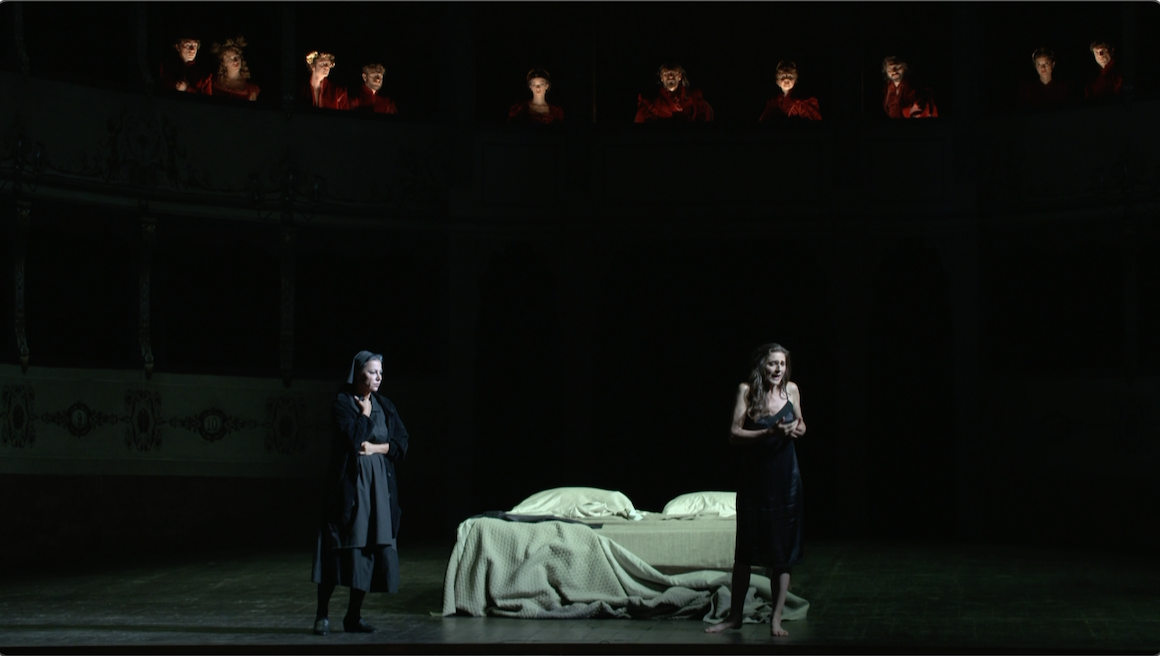
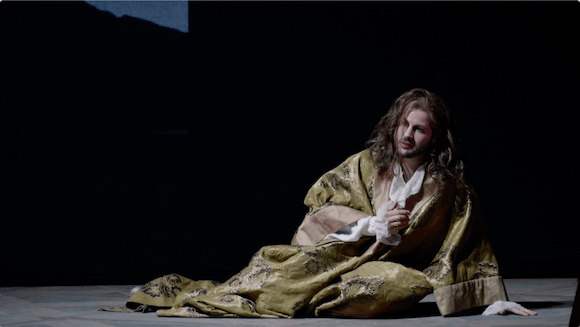
1.penelope

Continue reading

La Dori

Pietro Antonio Cesti’s 1657 dramma musicale La Dori is a hoot.  It seems to prefigure every plot device that will ever be used in opera.  A baby sold by bandits who turns out to be a princess.  Pirates. A ghost. Mistaken identities.  Swapped potions. Men pretending to be women.  Women pretending to be men.  Love polygons of fiendish complexity.  I won’t even attempt to explain the plot because it’s very complex and silly and hardly matters.  It took me a half page diagram just to map the relationships between the characters.

1.oronte

Continue reading

Adventure story

Robert Carsen doesn’t seem disposed to treat Handel too reverentially.  Although there is some of the trademark Carsen cool minimalism in his 2011 Glyndebourne production of Rinaldo (not to mention symmetrically arranged furniture) there’s also a degree of humour, as there is in his Zürich Semele.  I find it very effective and, judging by the audience reaction, so did the people who saw it at Glyndebourne.

1.cane Continue reading