
 This review first appeared in the print edition of Opera Canada.
Lebanese Canadian soprano Joyce El Khoury’s new CD on the Opera Rara label is a sort of “tribute album” to 19th century Belgian diva Julie Dorus-Gras. Mme. Dorus-Gras was a fixture at L’Opéra de Paris in the middle decades of the century, though only after she had starred in the performance of Auber’s La muette de Portici which sparked off the Belgian revolution of 1830. In Paris she created many new roles including Alice in Meyerbeer’s Robert le diable and Princess Eudoxie in Halévy’s La Juive. She thrived on the mixture of bel canto and grand opera that flourished in Paris in this period.
 This review first appeared in the print edition of
  This review first appeared in the print edition of
 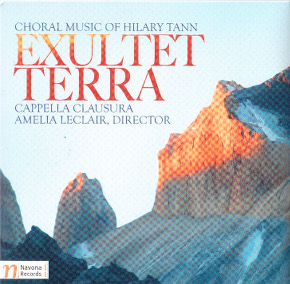 Exultet Terra is a disc of choral works (mostly) by Welsh-American composer Hilary Tann. The first half of the disc consists of shorter works for a cappella female chamber choir bookended by two pieces by Hildegard of Bingen in the latter of which the ladies are joined by the men of the choir. The second half of the disc consists of Exultet Terra; a five movement work for chamber choir, two bassoons, two oboes and cor Anglais.
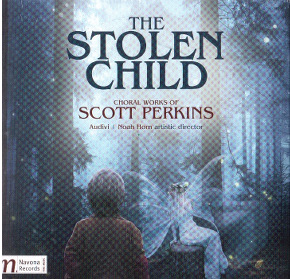 It’s not often that discs of contemporary a capella choral music come my way but that’s what The Stolen Child: Choral Works of Scott Perkins is. There are three works on the disc exploring the themes of loss of innocence, nature, magic, sleep and death. The first, The Stolen Child (2006), sets texts by WB Yeats, the second, A Word Out of the Sea (2003), is a Whitman setting and the final work, The World of Dream (2016), uses texts by WH Auden and Walter de la Mare. The first is set for tenor, baritone and choir, the second for tenor and choir and the last for choir alone though the sound world Perkins’ creates is such that the solo roles are more or less blended into the overall sound.
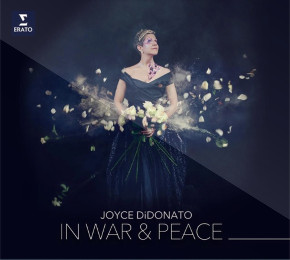 Joyce DiDonato’s latest CD In War and Peace is a compilation of baroque arias on the theme of war and peace, apparently prompted by the terrorist attacks in Paris. The arias are divided, apparently, into the two categories and while I get that Handel’s Scenes of Sorrow, Scenes of Woe from Jeptha is “war” I’m not at all sure how Purcell’s Dido’s Lament finds itself on that side of the balance sheet. No matter there’s lots of Handel; very well done, and quite a bit of Purcell, some of it quite little known; even better, with some Leo, Jommelli and Monteverdi along the way.
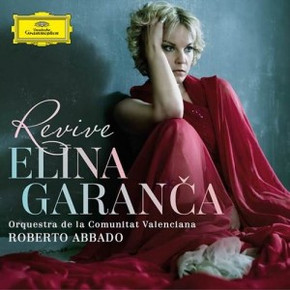 I’ve just been listening to Revive; a new recital disk from Elina Garanča. It marks her move into more dramatic territory as she enters her fifth decade. It also says quite a lot about how she wants to develop her career. There’s a very personal introductory essay titled Strong Women in Moments of Weakness and it seems to me that she’s looking to find her place in the 19th century French/Italian romantic/verismo repertoire as opposed to, say, Strauss or Wagner. Certainly the pieces on the disk represent roles like Eboli, Didon, Delila and Hérodiade, as well as some more obscure stuff like Musette from the Leoncavallo La Bohème and Anne from Saint-Saëns Henry VIII.
 This review first appeared in the print edition of
 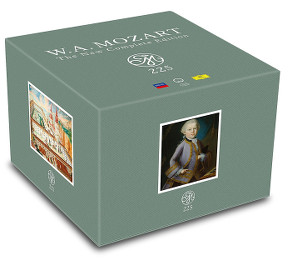 Today marks the 225th anniversary of Mozart’s death. To commemorate it Universal Records (Deutsche Grammophon and Decca basically) have put together a special commemorative edition which I have had a chance to dip into, but not much more than dip into, because it is huge. It’s a cuboid about the size of an LP record and a little over half as deep. It weighs 10kg. Inside are 200 CDs containing the complete works of Mozart including juvenalia, fragments, arrangements and alternative versions. There’s also a copy of the latest Kerchel catalogue, some prints and two very handsome hardback books; a new biography by Cliff Eisen and a second volume containing essays and work by work commentary. What there isn’t is libretti for the vocal works but it actually gets better. One can go to the website
  This review first appeared in the print edition of
  operaramblings