
 The Canadian Opera Company issued its Annual Report and Financials for 2015/16 today. As far as ticket sales go it was fairly flat in terms of tickets sold and revenues. Subscription sales were down a bit but single ticket sales were up. That’s probably the Carmen effect. That all equates to around 91% capacity sold which isn’t bad. Tickets to people under 30 are still less than 10% of tickets sold (and probably way, way less than 10% of box office revenue). Clearly there’s no magic bullet for replacing an aging subscriber base. Individual donations and government grants were both down by about 5%. That’s being spun as largely a loss of one time grants and extraordinary gifts but down is still down and the reduction in Ontario Arts Council funding can’t be spun. Still, one way or another it was finagled into a break even year which is not too shabby for any arts organization. Endowment performance was steady.
It’s a good product on the stage. The programming is about as adventurous as one could expect from a large house with minimal government funding. There is no financial crisis or signs of impending doom. I’ll take that.


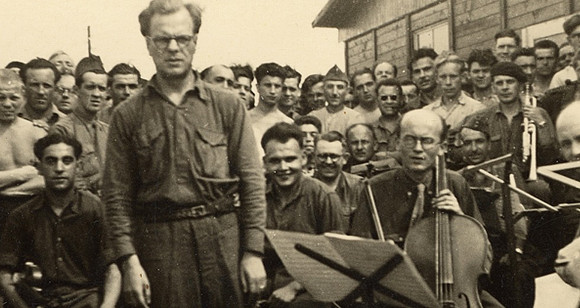
 Last night’s Soundstreams Koerner Hall presentation; Magic Flutes was an interesting experience. Aside from interesting (mostly) contemporary flute pieces it was very much an experiment in different ways of staging a concert. I’m all for breaking down the conventions of Mahlerian solemnity and I think experimentation is great. It’s in the nature of taking risks though that some things don’t quite work.
 Last night Christina Haldane gave her first DMA recital at Walter Hall. The inspiration was a painting by Manet and the programme was almost entirely made up of chansons from the late 19th and early 20th centuries; Offenbach, Charpentier, Duparc, Debussy and Berlioz. The exception was the cycle The Living Spectacle by Erik Ross which closed out the first half. I could have used more variation of mood and style.
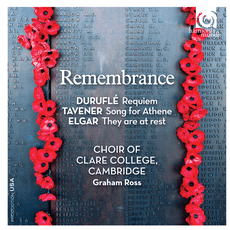 Remembrance is a new CD, on the Harmonia Mundi label, from the Choir of Clare College and their director Graham Ross to be released October 21st in time for poppy season. The main event is a performance of Duruflé’s Requiem given here in the composer’s organ reduction. It’s recorded in Lincoln Cathedral with its great Father Willis organ. It’s a very polished performance with a fair bit of drama. There’s some lovely singing and cello playing from mezzo Jennifer Johnston and cellist Guy Johnston in the Pie Jesu and bass Neal Davies also makes a couple of trenchant contributions. It’s not one of the most performed requiems but definitely worth a listen.
 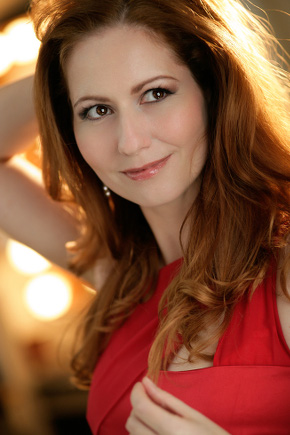 Considering we begin with a holiday weekend it’s a busy week. Tuesday sees Dimitry Ivashchenko and Rachel Andrist in recital in the RBA at lunchtime with a program of Russian song that, inevitably, includes Mussorgsky’s Songs and Dances of Death and works by Rachmaninov, Borodin, and Tchaikovsky. At 7.30pm that evening Christina Haldane is giving a DMA recital in Walter Hall. This isn’t your usual student gig. Christina has covered at Salzburg and the Royal Opera and made main stage appearances in several European countries. Both recitals are free.
 operaramblings