One acters

There a quite a few operas that are too short to make up a full evening’s entertainment. Most of these are one acters but there’s the occasional on that’s not such as Dido and Aeneas.  In any event they pose the problem of what to combine with what.  For example, I’ve seen Gianni Schicchi paired with Zemlinsky’s A Florentine Tragedy, Rachmaninov’s The Miserly Knight and even with Salome as well as with its original partners in Il Trittico.  I suppose there are a few almost canonical combinations like  Duke Bluebeard’s Castle and Erwartung but mostly I think the shorter works get neglected because it is hard to find good combinations that make aesthetic sense and are marketable.  So that’s my question for today; what combination of shorter operas would you like to see at your local opera emporium?

My contribution would be Stravinsky’s Oedipus Rex and Golijov’s Ainadamar.  I’ve never seen either staged and both interest me musically a lot.

Misfortune?

I admit to some surprise that a new work can make it to the stage at Covent Garden and be received with near universally dismal reviews.  I’ve never been involved in creating an opera but I have been involved in any number of large complex projects and I’ve also studied the processes by which projects with a creative component can best be accomplished (I’ve done this for both R&D and advertising). Creating an opera is a project and one would think it would make sense to adopt the same sort of project management principles one would use for bringing a fighter jet to production or developing a piece of software. It’s not like there isn’t a wealth of (really boring) literature on project management. The PMBOK or PRINCE-2 manuals make great bed time reading for insomniacs. Obviously, good project management isn’t enough and I know only too well the pressures that are applied to keep projects going that should have been killed off, especially in the public sector, and I’m prepared to believe that they apply to opera; unwilingness to admit the project was ill conceived, not wanting to be the bad guy, not wanting to take bad news upstairs etc. I’ve seen project teams and their leadership flayed alive by senior management for suggesting a project was doomed (and seen the project continued at many times the estimated cost for a fraction of the benefit). That doesn’t mean one ought not to try.

Continue reading

The booing controversy

Everybody’s a critic nowadays

The London papers seem to be falling over themselves to report booing and shouts of “rubbish” at the opera and classical concerts. Is it such a big deal?  I’m much less bothered about how people express their opinion than when they do.  I find intrusive applause far more annoying than displeasure at the end of a piece.  I know there’s a tradition of applauding individual arias in certain kinds of opera and I can live with it without actually liking it much but applauding scenery is strictly for rubes and applauding the triumphal march in Aida should be a hanging offence, especially if it’s a totally lame version like the Met’s.  Similarly, shouting “rubbish” during the action is inconsiderate to others and should be eschewed as should conversation, rustling sweet papers, coughing and, as experienced at one Met in HD broadcast, fortissimo intestinal eructations.  Shouting “rubbish” at the end is, as far as I am concerned, as legitimate as shouting “brava” though not perhaps to be indulged in lightly.  Certainly it shows more engagement with the performers than the usual band of people scurrying to be the first to the parking lot the second the curtain comes down.  Overt disapproval might even stimulate open debate about some of the more controversial productions though reviving traditions such as breaking the furniture over those one disagrees with might perhaps be too robust for today’s, typically elderly, audiences.

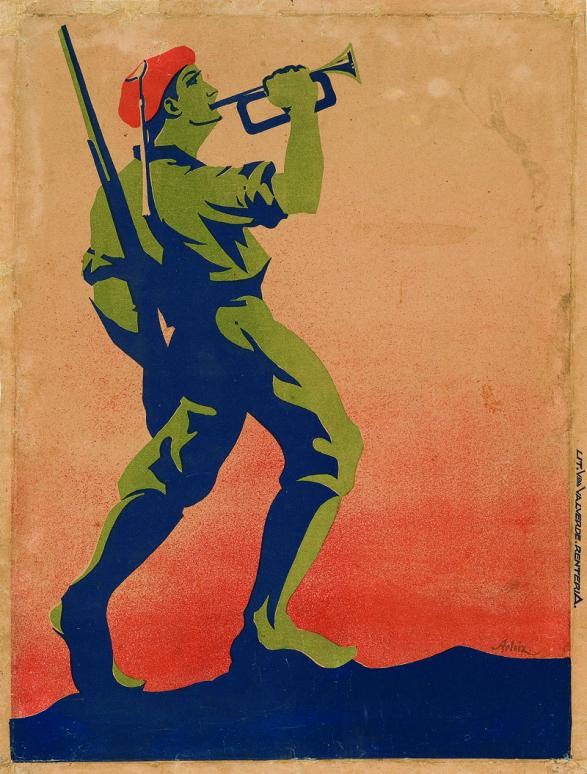
Red beret?

It’s funny how one can see a work many times but miss what may or may not be an important detail. I just watched the first act of Carmen for the umpty-umpth time and heard something the significance of which had never struck me before.  There’s an exchange between Zuniga and José quite early on that goes roughly as follows:

Zuniga: Vous êtes Navarrais?

José: Oui, et un bon Chrétien!

Are we being told that José is a Carlist; for what else could a Navarrese of respectable peasant stock who draws attention to his religion be in such an era?  Is so, what are we to make of it?  Is this an additional deliberate signifier of the gulf between respectable, pious, legitimist José and bohemian, pagan, anarchist Carmen?

Or am I just making a sierra out of a molehill or stating the blindingly obvious?  Whatever I find it odd that I missed that detail on all previous watchings.


On accents in opera

Generally speaking , as far as I can tell, opera is sung as far as possible without a particular class or regional accent.  Each language has a well understood sung form that isn’t exactly like RP speech but is clearly close to it.  I know that there are a few Italian works where a comprimario role takes a Sicilian accent and Baron Ochs in Rosenkavalier is supposed to be comically rural but these are minor exceptions for effect.  Why then the tendency for modern works in English to require exaggerated accents?  And why is it so uneven?  Nobody expects the characters in Peter Grimes or Albert Herring to sing with Suffolk accents but apparently Anna Nicole requires singers to do a really bad fake Texas accent and A Streetcar Named Desire seems to be thought to require a similar treatment.

Does the same thing happen with modern operas in other languages and does anybody have any explanation for why it’s suddenly crept into the English language repertoire?  The only explanation I can offer for Anna Nicole is that it’s part of a whole cultural appropriation/condescension thing that is going on in that work that I find quite intolerable.

In defence of Robert Lepage

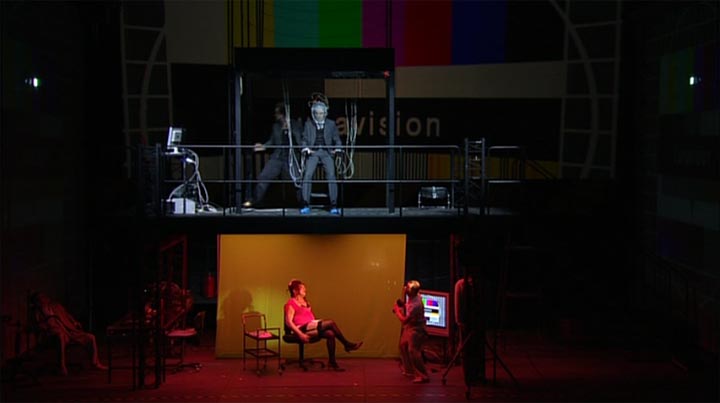
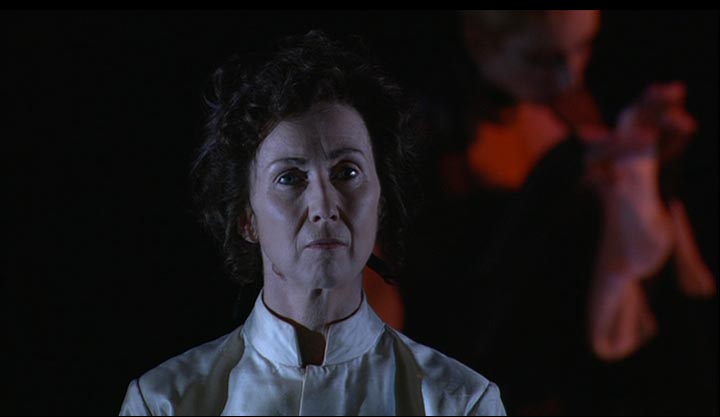
I am getting well pissed off with people taking ill informed shots at Robert Lepage based solely on his Ring cycle at the Metropolitan Opera. For three decades Lepage has been one of the most brilliant minds in the dramatic arts. His oeuvre spans straight theatre, film, circus, opera, multimedia performance art and stuff I don’t even know how to categorize. He acts, he directs, he designs. He also takes risks. In the nature of risk taking, sometimes they don’t come off and, frankly, I don’t think his Ring works. That said I think it shows the height (or depth) of poor taste and ignorance to launch ad hominem attacks on Lepage based on that one production and ignore all the things that have succeeded. The list is long; Elsinore and The Seven Streams of the River Ota would top my list but there have also been award winning opera productions such as Erwartung, Duke Bluebeard’s Castle and The Nightingale and other Short Tales along with a dozen movies, a Cirque du Soleil show that has run for years and an astonishing outdoor multi-media exhibition celebrating the history of Québec. There’s lots more if one cares to look. Even Shakespeare had his off days. Would anybody go on and on and on about how crap Shakespeare was based solely on seeing A Comedy of Errors?

Opera for a new century

As 2011 draws to a close I got to thinking about which, if any, “new” operas might survive infancy (for the survival rate of new operas seems to be roughly comparable to newborns in an 18th century foundlings hospital). My knowledge of new opera isn’t comprehensive and it’s biased to the English speaking world. Is it my imagination or is there a major split in this area between continental Europe and the angloverse? Or is there simply not much new work being produced on the Continent? Anyway here’s a far from complete list of operas that premiered in 2000 or after and my thoughts on their likely longevity.

John Adams Doctor Atomic 2005. Not Adams’ best work in my opinion. The libretto is pretty awful but there are some good orchestral lines and it’s a great subject. It probably has a future because it’s by Adams.

Harrison Birtwistle Minotaur 2008. Early days but the equally good (IMO) Gawain never got any traction. It’s also a pretty uncompromisingly atonal approach to a classical subject in a world where “tabloid opera” seems to be the thing. It’s probably undeservedly doomed though the fact that a really good video recording is available may help it.

Thomas Adès Tempest 2009. Already scheduled for the Met with a starry cast so has good survival chances.

Marc Anthony Turnage Anna Nicole 2011. I hate it but it fits the contemporary Zeitgeist.

Oswaldo Golijov Ainadamar 2003. A brilliant score but I bet it’s a bugger to stage. Probably doomed.

Jake Heggie Dead Man Walking 2000. This is well established in the US and has, crucially, been performed a few times outside the angloverse. Probably a survivor.

Kaija Saariaho L’Amour de Loin 2000. One of only two non English language opera on the list. Seems to have traction in both Europe and North America. Survivor?

Thoughts good people?

Foaming at the mouth

I am developing a pathological hatred of the people who do the video direction for opera DVDs. The sole exception I can think of is François Roussillon. Brian Large, Humphrey Burton, Kriss Rumanis, Gary Halvorson and the rest I could happily roast over a slow fire while poking them with a sharp stick. I do not want to see the tenor’s dental work or the soprano’s tonsils. I certainly don’t want a head shot of someone who isn’t even singing filling the whole screen. I do not watch opera on a 1950s television with a ten inch screen. Who does? FFS let us poor viewers see what is going on on the stage. It’s quite likely that the stage director does all that stuff deliberately(1) and maybe we might be able to understand the production if we could only see the bloody thing. This rant brought to you courtesy of trying to decode David Alden’s Ariodante while looking through the wrong end of the telescope.

This is what I want to see much/most of the time:

With tons going on all around and in the background this isn’t helpful:

And as for this…

Words fail me.

fn1. OK this may not be true of Zeffirelli or similar Met favourites. If the alternative is a furniture catalogue I’ll take the close ups.

Billy Budd vs Don Giovanni

Michael Grandage’s less than brilliant production of Don Giovanni at the Metropolitan Opera produced a really interesting blog post Opera Isn’t Theatre by Zerbinetta over at Likely Impossibilities. Zerb started to explore why successful stage directors might not succeed in opera. It sparked a lively debate in comments which is well worth a read. Having just watched Grandage’s excellent production of Britten’s Billy Budd I had a few further thoughts that I wanted to get out into the blogosphere.

All operas are not created equal. Some operas are clearly conceived as drama and some are really just vehicles for pretty singing. Billy Budd is clearly in the first category. Don Giovanni fits rather ambiguously in this schema. It seems reasonable to assume that a strong drama will be a better vehicle for a director used to the straight stage.

Language matters. I know many opera singers pride themselves on their command of the languages they sing in but there’s being good at a language and there’s being truly fluent. I think it’s hard to be a great actor in one’s second, third or fourth language. For a director who focuses on character development this could be a big issue. In Billy Budd Grandage has an anglophone cast singing in English and I think it shows.

The weight of tradition. There is a tremendous classical acting tradition in Britain (which I think is shared to some extent by the settler colonies, though less by the US). It’s impossible to grow up watching theatre in Britain, still less acting, without being aware of it. It seems to have had a spillover effect on productions of Britten’s operas in Britain. There’s almost a school of acting/singing Britten. It starts with Pears and Harper and Shirley-Quirk but it’s readily recognisable in singer/actors like Ainsley, Ens, Langridge or Oke. This has surely got to be an easier environment for the likes of Grandage than a polyglot cast of varied backgrounds.

Ensemble vs. star casting . The Metropolitan Opera is the epitome of a house that casts international stars and has, essentially, no ensemble. Even covers at the Met rarely get to sing. Far more likely that the house will go for a jump in if someone goes sick. Glyndebourne isn’t a Fest house either but there must be some sense of ensemble in all being stuck together in East Sussex for the summer. I would expect that to impact artistic cohesion. Also, I suspect Glyndebourne is less likely to tolerate the kind of singer who doesn’t learn her lines and thinks she has a better idea of how the work should be done than the director or the conductor.

None of this takes away from the many good thoughts over at Zerb’s place. Lack of rehearsal time, lack of drama training, ego, house/stage size no doubt play a huge role. I thought I’d just throw in a few thoughts based on recent viewing.

My love/hate relationship with Wagner

There’s this part of me that thinks I ought to like Wagner. In some ways I do. The Rhinegold was one of the first operas I saw live when Goodall was conducting at ENO and I loved it. I like most of the Ring and I’m very fond of Der Fliegende Holländer but I also see the essential truth in the two great Wagner witticisms:

Anon to Evelyn Waugh – “What was Crete (i.e. the battle of) like?”
Waugh – “Like German opera; too loud and too long”

and…

Wagner lover – “There are some amazing moments in Wagner”
Wagner skeptic – “And there are some damn dull half hours in between”

This really comes to a head for me with Tristan und Isolde. If ever fifteen minutes of plot were compressed into five hours this is it. Essentially nothing much happens; very slowly; and very loud. I think it’s only ever performed because (a) it’s Wagner and (b) that chord. Five hours is an awful lot of bum numbing to experience one moment of musicological history. Maybe this is why directors try so hard to make it look like something is going on? This surely reached utter desperation point in the Met’s HD broadcast, when I thought I was watching a game of Tetris, though the current fugly Bayreuth production runs it close. I know I’m not the only one who has this problem as witness Julia Spinola’s essay Der Kunst der Langsamkeit. I just lack the ability to put my thoughts into German Higher Bollocks. Or maybe my Imperial wardrobe detector kit is more sensitive than hers.

I’m not giving up on Wagner. I like the music in Lohengrin for example and I’d really like to see the current Bayreuth production. Most operas are improved by rodents in my experience. I don’t know Tannhäuser or Parsifal at all well so there’s some exploring to do there. I think I’m done with Tristan though.