Tcherniakov’s Holländer

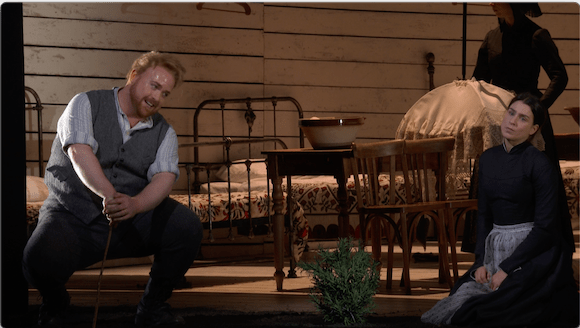
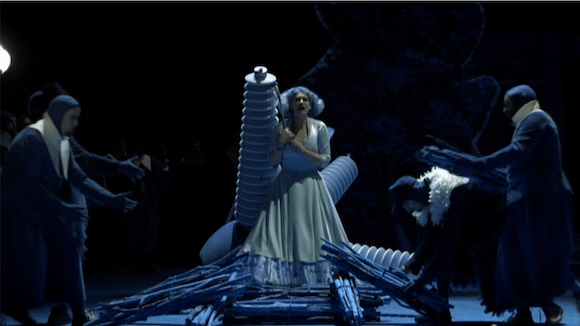
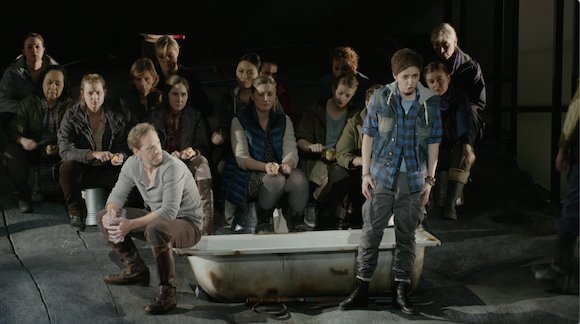
Dmitri Tcherniakov directed Der fliegende Holländer in Bayreuth in 2021 where it was recorded.  It’s no surprise given (a)Tcherniakov and (b)Bayreuth that it’s not a straightforward production.  I’m not sure I have fully unpacked it and there isn’t anything in the disk package to help (just the usual essay telling the reader what he/she/they already know/s).

1.prologue

Continue reading →

Sir John Eliot Gardiner’s Poppea

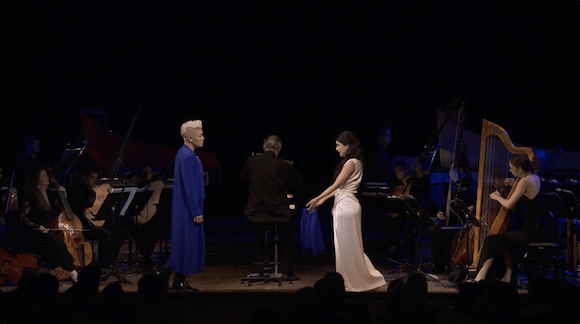
In 2017 Sir John Eliot Gardiner, the English Baroque Soloists, the Monteverdi Choir and a rather distinguished group of specialist baroque singers toured semi-staged versions of the three main Monteverdi operas, which were also recorded for video. Being a bit skeptical about the idea of videoing semi-staged performances I decided to take a look at L’incoronazione di Poppea (because it’s my favourite of the three) before committing to the trio. Bottom line, despite some stylish singing, good acting and excellent playing I can’t really see the point. There are good fully staged versions of all three operas available on video and, for me, especially watching at home, it’s hard for a semi-staged version to fully engage my attention.

1.neropoppea

Continue reading →

Falstaff as farce

Verdi’s Falstaff, of course, is a farce so there’s no reason why a director shouldn’t treat it as one but all three of the other productions I’ve seen in the last few years have transposed it to the 1950s and put a spin on it.  Sven-Eric Bechtolf, in his production for the 2021 Maggio Musicale Fiorentino, just doesn’t do that.  It’s a 1590s (ish) setting and it’s played very broad.  There are big costumes, big gestures, entrances and exits and characters “hidden in plain view”.  It could be Dario Fo or Brian Rix.

1.theinn

Continue reading →

600

It’s taken from late October 2018 to move from 500 video recordings in the archive to 600.  So that’s 2-3 recordings per month which sounds about right.  It’s slower than in the past for two reasons.  There just isn’t as much historic material I haven’t already seen and the rate of new releases, unsurprisingly, slowed down quite a bit during the pandemic.

blurayplayer

Continue reading →

Make Brabant Great Again

Yuval Sharon’s Lohengrin in 2018 at the Bayreuth Festival was the first production there by an American director and, perhaps unsurprisingly, there are echoes of contemporary events in the US in the show.  Specifically Sharon’s Brabant is a conformist theocracy in which society has regressed technologically.  Some of the action takes place in and around a prominently placed disused electrical installation of some kind.  The Brabanters are cowardly and subservient, initially to Telramund and then, equally, to Lohengrin.  The advent of a charismatic leader. does not necessarily equate to liberation or full citizenship.  Sharon also claims in his director’s notes that the real dissenter is Ortrud and that it is her actions that liberate Elsa and Gottfried.  Whether the staging supports this is, I think, questionable.

1.elsa_pyre

Continue reading →

The Passenger revisited

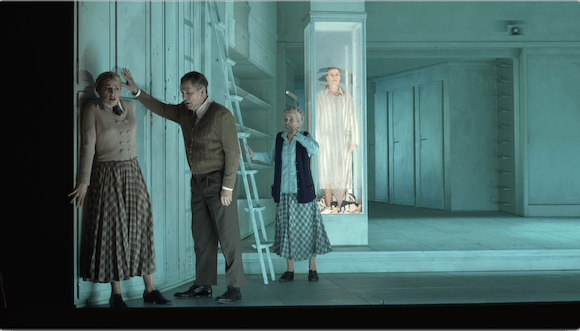
Something over three years ago I wrote a review of the video of the 2010 Bregenz Festival production of Mieczyslaw Weinberg’s The Passenger. There’s now been a second fully staged production, at Graz, recorded in 2021 (without an audience i think but otherwise no obvious COVID concessions). The Bregenz review contains a whole lot of information on the performance history of the piece as well as a plot summary so I’ll not repeat that. Having a quick look at it before reading on will likely make the rest of this post more comprehensible.

1.recognition

Continue reading →

La Wally

Catalani’s La Wally is not much performed outside Italy so I was interested to get my hands on a recording made at the Theater an der Wien in 2021.  It’s about what one might expect from an Italian opera of the 1890s; an everyday story of country folk plus murder.

Continue reading →

Ambitious Parsifal

Wagner’s Parsifal both attracts and repels.  It has gorgeous music but a problematic plot that, on the surface, is a weird mash up of Christian symbolism, medieval romance and (more than likely) anti-Semitism.  With reference to the latter it’s no great surprise that an Israeli conductor taking on the work would want to take an approach that deals with that aspect head on.  That’s what Omer Meir Wellber does, with the willing collaboration of director Graham Vick in a production staged and recorded at the Teatro Massimo in Palermo in 2020.

1.amfortasgurnemanzkundry

Continue reading →

Misfortunes of War

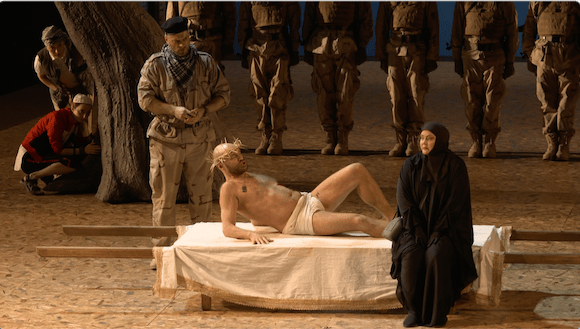
The basic premise of Kasper Holten’s production of Mozart’s Idomeneo, recorded at the Vienna State Opera in 2019, seems to be that Idomeneo and Elettra are so damaged by their experiences that they must yield limelight and power to Idamante and Ilia.  It’s an interesting idea though one wonders why Ilia is considered to be less traumatized given that her parents and siblings have been slaughtered and her home razed to the ground.  What’s really weird though is that Holten seems to show no sympathy for Idomeneo or Elettra.  Not only are they haunted throughout by particularly grizzly corpses but at the end Elettra goes down to Hades; a trench in the stage inhabited by said grizzly corpses, but she’s followed by Idomeneo.  He is visibly disintegrating mentally in Act 3 and by the time of his resignation speech the crowd is actually laughing at him then, as he goes to embrace Idamante he is intercepted by two men who hustle him off to the grizzly trench.  I’m not sure what Holten is getting at here but, for me, it undermines the sense of resolution that the music implies, as well as its essential humanity.

1.trojans

Continue reading →

Intense Jenůfa

Janáček’s Jenůfa was staged and recorded at the Staatsoper unter den Linden in 2021 under COVID conditions.  There’s no audience and the chorus members, in black, are distributed all around the auditorium.  Even without a live audience it’s extremely dramatic and intense.

1.set

Continue reading →