

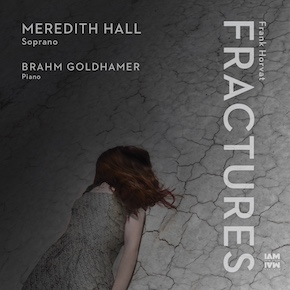
 Frank Horvat’s Fractures is a very interesting new CD. It sets eleven texts for soprano and piano on the themes of fracking, environmental degradation and climate change. It’s a tough listen; not because it’s preachy or hard on the ear but rather because there is a degree of irony in the texts, the music and the performance that somehow makes the situations described even more horrible.
There’s a Faustian quality to the texts in the sense that we all (or at least most of us) go on doing the things we do even though we know, long term, it’s indefensible and we, or our children, will pay for it. And that’s true whether we drive an SUV or work for an oil company or lease our farm to a fracking company. Or for that matter fail to address fossil fuel development for fear of losing votes and tax revenues.
 The latest Palazetto Bru Zane’s retrieval from the valley of lost things is Louise Bertin’s Fausto of 1831. It’s unusual in two respects. First of all it’s written by a woman (and quite a young one – she was 26) and secondly it’s an Italian language opera by a French composer written for the Théâtre-Italien in Paris; a theatre which produced mainly operas by Mozart and Rossini (its long time artistic director) with a few from other contemporary Italian composers such as Bellini and Donizetti; some composed for Paris, some imports.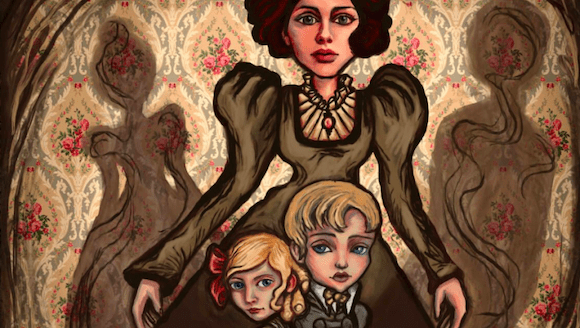
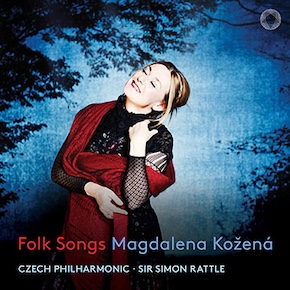 The new CD from husband and wife team Magdalena Kožená and Sir Simon Rattle consists of four sets of folk songs arranged for mezzo-soprano and orchestra; all of them pretty well known. There are the Five Hungarian Folk Songs of Bartok, Berio’s Folk Songs (all eleven of them), Ravel’s Cinq mélodies populaires grecques and Montsalvatge’s Cinco canciones negras.
 Tuesday’s lunchtime concert in the RBA consisted of works by Cecilia Livingston chosen and performed by members of the COC’s Ensemble Studio. It was a fairly varied programme considering it was all works by one composer.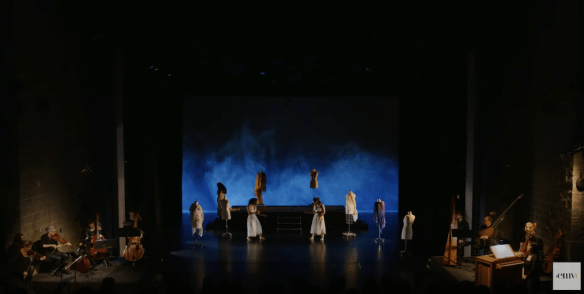

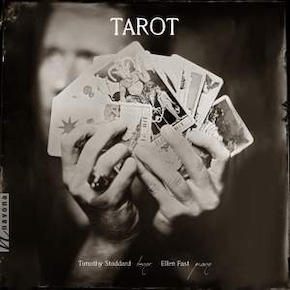 Tarot is a new recital CD from tenor Timothy Stoddard and pianist Ellen Fast featuring recent works by American composers. There are four song cycles on the record. The first, Mortally Wounded, features settings by Mark Markowski of eight poems by Lorca in English translation. These are interesting and treat Lorca’s quintessentially Spanish themes sympathetically. The music is basically tonal but complex with flamenco inflected rhythms. It’s beautifully sung and played with diction so good that the absence of texts and translations is not worrisome.
 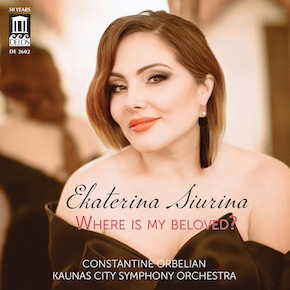 I first came across Russian soprano Ekaterina Siurina as Zerlina in the 2008 video recording of Mozart’s Don Giovanni from Salzburg. She had had plenty of success already in coloratura roles such as Gilda and Adina and was, I thought, the best Zerlina I had come across. Fast forward to 2015 and she sang a very fine Violetta at the Four Seasons Centre opposite her husband Charles Castronovo. A few years on and it’s not terribly surprising that she’s starting to venture into slightly heavier lyric-dramatic territory. This is reflected in her recent album Where is My Beloved? recorded in 2022 with the Kaunas Symphony Orchestra conducted by Constantin Orbelian.
 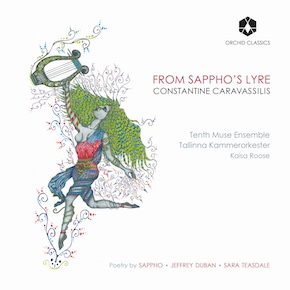 From Sappho’s Lyre is a double CD of music by Constantine Caravassilis. There are five cycles for voice and various combinations of instruments, all, as the album title suggests, related to Sappho of Lesbos. The first is a setting of her Hymn to Aphrodite; the longest, extant work. It’s intended to be performed as a “spectacle” with dance, costumes etc. It’s scored for soprano (Lana Guberman-Chriss), mezzo soprano (Carla Jablonski), countertenor (Daniel Moody), narrator, chorus Jeffrey Duban), eight piece chamber ensemble (Tenth Muse Ensemble) and recorded sounds and it’s conducted by the composer. It’s sung and narrated in a mixture of Ancient Greek and English and it’s richly orchestrated. It’s complex but mostly tuneful music with quite dense textures and lots of percussive effects. It’s really a very distinct musical voice as becomes clearer as one progresses through the pieces on the records.
  operaramblings