

Against the Grain Theatre’s latest production, Ayre, continues their run of innovative, site specific shows. This time it was a presentation of four works by Argentinian Jewish composer Osvaldo Golijov at the Ismaili Centre; part of the Aga Khan complex on Wynford Drive. The “appetisers” were three short works presented in three of the public spaces of the Centre. Yiddishbbuk, for string quartet (Jennifer Murphy, Barry Shiffman, Laila Zakzook, Drew Comstock), was inspired by apocryphal psalms and is a fractured piece employing a lot of extended techniques to create a three movement work “in the mode of Babylonic Lamentations”. Lua Descolorida, with Adanya Dunn as soprano soloist, sets a 19th century text in Gallego. It’s a folksy, Arab inflected piece over a kind of string “ground” with pizzicato cello. Short but rather beautiful. For Tenebrae the quartet was joined by clarinetist Brad Cherwin and soprano Ellen McAteer. It’s a beautiful piece with a melismatic vocal line culminating with multiple repeats of the single word “Jerusalem”.
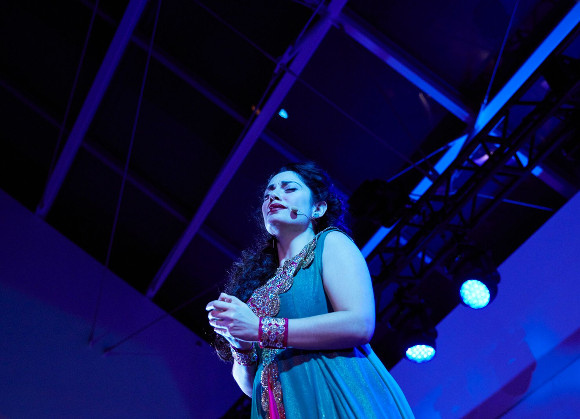
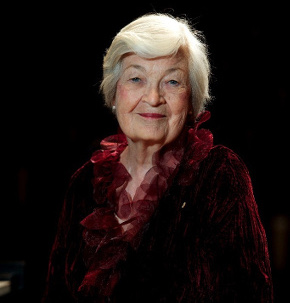 Mary Morrison, one of the true greats of Canadian opera, turns ninety today. In her day she was a most distinguished soprano soloist who was also an advocate for 20th century music; especially Canadian. She performed in at least a score of new Canadian works, few of which, sadly, made it to record but you can catch her in the
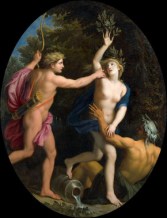 Here are details on some forthcoming new and/or amended shows. November 17th – 19th Toronto Masque Theatre are performing a double bill of Handel’s Apollo and Daphne featuring Jacqueline Woodley & Geoffrey Sirett performing alongside Montreal dancer Stéphaie Brochard. Larry Beckwith will lead a period instrument orchestra. It’s coupled with Richard Strauss’ Enoch Arden for spoken voice and piano. It will be performed by actor Frank Cox-O’Connell & pianist Angela Park. That one is at the Enoch Turner Schoolhouse at 8pm. Tickets and details

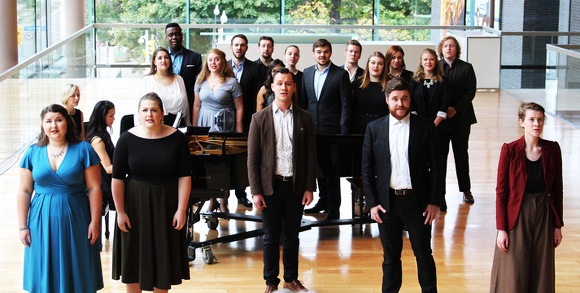
 Saturday at 8pm the Aga Khan Museum there’s a concert fusing western classical and Arabic maqam music. The featured artists are opera singer (Syria’s first) Lubana Al Quntar and composer and oud virtuoso Issam Rafea. I do feel this is the sort of thing we need more of in Toronto. There have been some interesting fusions of western and Chinese classical such as The Legend of Da Ji. Let’s see what this one can offer. You may even be able to see the show for free. The organisers have offered a lucky Operaramblings reader a pair of tickets. If you would like to enter the draw, comment here with contact details. We’ll do the draw at 5pm on Thursday. If you prefer to buy a ticket, details are
 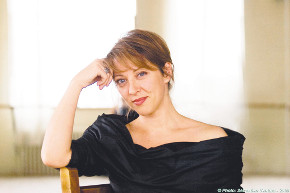 The first concert in this season’s Mazzoleni Songmasters series featured sopranos Nathalie Paulin and Monica Whicher with pianists Peter Tiefenbach and Robert Kortgaard in an eclectic program of English and fFrench songs on the theme of coming and going. First up was a set of Purcell songs which is always going to score brownie points with me. I’ve never heard Sound the Trumpet or Be Welcome, Then, Great Sir sung by female voices so that was interesting. The duet was really nice and Nathalie sang quite beautifully in the welcome ode. Monica followed up with fine versions of Dear Pretty Youth and An Evening Hymn.
