

Last night the COC began its run of Götterdämmerung, the last and longest opera in Wagner’s epic tetralogy at The Four Seasons Centre. It’s very different from Die Walküre and Siegfried. The visual elements that tied them together; tottering Valhalla, disintegrating world ash, gantries, dancers, heaps of corpses are mostly gone. In Tim Albery’s production the visuals are spare almost to abstraction. The Gibichung Hall is a CEO suite with computer monitors and red couches, both Brünnhilde’s rock and the Rhinemaidens’ hang out look improvised, almost like squatters’ camps. Costuming, apart from an occasional flashback, as in Waltraute’s scene, is severely modern business; grey suits, black dresses. Only Siegfried himself in tee shirt and leather jacket stands out from the corporate crowd. Dancing flames are replaced by red lights. Everything that can be understated is and the world ends not with an overflowing Rhine and collapsing Valhalla but a stately pas de quatre between Brünnhilde and the Rhinemaidens.
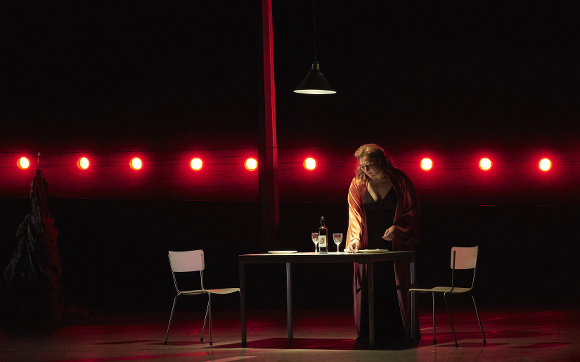
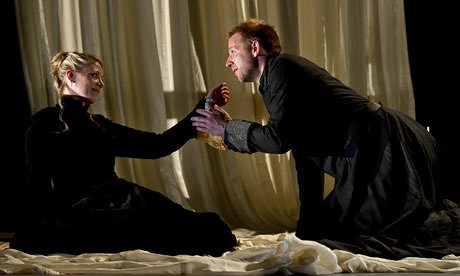
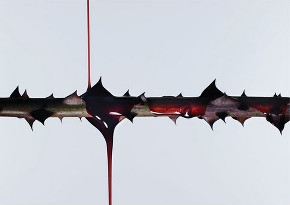 The Killing Flower is an opera by Salvatore Sciarrino. Both Italian and English versions exist and it was the latter that was given, in semistaged form, at Walter Hall as part of the Toronto New Music Festival last night. It’s a very distinctive work and not easy to form a full appreciation of on a single hearing. The plot is straightforward enough. There’s a duke and duchess. She falls in love with a guest. They are betrayed by a servant. He kills the guest and then her. But all this happens in a highly abstracted way (made even more abstract by not being fully staged). As the composer puts it:
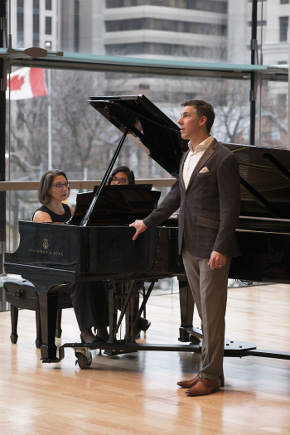 Phillip Addis, currently one of two Papagenos at the COC, together with pianist Emily Hamper, gave yesterday’s lunchtime recital in the RBA. First up were Ravel’s settings of Jules Rénard’s Histoires Naturelles. These are quirky, fun pieces with sometimes quite complex, impressionistic piano lines. They seemed well suited to Addis’ full, characterful baritone and his obvious zest for comedy. The text twists and turns both linguistically and as narrative calling for acute timing in places, which Addis delivered.
 Renée Fleming’s new CD Distant Light is quite unusual for a “diva disc”. It’s definitely not “Opera’s Greatest Hits” territory. Rather, it’s in three quite contrasting parts though all are linked by the idea of “emotional landscapes”. It starts off with Samuel Barber’s Knoxville: Summer of 1915, follows it with settings of Mark Strand poems by Anders Hillborg and finishes up with arrangements of Björk songs. She’s accompanied throughout by the Royal Stockholm Philharmonic Orchestra with Sakari Oramo conducting.
 Hot on the heels of the RCM, the Toronto Symphony has announced its 2017/18 season, whih will be Peter Oundjian’s last as Music Director. There’s lots of sesquicentennial stuff of course but here’s a summary of the interesting vocal stuff (rock and roll and other children’s music omitted).
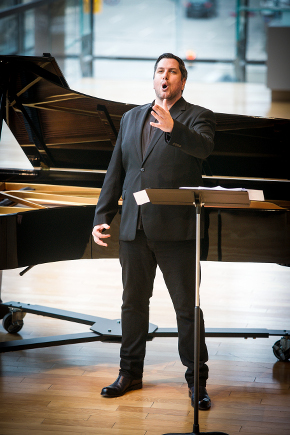 Croatian bass Goran Jurić is currently making his North American debut as Sarastro in the COC’s Magic Flute. Today he gave a lunchtime recital with Anne Larlee in the RBA. It was an all Russian programme; Tchaikovsky, Rachmaninov and Sviridov. I don’t want to do a blow by blow review because I don’t know the rep well enough and it seems a bit pointless. Instead let’s talk about Jurić as an artist, as shown by his performance here (and not surprisingly as Sarastro). He’s a genuine bass, no messing. The low notes are all there and the timbre is rich and dark when he wants it to be. But he’s also extremely lyrical. He can lighten up without ever stopping sounding like a bass. It’s a most pleasant combination. He’s also a terrific storyteller. This seems like an odd thing to say about a recital where not a word was spoken and all the songs were in a language I scarcely understand at all, yet I felt he was communicating the essence of the text with great clarity as a good lieder singer must. Anne was great as an accompanist too. There was quite a lot of range in the piano parts from quite delicate and playful in some of the Sviridov to cranking the pedals up to 11 in some of the Rachmaninov. A very good way to spend one’s lunch break.
 operaramblings