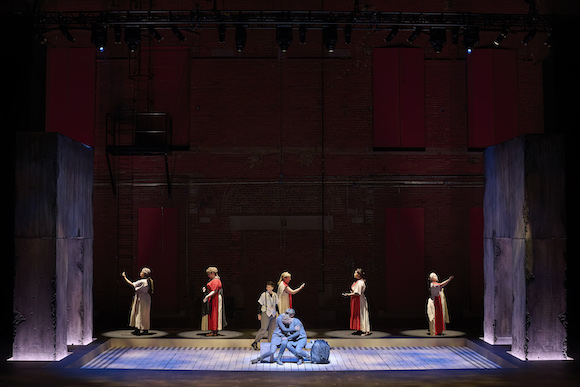
Il cappello di paglia di Firenze is a farce by Nino Rota, probably better known as a composer of film music particularly associated with Fellini. It’s playing right now at UoT Opera in a production directed by Jennifer Tarver. It’s an ambitious show. There’s a clever two level set, designed by Michelle Tracey,; indoors on an upper level and outdoors at stage level, and clearly a lot of thought and work has gone into both sets and costumes. The direction and choreography (Anna Theodosakis) is involved and makes use of the full space of the MacMillan Theatre with comings and goings all over the place energetically executed by quite a large cast. Continue reading
Tag Archives: tarver
Pomegranate at the COC
Almost exactly four years after Kye Marshall and Amanda Hale’s Pomegranate played at Buddies in Bad Times in a production by Michael Mori it reappeared at the COC in expanded form in a production by Jennifer Tarver. The basic plot hasn’t changed much so I’m not going to repeat what I wrote about that in 2019. The other changes are, though, quite extensive and I’m not convinced they are improvements.
L’occasione fa il ladro
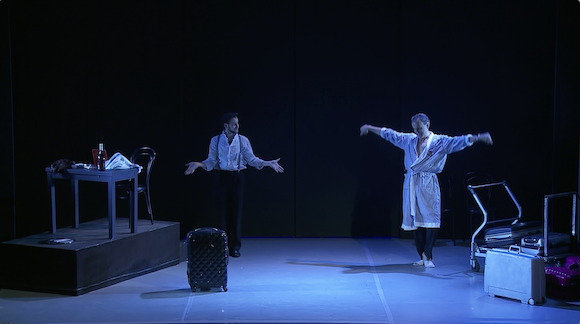
L’occasione fa il ladro is a rather typical early Rossini piece (he was only nineteen when he wrote it). The plot is extremely silly but it’s quite short (90 minutes) and the music is tuneful and well crafted. To cut a short story even shorter, Count Alberto is off to collect his bride, Berenice, who he has never seen. On the way his luggage gets mixed up with that of the chancer Don Parmenione, who decides t take the opportunity to grab the bride for himself. Meanwhile Berenice has swapped places with her maid Ernestina so she can check Alberto out at a safe distance. Inevitably confusion ensues but it all ends happily with Alberto paired off with Berenice and Parmenio with Ernestina, who, of course, is not really a maid at all.
Lucio Silla moda grunge
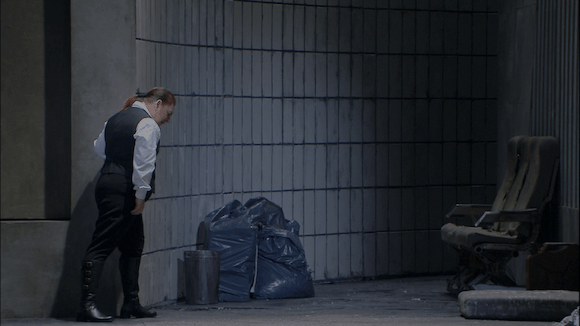
Claus Guth has a way with Mozart. At his best; with his Salzburg productions of the da Ponte operas for example, he’s superb while I was unconvinced by his Glyndebourne Clemenza, despite its ambition. I was really keen to see what he would do with an opera like Lucio Silla which, despite some lovely music, is formulaic and potentially very boring.

A feast of a Belshazzar
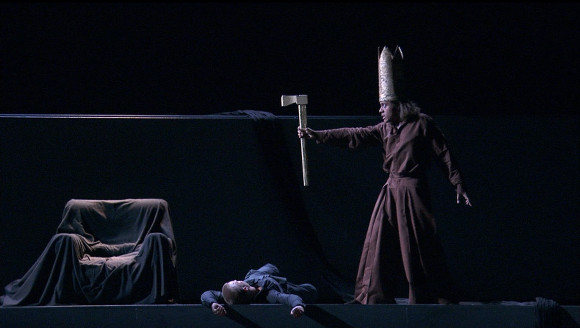
Handel’s Belshazzar, written as an oratorio, was staged at the Aix-en-Provence festival in 2008. It works really well as a stage work. The plot is straightforward but dramatic. Impious Babylonian king Belshazzar is being besieged by the virtuous Cyrus of Persia. Babylon is impregnable but a combination of Babylonian impiety and divine intervention on behalf of Cyrus(*) leads to Cyrus’ capture of the city, the death of Belshazzar and, almost incidentally, the liberation of the Jews.
Il Viaggio a Eurovision
Rossini’s Il Viaggio a Reims is a curious work. It was written as part of the celebrations for the coronation of Charles X of France, a leading contender in a relatively large field for the title of “most utterly useless king of France”. It doesn’t really have a plot and, in a sense, is a three hour riff on “An Englishman, a Frenchman and a German go into a bar”. It also has a huge cast; twenty solo roles of which ten or twelve are quite substantial and require no little virtuosity. It’s small wonder that it’s not seen all that often.