Back to work

zelenkaThings are starting to pick up after the Christmas lull.  Here’s my pick of the week in Toronto for w/c 10th January.

Today at 3.30pm The Talisker Players have a concert at Trinity St. Paul’s called High Standards.  It’s classic Broadway (Sondheim, Gershwin, Kern etc) and features soloists Virginia Hatfield and James Levesque.  (Also Tuesday at 8pm).

Wednesday is the COC Season Launch at the Four Season’s Centre at 6.30pm.  I think it’s subscribers and invitees only.  Speculation on what we might hear is here (me) and here (Dylan Hayden).

Then on Saturday from 1pm to 6pm Tafelmusik have a singing competition to select soloists for a future performance of Zelenka’s Missa omnium sanctorum.  Two gals and seven guys compete.  It’s free and , of course, it’s at Trinity St. Paul’s.
Get your Messiah here

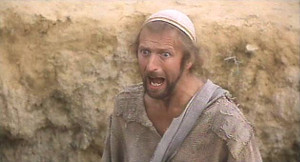
life-of-brian-movieAs Brian Cohen discovered picking a Messiah is a tricky business.  So is picking a Messiah.  As usual the winter solstice season in Toronto offers multiple options.  The nearest thing to the John Barbirolli approach is the TSO at Roy Thomson Hall.  This is your big, grand Messiah with famous soloists, modern instruments and a big chorus.  This year, besides the perennial Toronto Mendelssohn Choir, there are soloists Erin Wall, Liz DeShong, Andrew Staples and John Relyea and, best of all, Andrew Davis conducts.  This one is on December 15th, 16th, 18th and 19th at 8pm with a 3pm matinee on the 20th.

Continue reading

Opera Atelier at 30

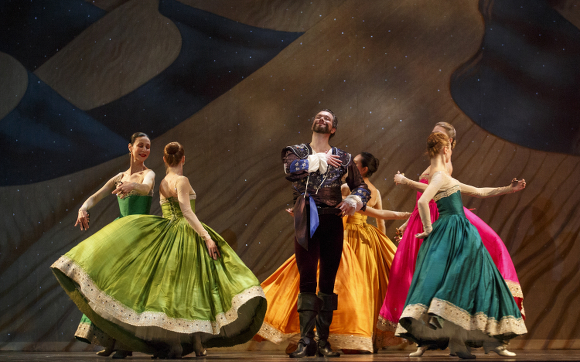
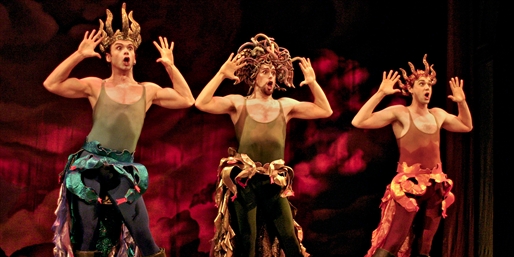
Opera Atelier opened their 30th season last night with Lully’s Armide.  It’s hard to think of a work that better encapsulates what Opera Atelier is and has always aspired to be.  It’s French, it’s 17th century and it’s heavily dependent on ballet, and ballet of an aesthetic that pretty much defines Opera Atelier.  The whole Opera Atelier aesthetic package is there in spades.  Bare chested male dancers in tights that leave little to the imagination, heaving bosoms, ladies twirling prettily in full skirts, castanets and finger cymbals, chorus singing off stage, camp “baroque” acting, tight buttocked homoeroticism, singers cast as much for eye candy value as vocals, a tendency to play for laughs,Tafelmusik.  To be fair, there were a few innovations.  I think I heard a more “realistic” vocal style.  The singers were prepared to make ugly sounds when the emotional context demanded it, rather than an endless flow of prettiness.  The homoeroticism got a BDSM twist in Act 3.  Still, this was very much “by the book” Opera Atelier and if that’s your bag you’ll love it.

151020_53981 Continue reading

The Human Passions

RodolfoRichter-media-room-thumbnailTafelmusik’s opening concert of the season, The Human Passions, was structured around the idea that baroque composers use the soloist in a piece; instrumentalist or vocalist, to explore an emotion and that, in the baroque world, from this point of view, the human voice is just another instrument to be explored/exploited.  At least I think that’s more or less what Rodolfo Richter said in his introduction.

Continue reading

This week

MLebel Color Portrait1I think it’s about time I started doing a weekly preview of upcoming Toronto events.  I’m going to try and make this in a regular slot, probably Sunday, so this is a bit late.  The main event this week is the opening of Tafelmusik’s season with a concert featuring mezzo Mireille Lebel.  It’s a pretty mixed line up.  Lebel will perform arias from Vivaldi’s Il Farnace, and Handel’s Alcina, Ariodante, and Rinaldo. Dominic Teresi performs Vivaldi’s Bassoon Concerto in F Major, RV 485, and Rodolfo Richter performs his own violin transcription of Bach’s Harpsichord Concerto in D Minor, BWV 1052.  The opening bash is tomorrow night at 7pm with repeats at 8pm on Friday and Saturday and a matinée on Sunday.  Trinity St. Paul’s of course.

Continue reading

Opera Atelier reverts to style

Opera Atelier’s spring production; Gluck’s Orphée et Eurydyce, opened last night under most unspringlike conditions.  Much had been made in the run up to the opening of the use of Berlioz’ 1859 performing edition, representing Tafelmusik’s deepest push into the 19th century and I think many of us were wondering how far this somewhat different sensibility would be reflected in the staging.  In the event it was a non event.  Connoisseurs of 19th century brass instruments might just have been able to hear a difference between the cornets à piston used in place of the natural instruments but nobody I talked to could.  The staging too was a remount of a previous production in classic Opera Atelier style though some of the dance numbers did feature point shoes and a more athletic style; notably the pas de deux in the closing ballet which was surely the terpsichorial highlight of the evening.

Mireille Lebel (Orpheus), Peggy Kriha Dye (Eurydice) and Meghan Lindsay (Amour). Photo by Bruce Zinger.

Mireille Lebel (Orpheus), Peggy Kriha Dye (Eurydice) and Meghan Lindsay (Amour). Photo by Bruce Zinger.

Continue reading

Opera Atelier announces 2015/16 season

Opera Atelier has announced its plans for the 2015/16 season.  As seems to have become the norm, the Toronto season will feature one new (to Toronto anyway) production and one remount.  The new piece will be Mozart’s little seen Lucio Silla which played at last year’s Salzburg Festival( with a considerably starrier cast) and which is headed for La Scala in a few weeks time.  The title role will be sung by Kresimir Spicer, alongside Inga Kalna (Cinna), Mireille Asselin (Celia), Peggy Kriha Dye (Cecillio) and Meghan Lindsay (Giunia).  David Fallis and Tafelmusik will be in the pit.  There will be six performances as follows; April 7th, 9th, 10th (3:00pm), 12th, 15th, and 16th (4:30pm), 2016 (start times 7:30 pm except where noted).  FWIW here’s a review of the Salzburg production.

lucio_silla.jpg.size.xxlarge.promo

Continue reading

Opera Atelier projects a new approach

141021-49266

Artists of Atelier Ballet with image of Meghan Lindsay as Alcina. Photo by Bruce Zinger.

Opera Atelier’s first real venture into Handel is accompanied by some significant shifts in aesthetic coupled with some slightly puzzling throwbacks.  The work chosen is Alcina.  It’s not Handel’s best known (or, indeed, best) but it’s a perfectly serviceable example of Handel’s Italian works for the London stage.  The plot, ultimately from Ariosto’s Orlando Furioso, concerns the sorceress Alcina who has an illusory kingdom made up of the souls of men she has ensnared.  Her most recent conquest is the knight Ruggiero.  His betrother, Bradamante, disguised as her brother, Ricciardo, shows up with Ruggiero’s former tutor, Melisso.  Melisso has a ring which shows things as they are, shorn of illusion.  Eventually they use this to return Ruggiero to his duty and Alcina’s kingdom goes up in smoke.  Along the way there’s also a sub-plot involving Alcina’s sister, Morgana, who falls in love with Ricciardo to the dismay of her lover Oronte.  In the original there’s also a boy looking for his father and a lion but they got cut in Marshalll Pynkoski’s version.  In fact there’s probably close to an hour in total cut from Handel’s score.

Continue reading

Opera Atelier does it again

I had planned on giving Opera Atelier’s production of Lully’s Persée a miss but early reviews were positive and, more importantly for me, suggested there was something new and a bit different about the piece this time around.  This production has been around since 2000 and was recorded for DVD four years later so I knew pretty much what to expect and to be honest that’s what we got last night.  If there were changes, they were very minor.  If anything it’s got even camper and I do wonder whether OA is in danger of becoming a sort of parody of itself.  And it’s still three hours of OA doing Lully and if that’s your thing you will not be disappointed.  If you are expecting anything else you won’t get it.

gorgons Continue reading

Rival Queens

Isabel-bayrakdarianRival Queens is a collaboration between Tafelmusik and Isabel Bayrakdarian showcasing music written for Faustina Bordoni and Francesca Cuzzoni; star divas of the 18th century who fought out a bitter rivalry on stage in London in 1726-28.  The great composers of the sage, most notably Handel, all composed for them and wrote works that brought out their respective, and quite contrasted, strengths.

In the first half of the program Bayrakdarian focused on works for Bordoni.  There were arias from Handel’s Alessandro (one of the works both divas performed in), Bononcini’s Astianatte and Hasse’s Cajo Fabricio.  These are pieces requiring extremely secure technique.  They lie fairly low in the soprano range (maybe modern mezzo territory) but have long, long, intricate coloratura runs which Bayrakdarian navigated with apparent ease.  The arias were rounded out with orchestral pieces by Handel and Zelenka.

Continue reading