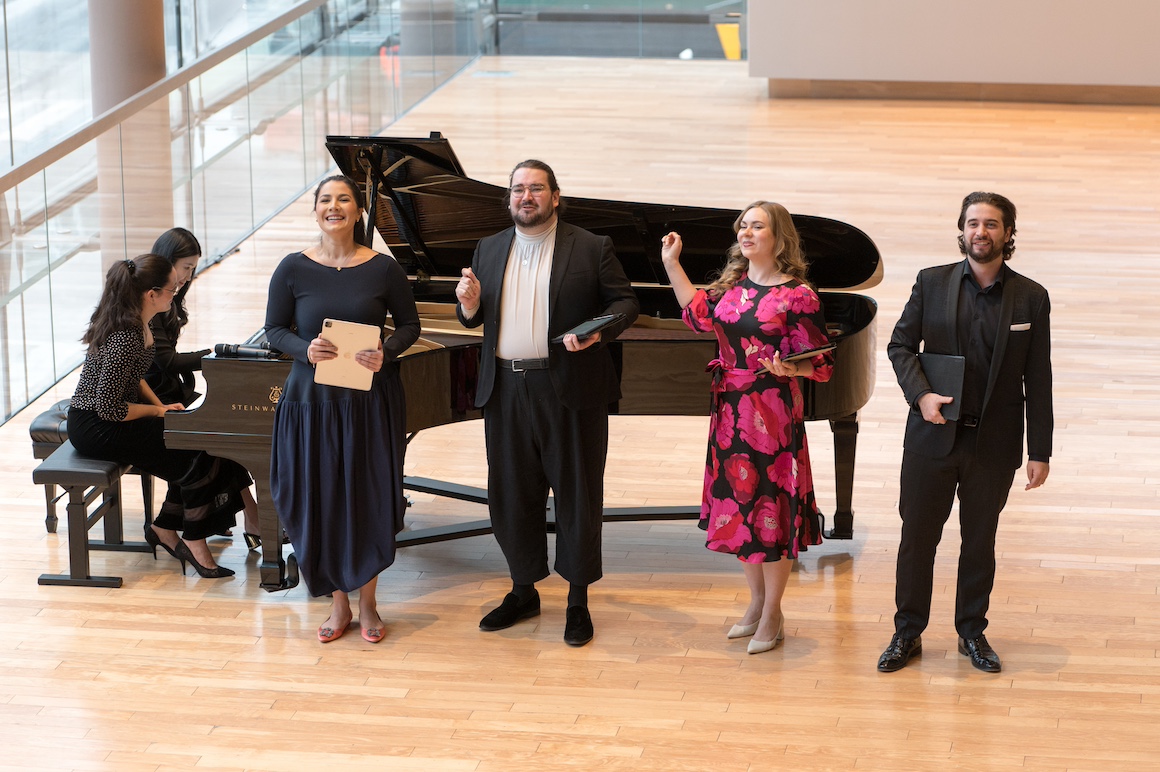
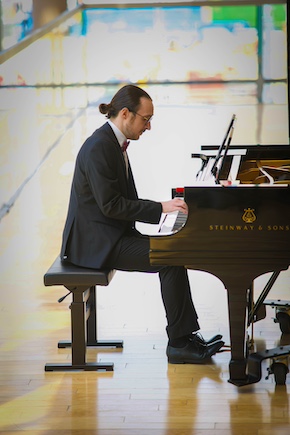
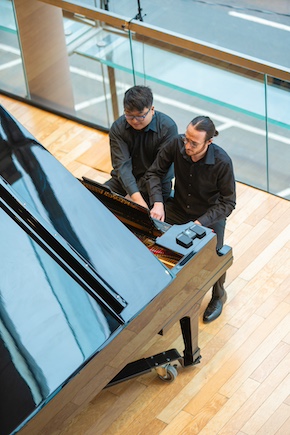
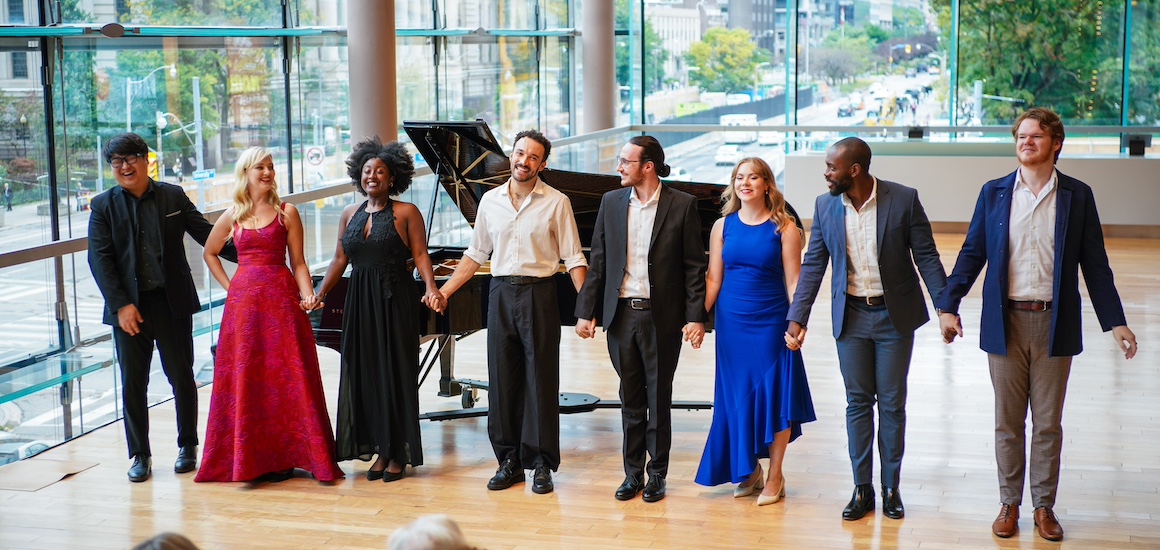
The free concert series in the RBA kicked off on Wednesday with, as usual, a performance by the artists of the COC’s Ensemble Studio. Owing to illness only five singers performed and only one of those, Emily Rocha, was a returnee. The other four singers and both pianists were newcomers. It was short but enjoyable.
Tag Archives: rocha
More farewells
The first of this year’s Les Adieux concerts for departing members of the Ensemble Studio took place Tuesday lunchtime in the RBA. It was supposed to feature Brian Cho, Mattia Senesi, Korin Thomas-Smith and Karoline Podolak but Karoline was indisposed so Emily Rocha (not leaving) jumped in at the last minute.
The rearranged programme worked pretty well with maybe a bit more opportunity for the pianists. Sio, Mattia played the Intermezzo from Brahms’ Op 118. No. 2, which was very nicely done and Brian closed things out with just the piano part from Schumann’s Widmung which works surprisingly well, at least if one is familiar with the song. Continue reading
Homage to Shostakovich
Dmitri Shostakovich died on 9th August 1975; the day after my 18th birthday and I remember the feeling of sadness and hurt I felt when I heard the news. The 50th anniversary is being celebrated by a fair number of concerts featuring the great man’s works including one given my members of the COC Ensemble Studio in the RBA on Thursday.
The material featured was comparatively unknown even by the standards of Shostakovich songs which are, in general, much less well known than his symphonic and chamber works. Matters started playfully enough with a four hands arrangement of Waltz No.2 played with appropriate whimsy by Brian Cho and Mattia Senesi It was followed by the first of two sets by Duncan Stenhouse; two of the songs from Four Romances on Poems by Pushkin, Op.46. Using text by Pushkin allowed the composer to express sentiments about authority that would otherwise have been very risky and these pieces are sombre. They were very solidly sung with some impressive floaty high notes, variation of colour and fine work by Senesi. Shostakovich rarely lets one forget he started out as a pianist! Continue reading
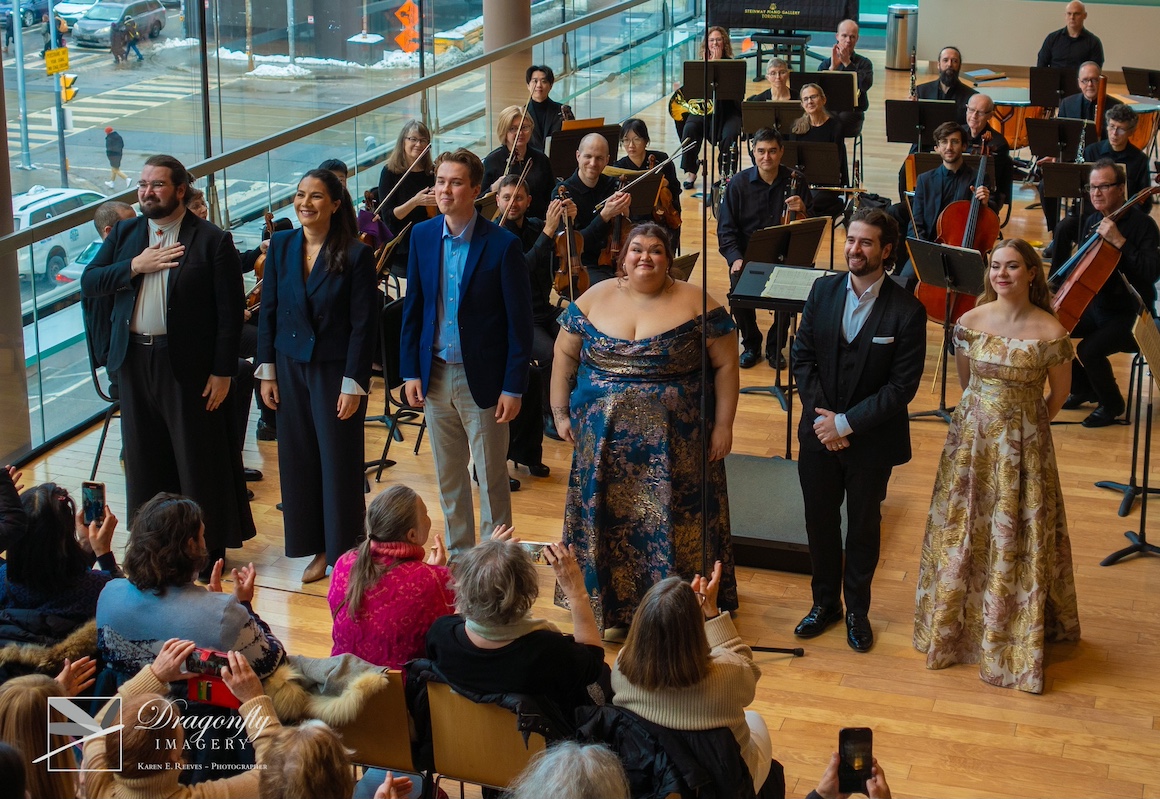
The Christina and Louis Quilico Awards – 2025 edition
Tuesday evening in the RBA members of the COC Ensemble Studio competed for the biannual Christina and Louis Quilico Awards. These days every time I attend a singing competition, which I have been doing much less of, I ask myself why. There are really three reasons:
- The music to faffing about ratio is pretty low,
- If one knows the contestants one has a pretty good idea what they are going to sing and one has probably heard it before,
- The judges give no reasons for their decisions which are as often as not inscrutable.
The Ensemble Studio kicks off a new season
Wednesday lunchtime saw the members of the COC’s Ensemble Studio kick of the free concert series season in the RBA. It was good. Pianists Brian Cho and Mattia Senesi started off in fine style with a four hands version of the overture to The Barber of Seville and then it was on to the singing.

10th Annual Centre Stage Competition
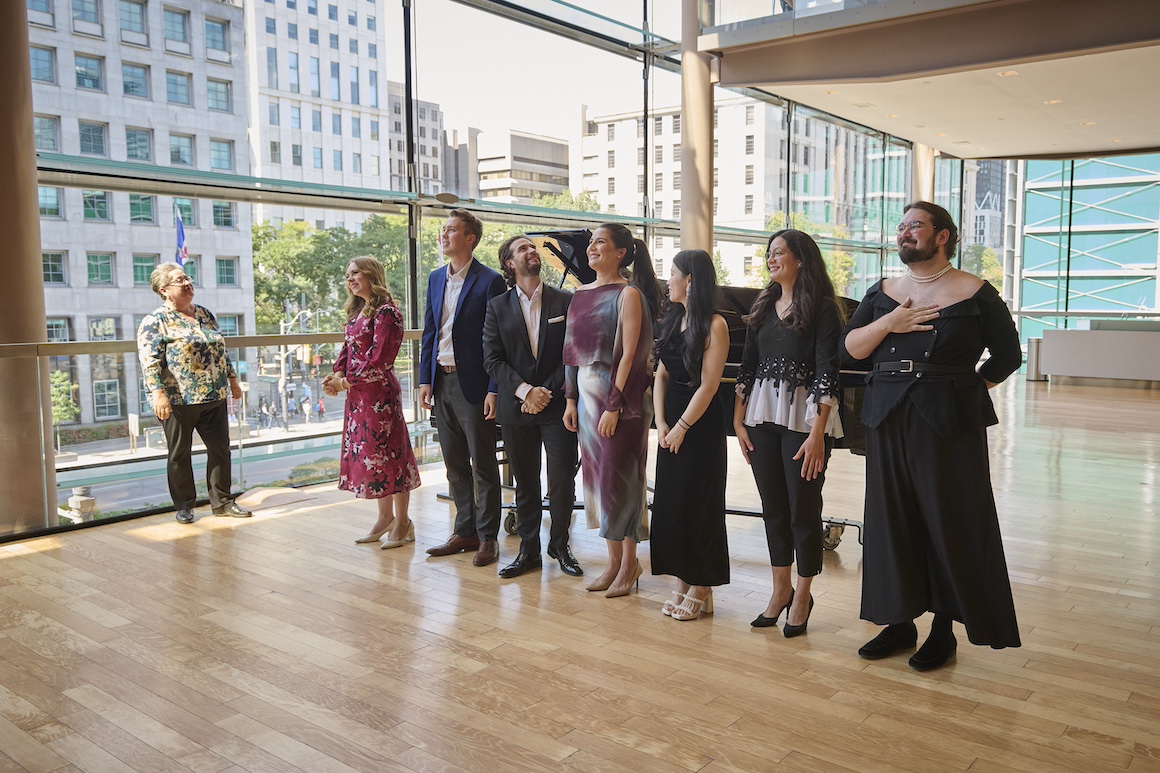
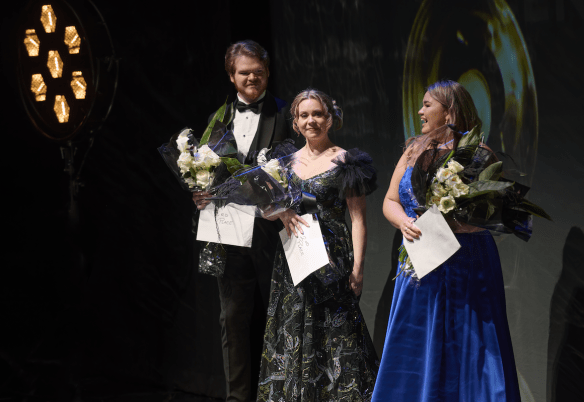
Thursday night at the Four Seasons Centre saw the tenth iteration of the COC’s Centre Stage: Ensemble Studio Competition. It’s a competition for young singers for cash prizes and, more opaquely, potential places in the COC’s Ensemble Studio.

L-R: Duncan Stenhouse, Emily Rocha, Elisabeth St-Gelais
It was the best of times…
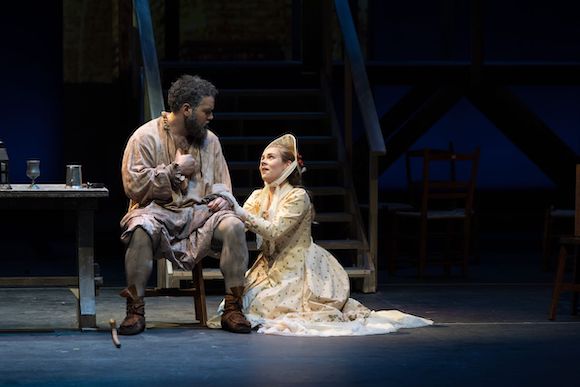
UoT Opera Division’s production of Arthur Benjamin’s A Tale of Two Cities, currently playing at the MacMillan Theatre, is really rather good. Its partly the work itself which surely deserves to be better known. It’s a 1950 work to a libretto by Cedric Cliffe. It was written for the Festival of Britain and was considered a success at the time. It is in many ways typical of mid 20th century English opera (though Benjamin was a peripatetic Australian rather than a Brit). It’s colourful and uses a large orchestra with lots of brass and percussion and combines lyricism with some fairly heavy dissonance. It also includes a few good arias, notably one for Lucie Manette, the romantic female interest.

Dr. Manette (Burak Yaman), Lucie Manette (Emily Rocha)
Trilogy
This year’s fall offering from UoT Opera is three short comic operas presented at the MacMillan Theatre in productions by Michael Patrick Albano. The first is Paul Hindemith’s Hin und Züruck; a twelve minute musical joke which manages to send up a lot of operatic conventions in a very short time. It’s a musical and dramatic palindrome. A man discovers his wife has a lover and shoots her. The paramedics arrive and attempt to revive her. In this staging this includes a giant syringe and no prizes for guessing where that goes. The remorseful husband shoots himself. An angel (Ben Done) appears and explains that the usual laws of physics don’t apply in opera and the entire plot and score is replayed backwards. It was played effectively deadpan by Cassandra Amorim and Lyndon Ladeur while Jordana Goddard, as the elderly deaf aunt, sat through the whole thing entirely oblivious. Good fun.

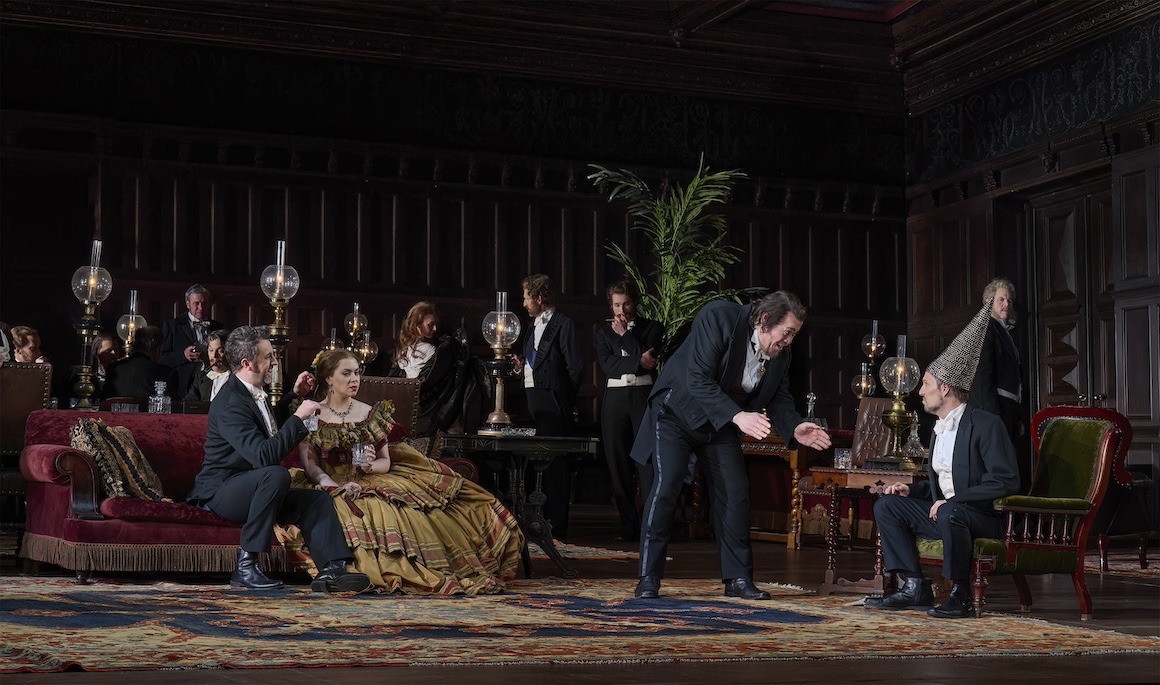
The other Otello
Just as Rossini’s version of Il barbiere di Siviglia completely eclipsed Paisiello’s version, so Verdi’s Otello sounded the death knell for an earlier version; ironically enough by Rossini. It’s a bit surprising as the Rossini version is not bad at all despite having a rather patchy libretto and being hard to cast. The first thing one notices is that the story isn’t even close to Shakespeare/Verdi. This is because the libretto was based on a French play by Jean-François Ducis that was popular in the 18th century. I don’t know whether the plot’s weaknesses are due to Ducis or the librettist but there are a few. There’s no Cassio so the motivation for Jago’s plotting is unclear. All the Venetian notables (bar perhaps the Doge) hate Otello but Jago doesn’t seem to have any special reason for animosity. Between the end of Act 2 and the beginning of Act 3 Otello is exiled. There is no explanation. The finale is abrupt and weak. Immediately after Otello kills Desdemona the gang of notables burst in to the room and appear to be completely reconciled to Otello and to him marrying Desdemona, despite having spent the rest of the opera chewing chips about this. In fact one could argue that the happy ending variant (yes, there was one) is the more plausible as it would only take the guys to arrive about ten bars sooner for that to be the logical outcome. As it is, Otello listens with incredulity to the change of heart and, not unreasonably, kills himself.