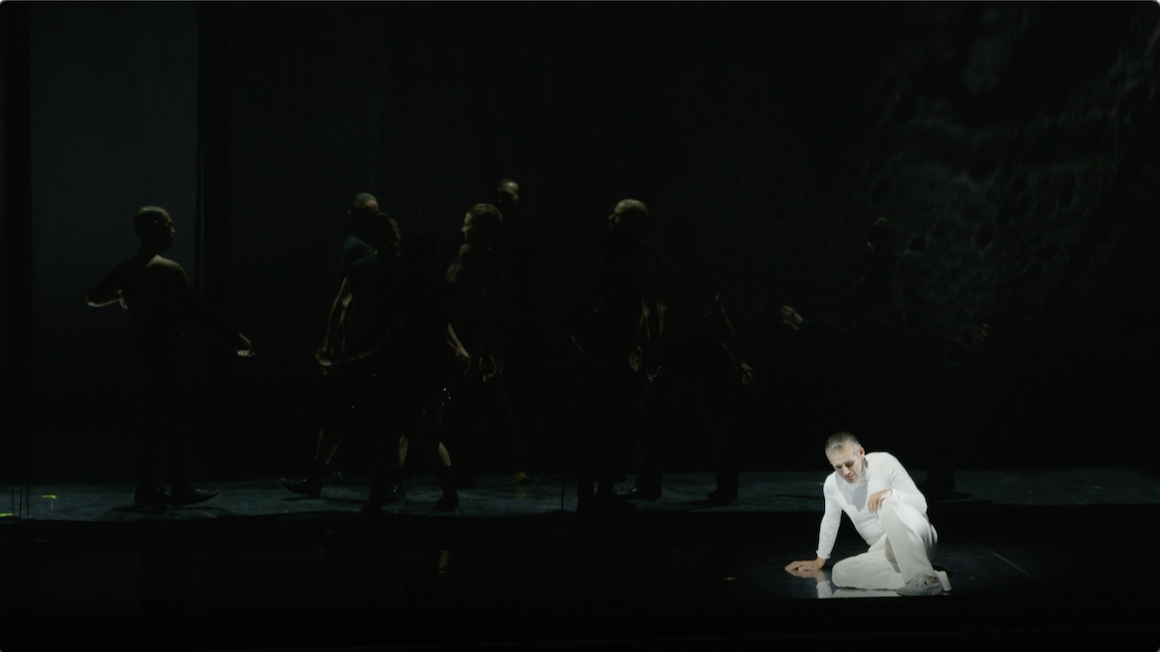
Gluck’s Orpheus opera; in either Italian or French guise, is usually presented as a short and cheery “love conquers all” with an uncomplicated happy ending. Pierre Audi in his production of the 1774 Paris version of Orphée et Euridice, recorded at the Maggio Musicale Fiorentino in 2022 takes a different tack. Here Amour, who is on stage 100% of the time, forms a love triangle with Orphée and Euridice and while she’s happy to work to reunite the lovers Orphée gets in a snit in the last act when he realises that her interest isn’t entirely altruistic and comes close to violence when the two girls show more interest in each other than in him!
Tag Archives: maggio musicale fiorentino
Elegant 1930s Tosca
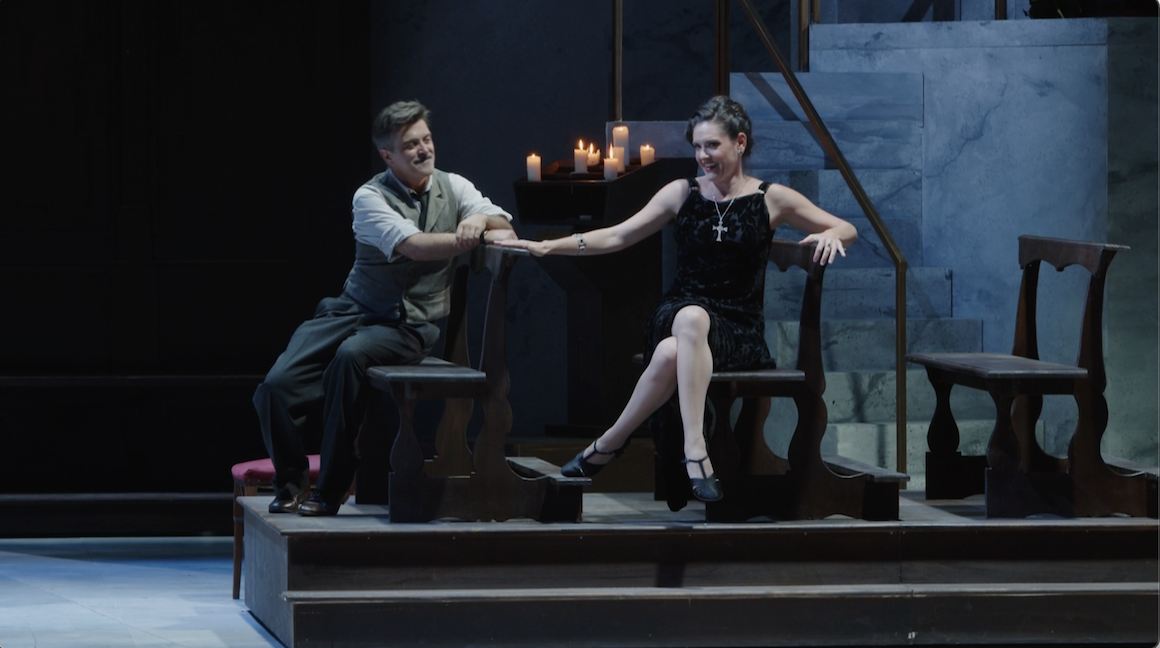
Puccini’s Tosca was recorded for video last year at the Maggio Musicale Fiorentino in a production by Massimo Popolizio. It’s set in the 1930s but other than sets and costumes appropriate to that period it’s played dead straight. Although there’s some kind of mafia/fascisti vibe it’s not really explored and one really experiences it as a “traditional” Tosca. The 30s aesthetic though certainly suits Vanessa Goikoetxea who comes over as very glamorous.
Ernani
Ernani is an early Verdi opera (1844) and it’s not performed that often (16th most performed Verdi opera according to Operabase). It was given at the Maggio Musicale Fiorentino in 2022, in a production by Leo Muscato, which was recorded for video release. How you react to it may partly depend on how you feel about bel canto operas on (more or less) serious themes. This is an opera about unrequited love and revenge (lots of revenge) but, in typical bel canto style, the music doesn’t always fit the mood. So here we open on a prelude where Ernani’s bandit gang are sorting out the corpses from their latest skirmish while the orchestra plays a rather jolly tune, then they break into a drinking song and then Ernani enters and sings a rather lovely cavatina. There are places where the music is darker and some of it is really rather good. In particular there are some strong duets for Ernani and his (everyone’s) love interest Elvira. Overall, I rather liked it musically.

Oedipus Rex
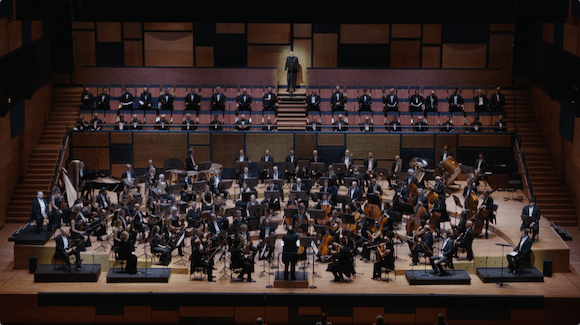
A video recording of Stravinsky’s Oedipus Rex is a bit of an oddball really. It’s quite short (55 minutes) and it’s an oratorio rather than an opera. I guess it could be staged but the version recorded at the Maggio Musicale Fiorentino in 2022 isn’t. It’s a concert setting, in concert dress, with music stands. There’s not even minimal blocking.

L’amico Fritz
Mascagni’s L’amico Fritz might be the perfect antidote to an unsuccessful reimagining of Götterdämmerung. It’s short, uncomplicated, tuneful and nobody dies. It’s a simple love story in which an Alsatian landowner, who is a confirmed bachelor, makes a bet with the local rabbi that he can’t find him a bride. Then he falls hopelessly in love with the daughter of his tenant and they all live happily ever after.

Acis et Galatée
Acis et Galatée was Lully’s last completed opera. Like pretty much all of his work it displays in abundance the qualities that Voltaire claimed made Racine and Corneille superior to Shakespeare. How you feel about that will probably affect how you feel about Acis et Galatée, which is an elegant and classically correct retelling of Ovid’s tale of a nymph who loves a shepherd and the Cyclops who spoils the fun. It has an allegorical prologue too, which celebrates the glories of Louis XIV (natch). It also has lots of dance numbers.

A black hole in Florence
Carlus Padrissa’s (of La fura dels baus) take on Verdi’s La forza del destino for the Maggio Musicale Fiorentino is nothing if not ambitious. He interprets this rather banal and meandering melodrama as a tale of cosmic inevitability. Leonora and Alvaro are metaphors for two stars, which after an epic journey through time and space, will collide and form a black hole extinguishing each other. FWIW the recording was made in June 2020 under COVID restrictions so the chorus is masked and it sounds as if the theatre is a lot less than full.

Moving Traviata from MMF
It’s not all that often I feel genuinely moved by an opera on video. It’s so much less immersive than experiencing live. There is the occasional one. Both the Berlin Parsifal and the Aix-en-Provence La traviata come to mind. The recently released La traviata from the Maggio Musicale Fiorentino is another one. It’s an interesting and effective production with a strong cast centred on the searing Violetta of Nadine Sierra.

The Gods look down
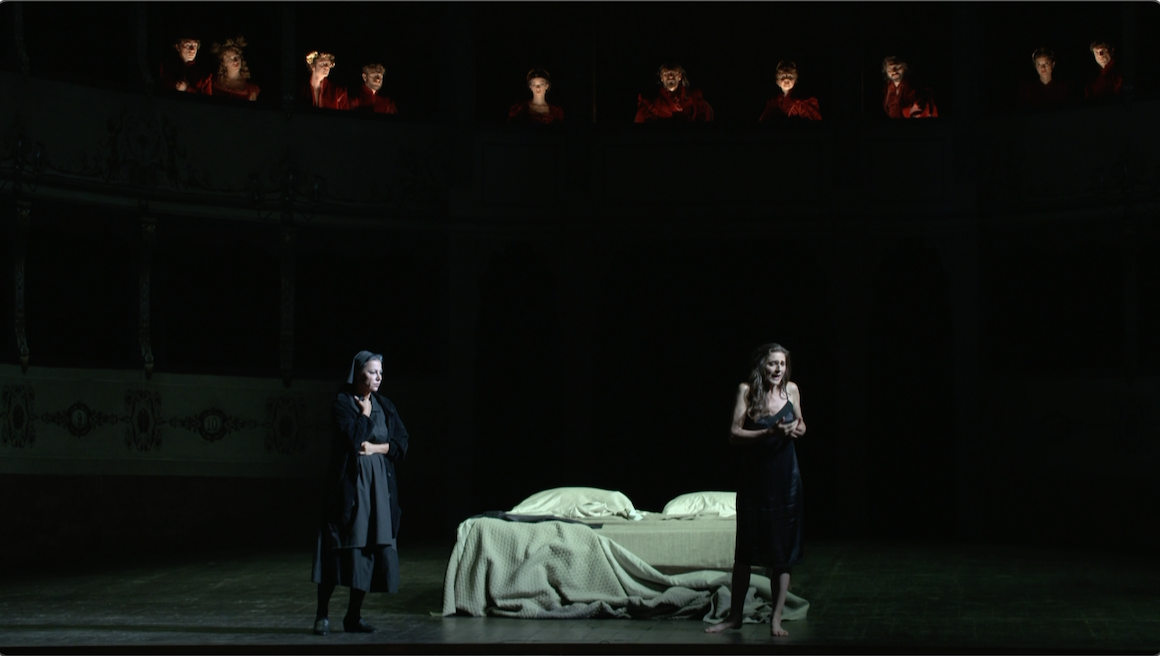
Robert Carsen’s 2021 production of Monteverdi’s Il ritorno di Ulisse in patria was recorded at the Teatro della Pergola during the Maggio Musicale Fiorentino. The theatre, opened in the 1660s and very much a “renaissance theatre”, is very much part of the production; the loge boxes are used during the prologue, entrances are made through the unusual parterre (individual chairs not rows of seats) and the gallery behind the stage is used by the gods to observe the action below. Monteverdi used three distinct styles of music for gods, royals and lesser folk, Carsen mimics this by giving the three orders distinct costume and acting styles. The gods (and there is the full pantheon, not just the ones who appear in the opera, each with his or her distinctive emblem), costumed in opulent crimson 16th century style costumes, act in a stylised manner. The royals get smart modern dress and naturalistic acting while the others are scruffier and act more broadly.

Falstaff as farce
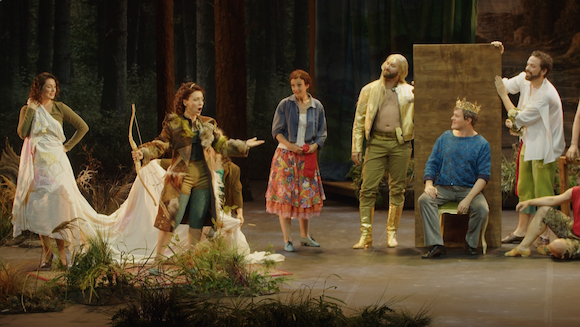
Verdi’s Falstaff, of course, is a farce so there’s no reason why a director shouldn’t treat it as one but all three of the other productions I’ve seen in the last few years have transposed it to the 1950s and put a spin on it. Sven-Eric Bechtolf, in his production for the 2021 Maggio Musicale Fiorentino, just doesn’t do that. It’s a 1590s (ish) setting and it’s played very broad. There are big costumes, big gestures, entrances and exits and characters “hidden in plain view”. It could be Dario Fo or Brian Rix.