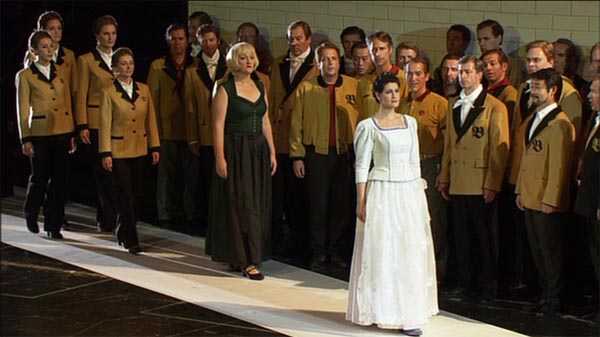
Having now had a chance to watch and review all seven currently available (as of June 2025 only the Oke and Graham-Hall performances seem to be available) video recordings of Peter Grimes I thought I might do a summary of the strengths and weaknesses of each. All of them have some merit and I doubt that there would be consensus on a “winner”. Anyway, here goes…
BBC film 1969
 Grimes – Peter Pears
Conductor – Benjamin Britten
Director – Joan Cross & Brian Large
This is an essential historical document with both composer and the creator of the role involved. The production is straightforward and naturalistic. The sound and video quality is surprisingly good for the period. It does, though, leave one with the feeling that there is more to the role of Grimes than Pears finds.
Royal Opera House 1981
 Grimes – Jon Vickers
Conductor – Colin Davis
Director – Elijah Moshinsky
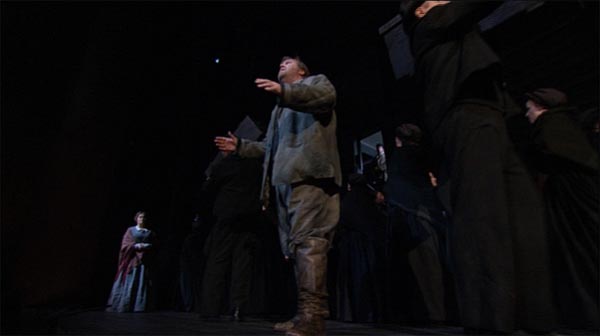
Also a historical landmark being the first major production where Grimes wasn’t sung by Peter Pears. It has the excellent Heather Harper as Ellen Orford. The production is quite dull and very dimly lit. Vickers’ Grimes is controversial. In places he sounds fantastic and in others sorely taxed. His acting is oddly stilted. Norman Bailey fails to convince as Balstrode. Sound and picture quality are OK.
English National Opera 1994
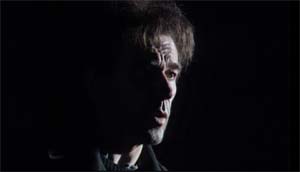 Grimes – Philip Langridge
Conductor – David Atherton
Director – Tim Albery
This is the production with most sense of the sea as a character brought out through innovative use of video projection. Langridge’s Grimes is intense, convincing and beautifully sung. Alan Opie is a very strong Balstrode. Unfortunately the orchestra and chorus aren’t up to rival versions and all aspects of the DVD; video direction, sound quality and picture quality are rather poor. This recording was rebroadcast on June 1st 2025 by the BBC with dramatically better sound. See my thoughts here.
Opernhaus Zürich 2005
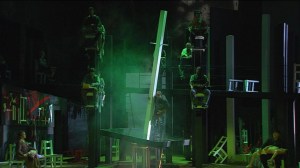 Grimes – Christopher Ventris
Conductor – Franz Welser-Möst
Director – David Pountney
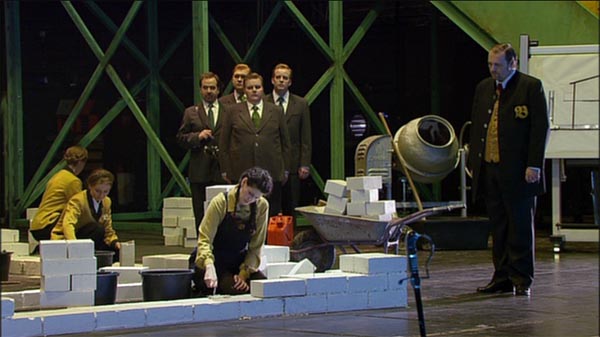
This is a very fine and thought provoking production with any number of magical moments. Ventris is a first class Grimes combining power and sensitivity and the supporting performances all have merit, save perhaps for Alfred Muff’s sub-par Balstrode. The orchestra and chorus are quite superb. The performance gets a thoroughly sympathetic treatment on DVD with good video directing backed up by quite excellent sound and picture quality.
Metropolitan Opera 2008
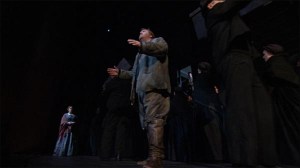 Grimes – Anthony Dean Griffey
Conductor – Donald Runnicles
Director – John Doyle
This is a rather dull and dark production given a very eccentric treatment by the video director. Dean Griffey is a lyrical and sympathetic Grimes well backed up by the supporting cast, especially Anthony Michaels-Moore as Balstrode and Teddy Tahu-Rhodes as Ned Keene. The orchestra and chorus are excellent and Runnicles is fairly convincing though the first act drags a bit. The sound and picture quality is excellent.
La Scala, 2012
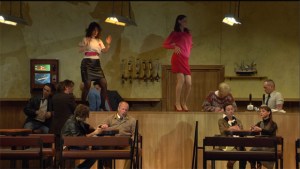 Grimes: John Graham-Hall
Conductor: Robin Ticciati
Director: Richard Jones
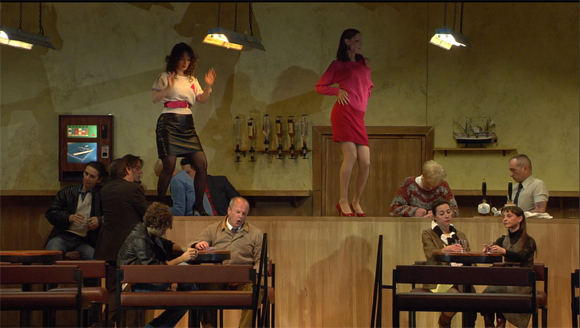
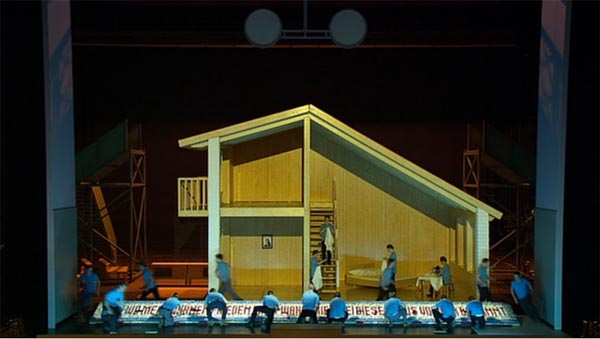
Richard Jones’ production, updated to the 1980s, is quirky. John Graham-Hall is quite lyrical as Grimes but slips into pseudo speech a lot. Susan Gritton fails to convince as Ellen Orford. The supporting cast, the orchestra and the conducting are first rate but the chorus is decidedly sub-par. The Blu-ray sound and picture outclasses all previous versions but, overall, this recording fails to convince.
Peter Grimes on Aldeburgh Beach, 2013
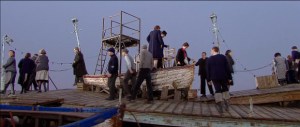 Grimes: Allan Oke
Conductor: Steuart Bedford
Director: Tim Albery/Margaret Williams
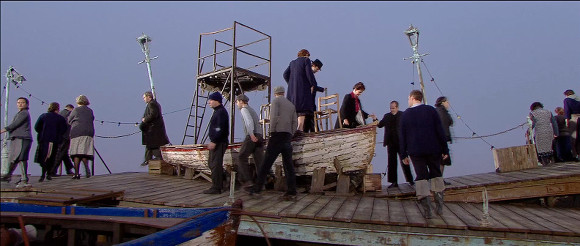
This film is a record of the unique production staged on Aldeburgh beach by Tim Albery and filmed by Margaret Williams. It’s highly atmospheric and features a brilliant performance by Alan Oke but conditions were not ideal for the singers and musically this cannot match the best available recordings from the theatre.

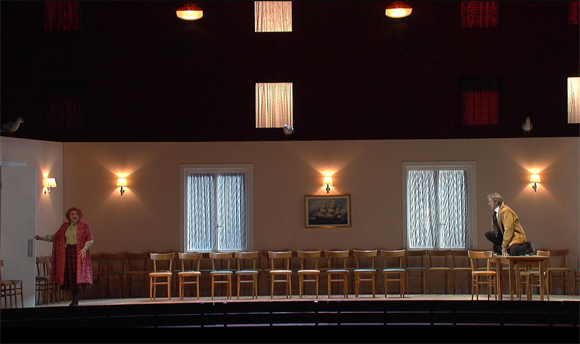 Richard Jones has chosen to set the piece in the 1980s and to portray the inhabitants of the Borough as a sort of inbred hive mind fuelled by prejudice, alcohol and drugs. Actually it’s not a bad concept but it comes off as exaggerated with cast and chorus repeatedly making more or less coordinated middle aged disco moves. He also portrays the nieces as the sort of permanently stoned bubble heads one wants to avoid on the last train home. There are some neat touches. The Moot Hall, The Boar and Grimes’ hut are all formed by box like spaces that are tilted and rotated to good effect. The lighting is effective too. Unusually for a modern production Jones doesn’t provide any staging for the interludes, leaving the theatre dark with the curtain down. Overall, it’s a production I’d want to take a second look at but I suspect it’s just painted too broadly to be really effective.