I put off watching Saariaho’s L’Amour de Loin on DVD until after the run at the Canadian Opera Company because I didn’t want to prejudge the piece. Now, having seen it live twice and listened to Kent Nagano’s Berlin CD recording it seemed like time to look at the DVD. The DVD is of the original Salzburg production directed by Peter Sellars but it was recorded at Finnish National Opera in Helsinki. It features the original cast of Gerald Finley (Jaufré Rudel), Dawn Upshaw (Clémence) and Monica Groop (Pilgrim). Esa-Pekka Salonen conducts with the Orchestra and Chorus of Finnish National Opera. If you are unfamiliar with the piece you might want to check out my review of the COC production which gives a plot summary etc.
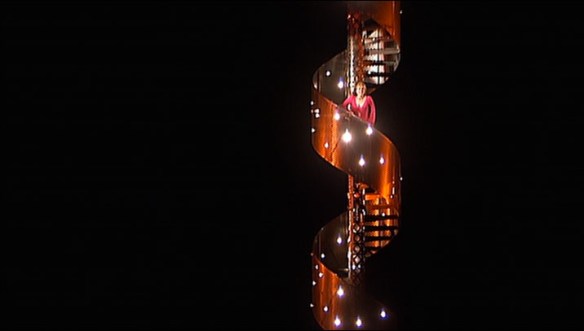
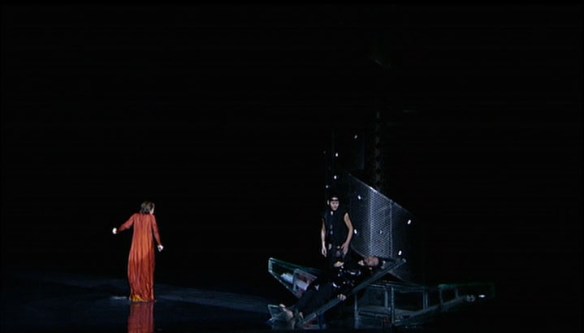
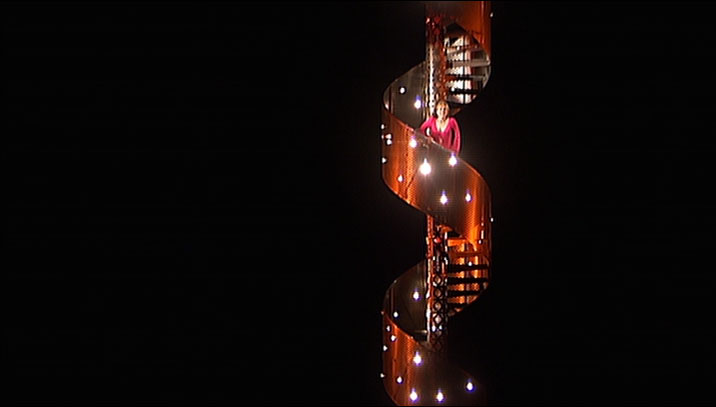
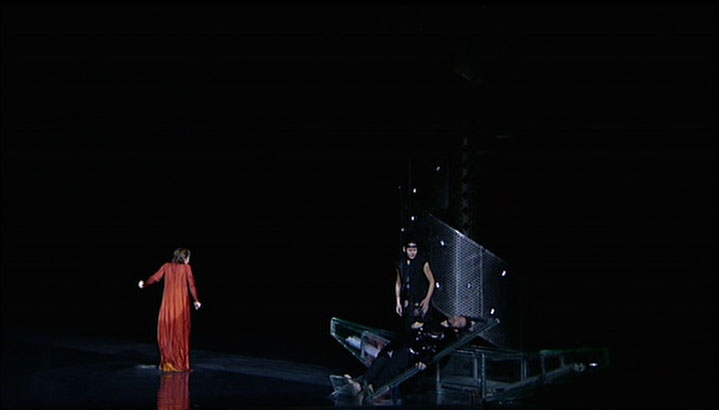
 The production concept is simple enough. At each side of the stage is a spiral tower representing Jaufré’s castle in Blaye and the Citadel in Tripoli. The towers stand in a lake which the Pilgrim traverses in a sort of crystal boat. It’s simple and effective but much less spectacular than Daniele Finzi Pasca’s production seen at COC. Colour is used to symbolise the two sides and the journey; blues and greens for Blaye, reds and oranges for Tripoli and black and white for the journey. In typical Sellars style there is a fair amount of stylized and elaborate gesturing. It all seems to work pretty well.
 The performances are excellent. All three singers have complete mastery of their parts and can act vocally as well as sing. Some of the acting is a bit overwrought but I think that’s Sellars. At key moments, and especially in the beautiful final scene, this very intense approach works much less well than the more understated approach taken in Toronto which seems more at one with what the music is doing. The Orchestra and, off-stage, chorus are just fine. Salonen has worked a lot with Saariaho and knows what’s required.
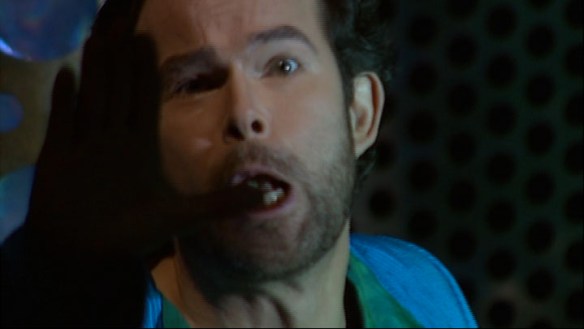
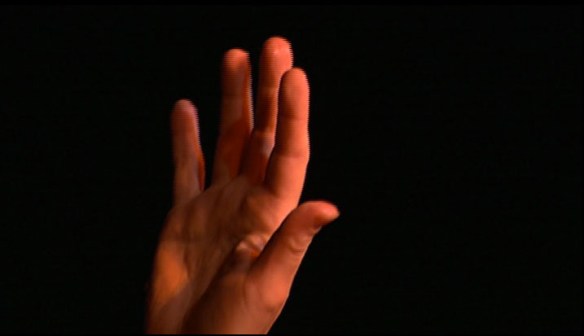
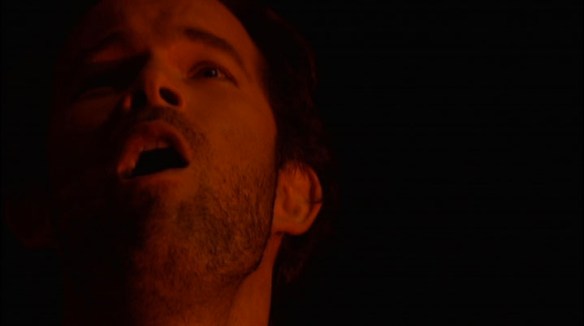
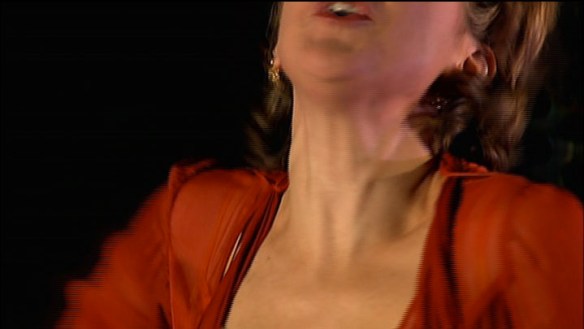
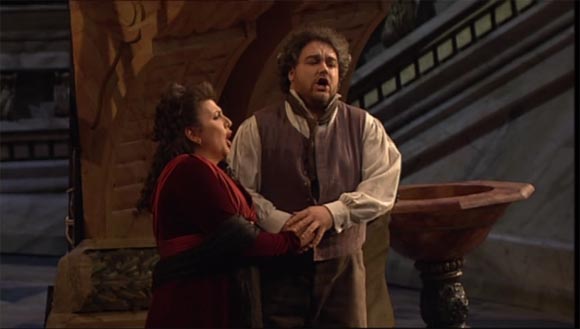
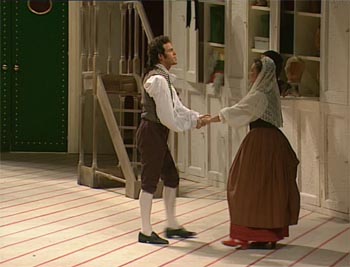
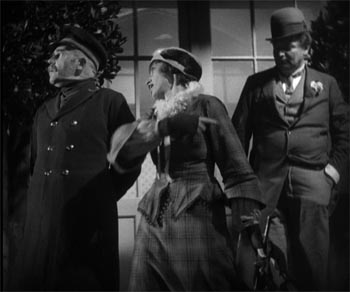
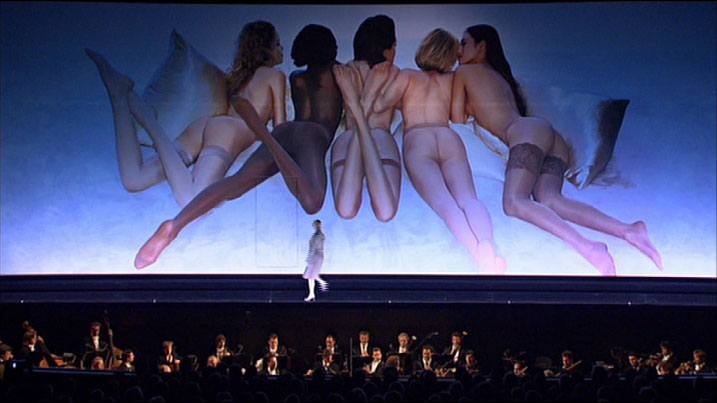
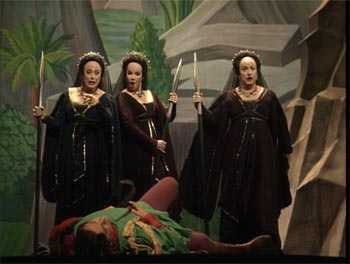
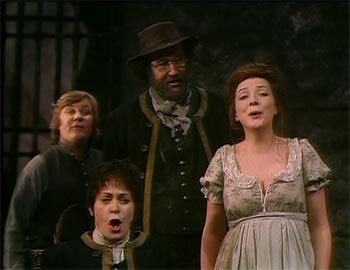
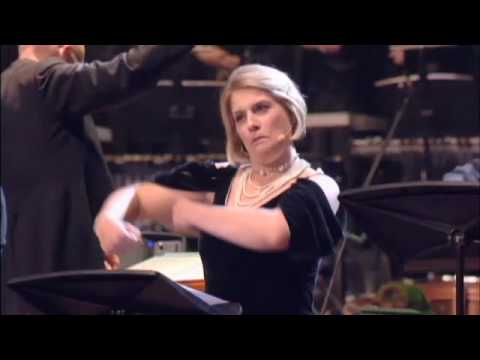
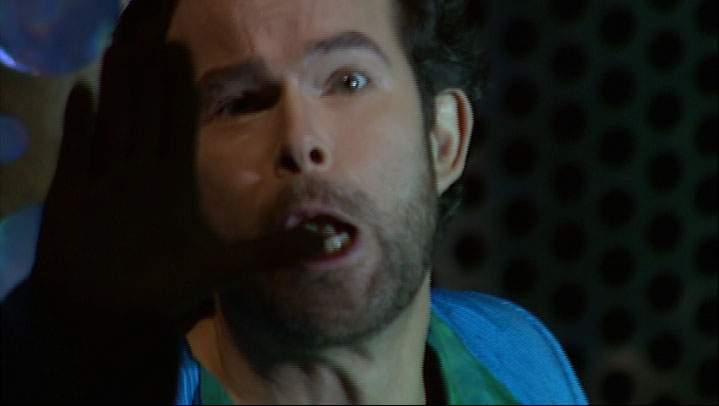
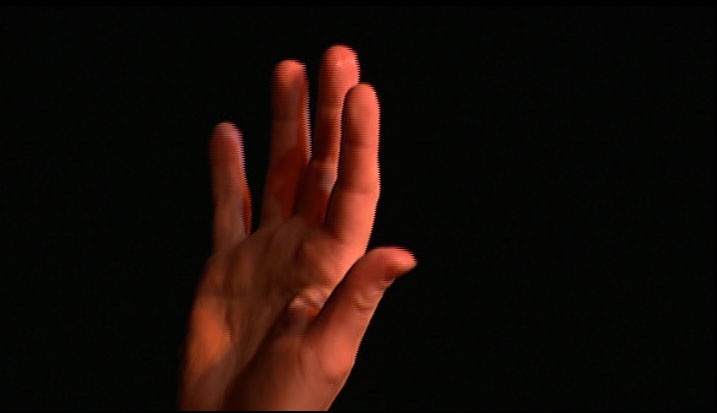
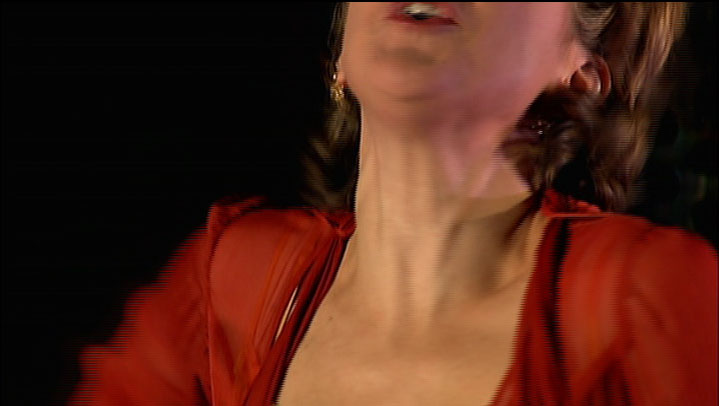
 Where I have serious reservations with this recording is the video direction. Sellars directs this himself and like his Nixon in China Met HD broadcast it’s really quite bizarre. All video directors use close ups. Most use too many of them. Sellars takes this to extremes with bizarre partial face shots or body extremities filling the whole screen. Coupled with the exaggerated acting style, which might just be OK at a distance, this makes for a very overwrought effect that is at serious odds with the music. I’ve included four entirely typical screen caps at the end of the post to show what I mean.
 Technically the disk is OK. The picture is European TV quality 16:9. One might have expected a little better for a 2004 disk. The sound is decent DTS 5.1 (Dolby 5.1 and PCM stereo alternatives). It’s quite vivid though I think the voices are balanced artificially forward. Documentation is pretty decent and the subtitle options are English, French, German and Spanish. There are very informative interviews with Sellars, Saariaho and Salonen that are all well worth watching. This is the only DVD of the piece and it’s pretty adequate. I wish someone would film Daniele Finzi Pasca’s production though.
OK, here are some screen caps of close ups. These are not cropped. This is the screen you see watching the DVD.





 operaramblings