Norma with string

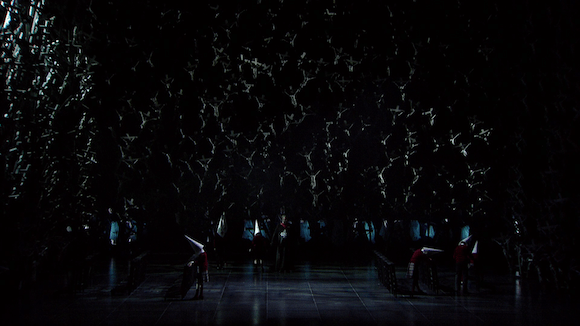
I rather like recordings from the Macerata Festival where the performances take place in the enormous amphitheatre of the Arena Sferisterio.  Bellini’s Norma is a good choice for such as setting and the 2016 production directed by Luigi di Gangi and Ugo Giacomazzi makes good use of the space.  It also uses string.  The sets are stringy.  The very scruffy Gauls wear shapeless tunics with lots of string over them.  The slightly smarter Romans also wear string.  And everybody plays with string.  There are more strings than in the Princeton Physics Department. There’s lots of face paint too.  The production also makes use of a spectacular multi-coloured lighting plot but, apart from the visuals, is pretty conventional and straightforward.

1.green

Continue reading

More fun with DVD statistics

bad-news-statistics-1Thinking about the analysis I did of my DVD reviewing habits, by individual work, just after Christmas, I wondered if a different pattern would emerge if I looked by composer instead.  In a way it does show a different picture though some things remain the same.

Here’s the ranking based on the number of reviews of works by each composer with at least ten reviews (note this includes staged oratorios etc so may not be strictly comparable with Operabase).  The Operabase ranking, based on performances in the 2015/26 season, follows in brackets.

Continue reading

Madama Butterfly at La Scala

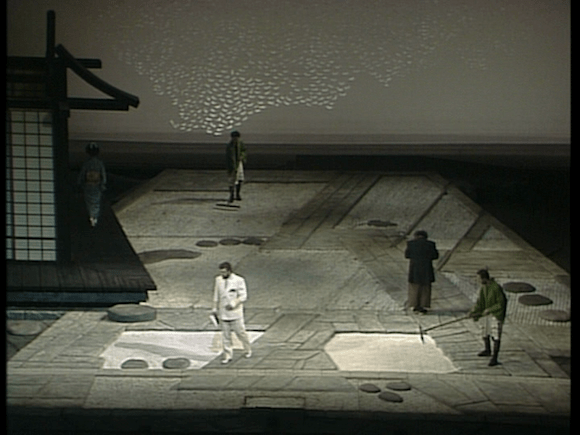
Looking at a (perhaps inadequate) sample of video recordings from La Scala I begin to come to the conclusion that there is a pretty strong pattern in what they do well, and not so well.  1800-1920 Italian classics with strong casts in visually attractive but not overly deep productions seems to be the sweet spot.  Stray far from this and the wheels tend to come off.  Fortunately this week I’ve seen two of the good ones recorded 30 years apart.  A couple of days ago I posted a review of the recent I due Foscari and now I’ve jumped in the Tardis to watch a 1986 recording of Puccini’s Madama Butterfly.  The similarities are striking.

1.garden Continue reading

I due Foscari

Verdi’s sixth opera, I due Foscari, is probably not well known to many readers so a brief description may be in order.  It’s a rather grim tale of injustice and revenge.  Francesco Foscari is the aged Doge of Venice.  His son, Jacopo, has been stitched up by the family rival Jacopo Loredano and exiled to Crete.  He returns to try and clear his name but is fitted up again.  This time for the murder of one Donato.  Despite torture he refuses to confess and is sentenced to return to exile in Crete.  The first three quarters of the opera is mostly either father or son bemoaning their fate (Francesco has already lost three sons.  Lady Bracknell would be unimpressed) or Lucrezia, Jacopo’s wife, pleading for mercy to anyone who will listen.  Then there’s a final scene where Francesco receives proof of his son’s innocence, closely followed by news of his death, closely followed by news that the Council and Senate are sacking him.  Loredano gloats.  Foscari dies.  Structurally it’s very much a “numbers” opera with a succession of short scenes mostly featuring various combinations of the three Foscaris and the chorus.  There are a lot of quite sophisticated ensemble pieces as well as a couple of solo arias for each of the principals.  It’s musically rather distinguished in fact.  The three Foscari roles are big sings.  Nobody else has much to do.

1.gondoliers

Continue reading

Puritans in Madrid

I keep trying with Bellini’s I Puritani.  People I respect admire it a lot but I just cannot find a way to like it despite there being, undoubtedly, some very fine music in Acts 2 and 3.  I think there are, essentially, two problems and I could maybe cope with either in isolation but taken together my brain just starts to turn off.  The first is plot and there are two huge problems with this piece.  It’s complete garbage historically.  It makes Donizetti’s Tudor operas look like Geoffrey Elton.  But worse, it makes no sense in it’s own terms.  It’s just a string of improbable coincidences.  The second problem is emotional dissonance.  Too often the emotional tenor of the music is just way inappropriate to the stage action.  This is common to all bel canto of course and on its own I can deal.  I just can’t take the two things together.

1.weddingdress

Continue reading

Dancing to Così

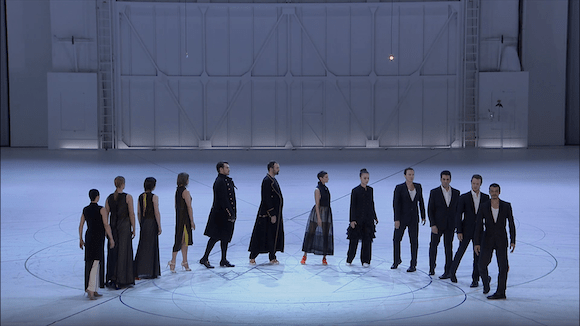
Anna Teresa De Keersmaeker is a well known, rather avant garde Belgian choreographer and not, perhaps, the obvious choice to direct an opera production but that’s the assignment she took at Opéra nationale de Paris in 2017 with Mozart’s Così fan tutte which was recorded at the Palais Garner.  Her approach is to double each of the six characters with a dancer and develop an elaborate, largely abstract and severely modern choreography for all twelve players though, naturally enough, with the more technical dance elements going to the dancers.  The choreography, as is apparently often the case with De Keersmaeker is explicitly geometric.  The stage is marked with circles and other geometric figures which inform or constrain the choreography.  Much of the time this results in a lot of running round in circles or standing in semicircles swaying backwards and forwards.  Indeed right up to Ah, guarda, sorella that’s pretty much all that happens though as things hot up emotionally the dancers get more to do with most of the big arias being paired with a dance solo and so on.

1.circle

Continue reading

Fun with DVD statistics

popularityI thought it might be interesting or amusing to compare the number of video recordings I’ve reviewed of various works with their Operabase popularity ranking (based on number of performances worldwide in the 2015/16 season).  I’ve reviewed a total of 467 DVDs and Blu-rays and 15 works have been reviewed five times or more.  That list includes five of Operabase’s top 10.
Continue reading

A Norma for our times

The recording of Bellini’s Norma made at the Royal Opera House, Covent Garden in 2016 is about as good as video recordings of opera go.  It has it all; a well thought through and well executed production concept, very fine musical values, great acting, judicious camera work and top notch sound and picture.  It doesn’t get much better.

1.schoolies

Continue reading

Vlad Disney does Tsar Saltan

Rimsky Korsakov’s The Tale of Tsar Saltan doesn’t get a lot of performances outside Russia and there’s only one video recording in the catalogue.  It was recorded in 2015 at the Mariinsky Theatre in St. Petersburg in 2015 and is now available as a dual format DVD/Blu-ray package.  It’s a curious work.  It’s based on a Russian folk tale based poem by Pushkin turned into an opera libretto in a prologue and four acts by Vladimir Belsky.  It’s quite odd in that much of it is in a simple strophic form similar to the “wedding song” that Mandryka sings in Strauss’ Arabella.  I have no idea if this is typical of Slavic folk song but it’s a bit repetitive especially when coupled to Rimsky-Korsakov’s colourful but not especially interesting music.  The music is actually rather better in the orchestral interludes, notably the famous Flight of the Bumblebee and some of the choruses which are grand in the Russian manner.

1.sisters

Continue reading

Reflecting on Lucio Silla

I just got my hands on the La Scala recording of Mozart’s Lucio Silla.  It’s the Marshall Pynkoski production that was done at Salzburg, then La Scala, then in somewhat modified form at Opera Atelier in Toronto, which I saw.  It has provoked lots of thoughts about the work itself, how well the OA aesthetic transfers to another house and how seeing a production on video differs from seeing it live.

1.landscape

Continue reading