Final thoughts on the Zürich Ring

Overall I rate this cycle very highly.  Andreas Homoki’s production is unusual in that it’s really not conceptual and is often very literal.  That’s rare in Wagner productions in major European houses.  But it’s also not cluttered up with superfluous 19th century “stuff”.  When a thing is essential, it’s there as described.  If it’s not essential more often than not it’s omitted.

Continue reading

Zürich Ring – Die Walküre

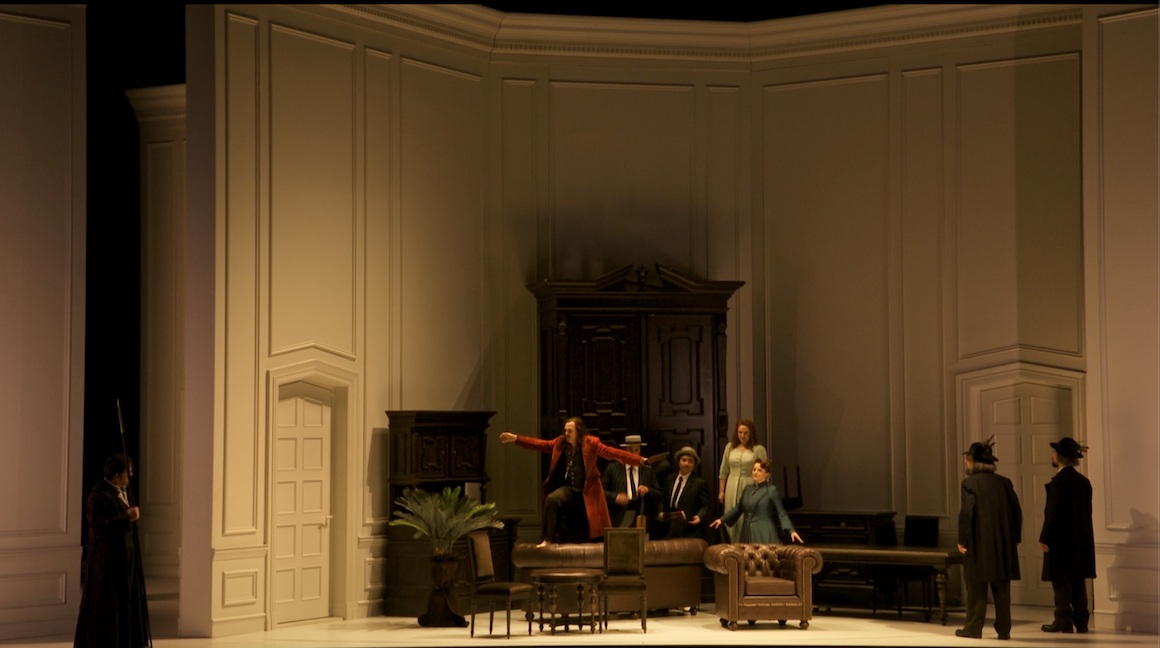
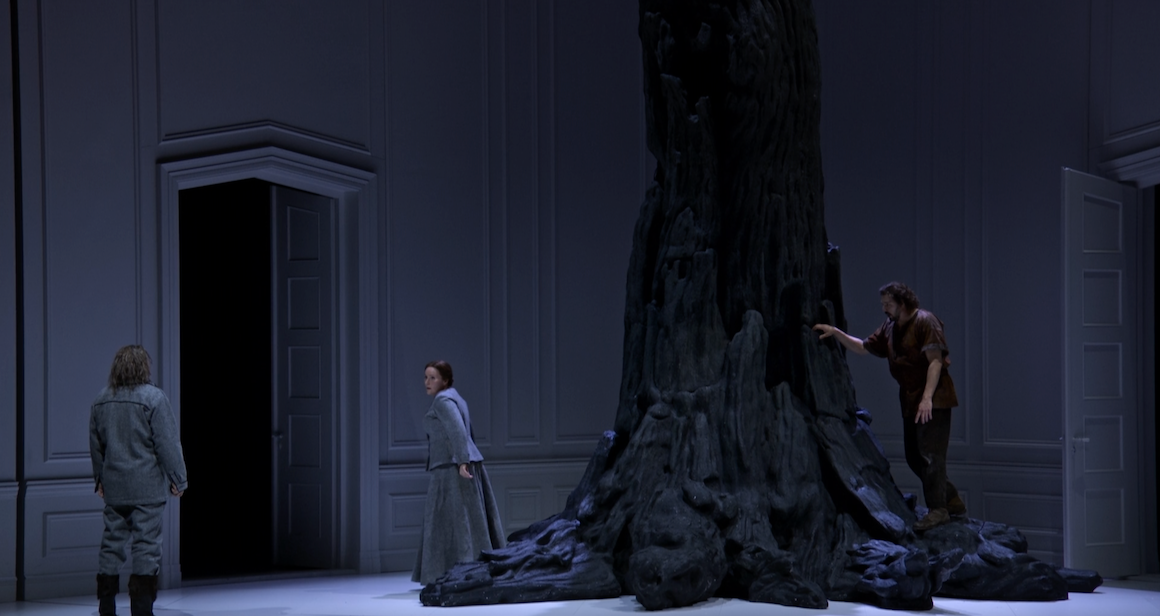
Continuing on from Das Rheingold we come to Die Walküre.  There’s a lot of continuity with the earlier work.  It’s basically the same rotating set though in some scenes one of the “rooms” becomes a forest.  Another thing we see is characters who aren’t canonically “there” appearing in scenes.  So right at the beginning, when Siegmund and Sieglinde meet, Wotan is lurking and doing things like handing drinks to Sieglinde.  We’ll see more of this with Hunding’s henchmen appearing in various places, Wotan and the henchmen appearing when Sieglinde is describing her wedding and the Valkyries showing up at the start of Act 2.

Continue reading

Civilized

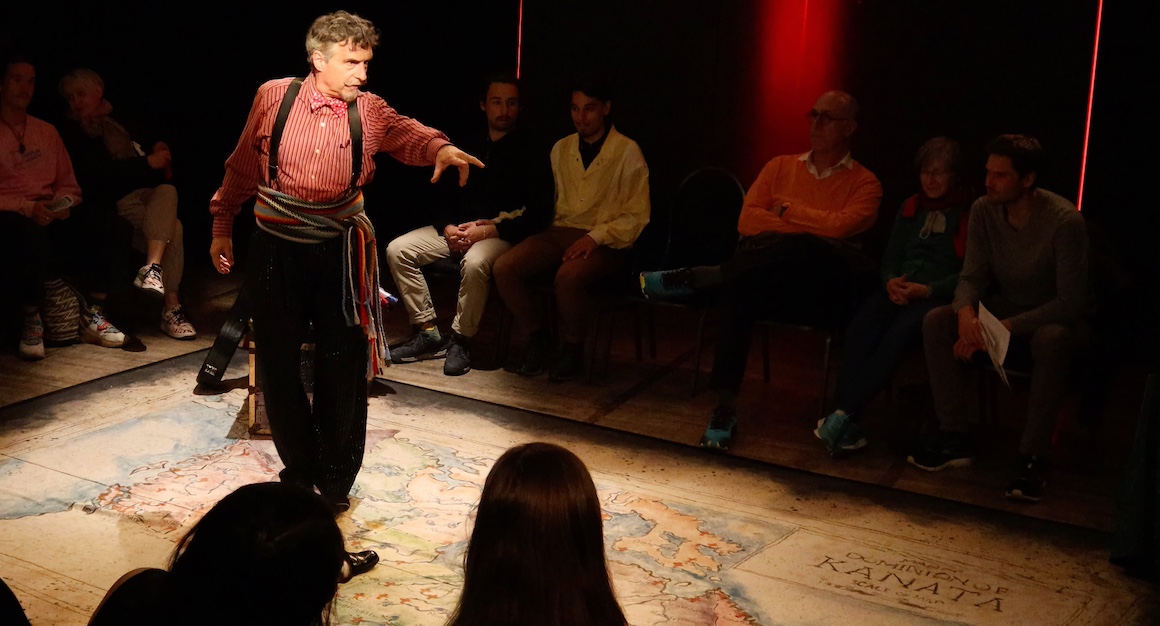
The Toronto Fringe Next Stage festival opened on Wednesday evening at Buddies in Bad Times with Keir Cutler’s Civilized.  It’s a one man tour de force in which John Huston plays a senior bureaucrat from Indian Affairs during the Laurier government who has returned from the dead to explain to contemporary Canadians why the Residential School System was entirely necessary and a Very Good Thing.

09-14-2024-034453-3135

Continue reading

Tcherniakov’s Holländer

Dmitri Tcherniakov directed Der fliegende Holländer in Bayreuth in 2021 where it was recorded.  It’s no surprise given (a)Tcherniakov and (b)Bayreuth that it’s not a straightforward production.  I’m not sure I have fully unpacked it and there isn’t anything in the disk package to help (just the usual essay telling the reader what he/she/they already know/s).

1.prologue

Continue reading

Fidelio 1806

There were, of course, many Beethoven 250 events planned for 2020 and few of them happened.  One, planned for Vienna, was to stage all three versions of Beethoven’s only opera; Leonore (1805), Fidelio (1806) and the final form that modern audiences mostly know, Fidelio (1814).  As far as I know the only one that went ahead was a production of the 1806 version at the Theater an der Wien that was filmed in an empty house and has just got a release on Blu-ray and DVD.  Now, it happens that the 1805 Leonore was staged and recorded by Lafayette Opera in New York the year before.  So we can look at all three versions and the evolution of the piece despite the Vienna cancellations.  For those who want more details on the New York production, it was reviewed by Patrick Dillon in the summer 2020 edition of Opera Canada and there will be a review, by myself, of the recording in a future edition (probably soon).
1.marcellina

Continue reading

War and Peace

No, not the opera by Prokofiev but Robert Carsen’s rather brilliant take on Mozart’s Idomeneo recorded last year at the Teatro Real in Madrid*.  It’s a contemporary Mediterranean setting.  Crete is a completely militarised society.  Everyone is uniformed and carries weapons.  The Trojans are refugees living in a camp with all the pathetic accoutrements of refugee camp life.  Idomeneo and Elettra stand for the traditional “Make Crete Great Again” kind of nationalism while Idamante and Ilia look forward to a world where “Us” and “Them” dissolve in our common humanity.  Carsen, Neptune, this writer and, I think, listening closely to the music, Mozart side with the young lovers.

1.refugees

Continue reading

1649 And All That

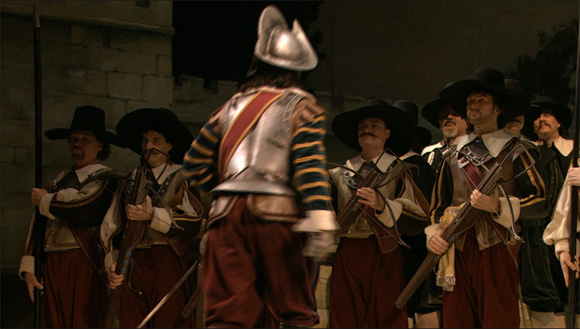
Bellini’s I Puritani is one of those 19th century operas that dishes out a version of 16th or 17th century English history that’s all but unrecognisable to anyone with any actual knowledge of the subject.  In this case we are in Cromwell’s Commonwealth and the nasty Puritans want to off anyone with a Stuart connection including the widowed queen Henrietta.  Various implausibly named Puritan colonels (everyone in the New Model apparently holds that rank) feature as well as a Royalist earl who is, of course, in love with the Roundhead commander’s daughter.  Immediately prior to marrying her though he decides to save Henrietta from execution and escapes with her thus triggering the obligatory mad scene, which is probably the main reason for watching this thing at all.  Finally Arturo (the earl) returns, is captured and, inevitably, sentenced to death.  As he is being led to the block Cromwell’s messenger arrives with the second most improbable reprieve in all of opera.  The Stuarts have been defeated and everyone is pardoned.  A happy ending with fortissimo soprano high notes ensues.

1.crossbows Continue reading