There’s going to be a Robert Lepage retrospective at the TIFF Bell Lightbox from March 27th to April 1st. Most of the screenings/events will focus, naturally enough, on Lepage’s output for cinema but there are a couple of showings of interest to opera fans. On Saturday March 29th at noon there’s a showing of his production of Berlioz’ La Damnation de Faust first seen in the MetHD series and the following day at 12.30 pm one can see Susan Froemke’s documentary Wagner’s Dream about the making of the Metropolitan Opera Ring cycle. Lepage will be present at both shows.
Berlioz’ Les Troyens is one of those pieces that really deserves the descriptor “sprawling epic” and, if anyone can make an epic sprawl it’s David McVicar. This production, recorded at the Royal Opera House in 2012, is typical of McVicar’s more recent work. It’s visually rather splendid and the action is well orchestrated but it’s short on ideas and long on McVicar visual cliches; acrobats, gore and urchins (but mercifully no animals). I don’t want to be too hard on McVicar. This piece is based on the sort of “Ancient History” one used to learn at prep school (British usage) and McVicar pretty much runs with that making no attempt to find deeper meaning, despite superficially translating at least the first two acts to the time of first performance; the era of European colonialism.
Opera Atelier announces its usual two production season. The fall 2014 production will be Handel’s Alcina with Meghan Lindsay in the title role. She will be joined by Allyson McHardy as Ruggiero, Marie Lenormand as Bradamante, Mireille Asselin as Morgana, Krešimir Špicer as Oronte and Olivier Laquerre as Melisso. Despite the absence of Curtis Sullivan, the advance publicity suggests that the trend to ever increasing amounts of bare flesh will continue.
The spring 2015 production will be Gluck’s Orphée et Eurydice in the Berlioz orchestration. This will push Tafelmusik even further into 19th century romantic rep. Is Tannhäuser on the cards? Mireille Lebel will sing Orpheus, Peggy Kriha Dye appears as Eurydice with Meghan Lindsay as Amour.
In many ways this is the most interesting season OA have offered for some time and the venture into Handel is very welcome. More details and tickets can be found here.
Berlioz’ Les Troyens is opera on a grand scale. Only a really big company like the Met could possibly afford to stage it. Yesterday’s performance used a chorus of 110, a larger orchestra, at least twelve soloists and a bunch of dancers. It also lasted 5 1/2 hours including the intervals. Was it worth it? For the most part I’d say yes.
As November 11th comes around for the 94th time since the guns were, very temporarily, silenced I thought it might be interesting to look at how war has been seen by librettists and composers over the years. Very early on we get a very gritty take on the subject in Monteverdi’s extremely compact Il combattimento di Tancredi e Clorinda but not so long after the path for the next three centuries is set with Purcell’s broadly comic King Arthur. As far as I can see from Purcell to 1945, with very minor exceptions, the message is largely “war is fun”. War is an excuse for a big parade (Aida; unless Tim Albery is directing!), an excuse for a drinking song (Faust), just plain comedic (La Fille du Regiment), a plot device (Cosí fan tutte) or a background event (Tosca, various versions of the Armida story). The only opera, pre 1945, that I can think of that deals with the horror of war is Les Troyens, and that of course takes place in a distant, mythical, past.
Last Friday the BBC broadcast the English National Opera production of Berlioz’ The Damnation of Faust directed by former Python Terry Gilliam. This was filmed back in May at the Coliseum and got positive to glowing reviews for its visual inventiveness. So how well did it come over as a TV broadcast?
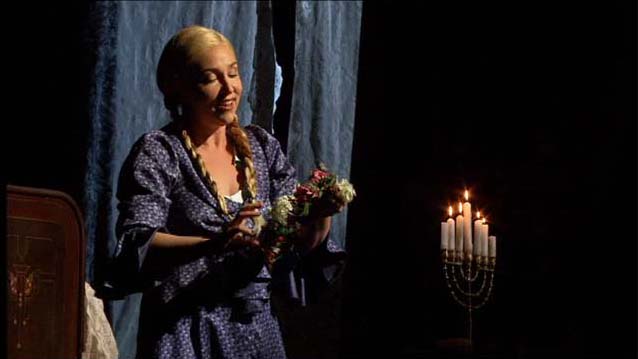
The bottom line is “probably less well than in the theatre”. Gilliam’s approach to staging this almost unstageable “opera” is to treat us to a visual romp through German history from the late 19th century through WW1 to Auschwitz and in between we get lots of Nazis and Jews. There is heavy use of projection, film and special effects and one imagines it must have been incredibly spectacular in the theatre. Unfortunately much of this is lost in the filming for TV. There are certainly some arresting moments but not enough to keep one locked into the action and the director’s vision. And, once when starts to ‘lose the plot’ the more inconsistent and incongruous much of it seems. It doesn’t help that there are long passages where the orchestra is playing and action is going on on stage and it all feels a bit more like a movie soundtrack than an opera. Also, of course it being the ENO, it’s in English. The broadcast subtitled the chorus but not the soloists which was a bit odd and certainly made things harder to follow. The biggest dramatic problem I had was with the treatment of Marguerite. She’s Jewish but seems to have a serious “Aryan wannabee” complex. There’s a bizarre scene where she comes home, lights a menorah, puts on a blonde, pigtailed wig and swoons over a giant poster of a ideally beautiful Hitler Youth on the wall of the building opposite. She then takes Faust, who looks more like George Bernard Shaw on an off day, as her lover, apparently as some sort of substitute. Marguerite is then carted off to Auschwitz and death but there’s no sin here. She’s killed because she’s Jewish along with hordes of others. So there is nothing to redeem which makes the final scene really weird. Marguerite ascends to (Christian) heaven to words that are overtly Christian sung by a chorus of gassed Jewish corpses. So spectacular but a bit incoherent and on TV the incoherence tends to overwhelm the spectacular. I really would pay to see this in the theatre though.
Pretty good performances on the whole. Peter Hoare is Faust and he is convincing though somewhat overchallenged by some of his higher passages. Christopher Purves is near perfect as Mephistopheles (though surely the Prince of Darkness would not be caught wearing a clip-on tie!). He’s sardonic, funny and vocally and dramatically assured. Christine Rice is vocally excellent and does her best with the odd Marguerite she has to project. I wish Edward Gardner in the pit had managed a bit more drama in the orchestral passages. With Nazis on stage executing Communists, smashing Jewish shops and staging the odd Nuremberg rally it was far too easy to forget there was any music going on.
Here’s Marguerite with her pigtails and menorah
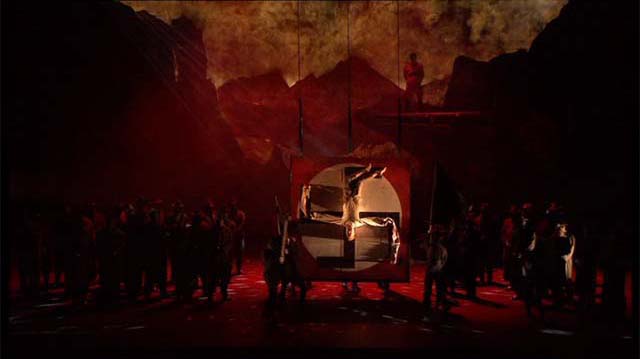
And, to emphasise the subtlety of it all, here’s Faust crucified on a swastika with Adolph going nuts in the background.
Berlioz’ Les Troyens is widely considered to be his masterpiece and it does have a lot going for it both dramatically and musically, especially when given the full on star studded treatment that it got at the Chatelet in 2003. That said, it’s dramatically rather odd, it’s very long (well over four hours) and it requires huge forces; twenty soloists, massive chorus, dancers, supers, acrobats, jugglers etc. It also has preludes, ballets and masques on a scale that seem more appropriate to the 17th than the mid 19th century. Act 4 is particularly marked in this respect. It’s perhaps no wonder that it was never played complete in Berlioz’ lifetime. The story is taken from Books two and four of Virgil’s Aeneid; the first dealing with the wooden horse and the fall of Troy (Acts 1 and 2) and the second with the Trojans at Carthage (Acts 3-5). The problem is that there isn’t much connecting them. In the first part the drama centres around Cassandre. By the end of Act 2 she’s dead and we move on to Carthage where Didon makes her first appearance. The Trojan hero Énée links both halves but he’s a pretty minor presence in the first bit.
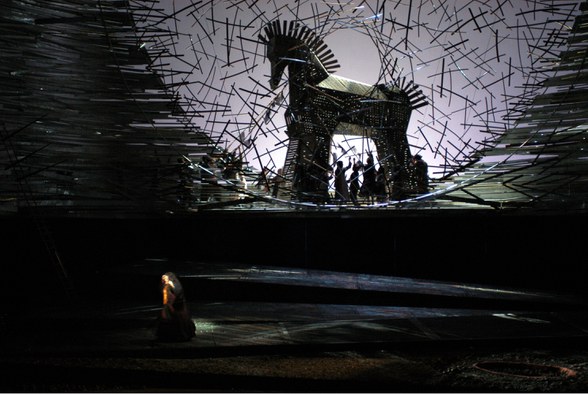
In Acts 1 and 2 Troy is a sparse stage with a reflector above it projecting much of the action onto a backdrop of an Italianate cityscape of Troy. It’s a good idea as for most of the act there are a lot of people on stage and it’s not easy to take it all in. Occasionally the cityscape dissolves into some kind of symbolic back projection as with the the horse itself which is just a rather grim projection of a horse’s head. It works pretty well. A similar approach is used to introduce the scene where Hector’s ghost tells Énée he’s got to rebuild Troy in Italy. The camera work for the DVD switches between stage and backdrop with the usual close ups and just occasionally pulls back to let us see what the theatre audience is seeing. All in all I think Peter Maniura is giving us as good a look at Yannis Kokkos’ staging as could reasonably be done on DVD.
Vocally, the first part is all about Cassandre, here played by Anna Caterina Antonacci. She’s stunning. She gives a totally committed performance as the prophetess who everyone thinks is mad until it’s all too late. She stands out visually in a simple white dress against the rest of the Trojans who wear greatcoats of mixed military provenance and otherwise look generally scruffy giving an effect somewhere between Colditz and Les Miz. Her singing and acting are both quite mesmerizing. She is well backed up Gregory Kunde’s Énée although he doesn’t have too much to do. He manages to sound like a bel canto singer while upping the heft to cope with some pretty dense orchestration.
Here’s a clip of Antonacci which gives a pretty good idea of the overall idea.
Act 3 involves a total shift of dramatic and aesthetic gear. Now we are in Carthage where Didon (Susan Graham) is presenting the results of the first Five year Plan to what looks like a cross between a Druidic gorsedd and a meeting of the Carthage Soviet of Workers and Peasants. The plan has met its targets but their idyllic existence is threatened by the king of Numidia who wants to marry Didon and is marching on Carthage. Énée appears and offers to save the peace loving Carthaginians (nb these are not the baby burning, general crucifying Carthaginians I remember from history) by doing the fighting for them. This is followed by a longish section where Didon’s sister Anna (the very fetching Renata Pokupić) tries to persuade her that hooking up with Énée would be a smart move. This continues into Act 4 which rather drags. There’s a long, almost Wagnerian, prelude after which Didon enters, obviously head over heels in love. We can tell this from her little interpretative dance and her spending the next half hour looking like a contented hamster watching several ballets complete with jugglers and acrobats.. The entertainmet concludes with singing, dancing Nubians who could have come straight out of National Geographic c. 1950. Finally we get going again and Didon decides that maybe the Énée thing isn’t such a bad idea after all. She and Énée sing the gorgeous duet “Nuit d’ivresse”. Kunde and Graham are very fine indeed in this as you can see below. Both these acts are played out on a brightly lit stage with lots of bright whites and colours.
The act concludes on an ominous note as Mercure reminds Énée of his Italian destiny.
In Act 5 we are back dramatically and aesthetically more or less where we started. It’s dark, Trojans in greatcoats, the reflector. The ghosts of the dead Trojans remind Aeneas of his quest. He decides to obey. Most of the rest of the act is Susan Graham going through a full gamut of emotions; anger, grief, vengeance, resignation. It gets a bit over the top but she is elemental and always musical. Graham steals the show in the final three acts but she is very well supported by Pokupić’s Anna and Laurent Naouri’s Narbal as well as Kunde. Cassandra (or her ghost) get the last word but nobody is going to believe her.
John Eliot Gardiner conducts the Orchestre Révolutionnaire et Romantique. He pushes things along well without sacrificing grandeur at the needed points. The period instruments give some pleasing variation of tone colour. The chorus is the ever excellent Monteverdi Choir. No problems in those departments.
Peter Maniura’s screen direction maintains its high standard through the second half. So what of the disk package? It’s an Opus-Arte production and it was filmed in high definition. The 16:9 anamorphic picture is superb even on DVD (which is what I watched) but it is also available on Blu-Ray which should be even better, especially as the Blu-Ray is cheaper and two discs versus three DVDs. Sound is LPCM stereo or DTS 5.1 (DTS HD on the Blu-Ray). The DTS track is really good with real depth. There is even adequate documentation and an hour long “Making of” documentary. All in all, it’s what an opera DVD/Blu-Ray release ought to be.

 There’s going to be a Robert Lepage retrospective at the TIFF Bell Lightbox from March 27th to April 1st. Most of the screenings/events will focus, naturally enough, on Lepage’s output for cinema but there are a couple of showings of interest to opera fans. On Saturday March 29th at noon there’s a showing of his production of Berlioz’ La Damnation de Faust first seen in the MetHD series and the following day at 12.30 pm one can see Susan Froemke’s documentary Wagner’s Dream about the making of the Metropolitan Opera Ring cycle. Lepage will be present at both shows.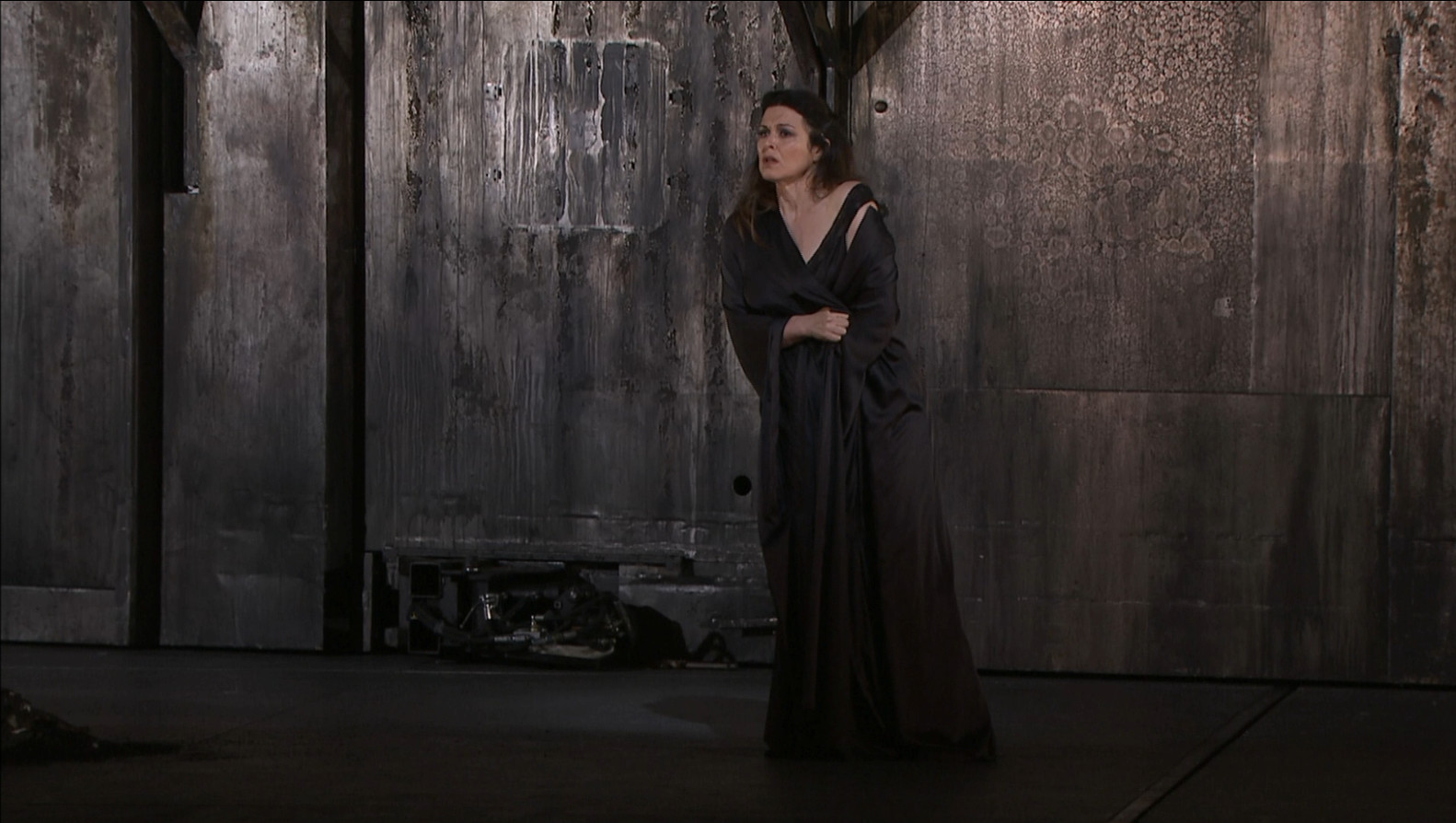


 operaramblings