Tuesday’s concert in the RBA was given by students from the France-Canada Academy of Vocal Arts currently being hosted by the UoT Faculty of Music. The music was a range of mélodies, all in French, by French and Canadian composers.
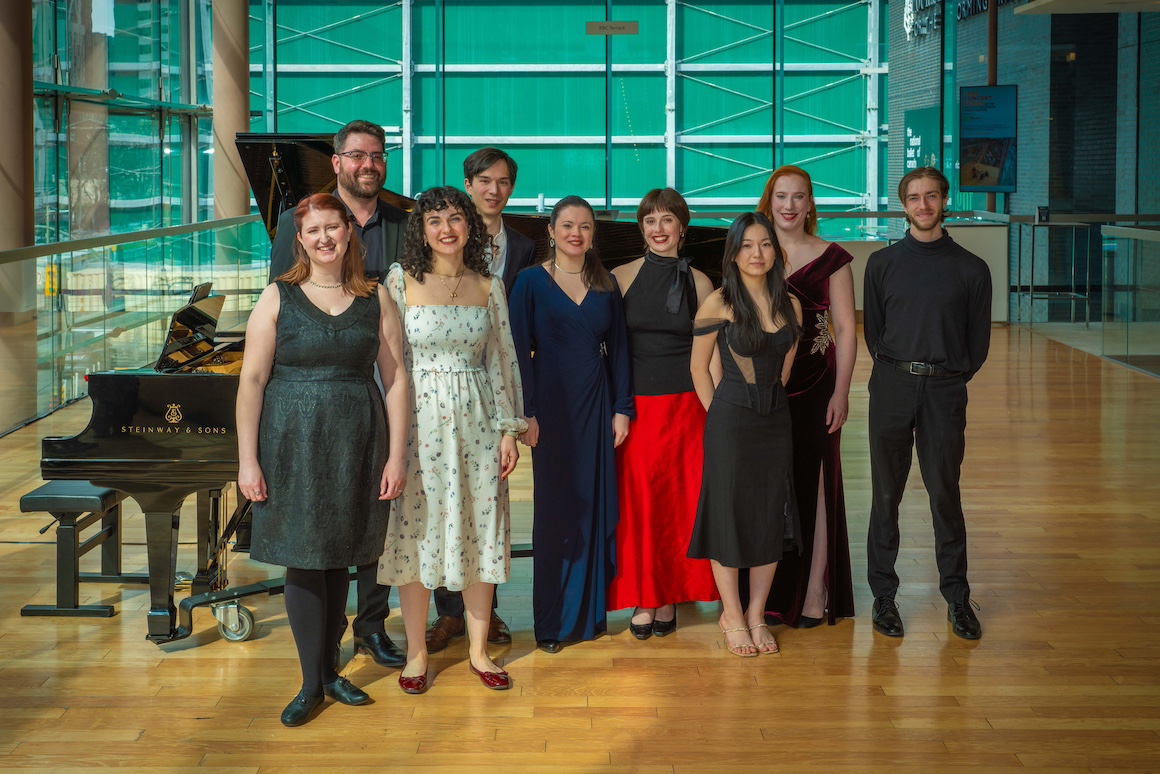

Tuesday’s concert in the RBA was given by students from the France-Canada Academy of Vocal Arts currently being hosted by the UoT Faculty of Music. The music was a range of mélodies, all in French, by French and Canadian composers.
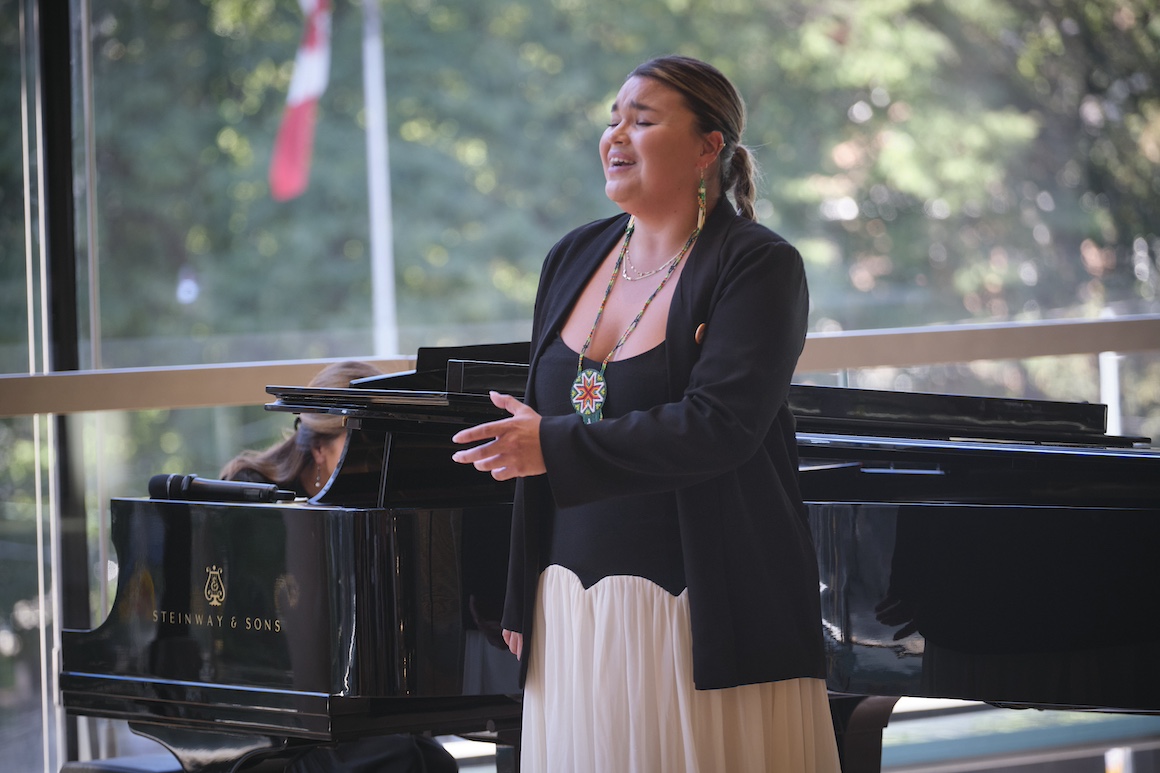
Tuesday was the National Day for Truth and Reconciliation and the COC programmed Innu soprano Elisabeth St-Gelais, with pianist Louise Pelletier, for the lunchtime concert series. They began very appropriately with Ian Cusson’s Le Récital des Anges; settings of two elegiac poems by Émile Nelligan about death and childhood. They are very beautiful and deeply sad songs that seemed just right for the occasion.
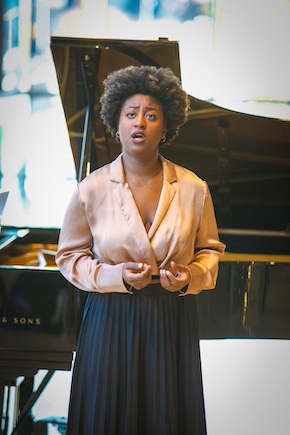 Tuesday’s RBA concert with members of the Ensemble Studio was themed around composer rivalries though not the really toxic ones. No Mozart/Salieri or Wagner/Meyerbeer here! The most convincing as a rivalry was the first; Berlioz vs Rossini. So Queen Hezumuryango sang “Le spectre de la rose” with some sensitive handling of the text and a pretty fiery “Cruda sorte” from L’Italiana in Algeri with plenty of emotion. I definitely like her voice more when she’s going for drama as she’s got plenty of power and expressiveness.
Next up was Duncan Stenhouse with four pieces that illustrated the complex relationship between Brahms, Wagner and Dvořák. “Der Tod, das ist die kühle Nacht” from the Vier Lieder Op. 96 and “Při řekách babylonských” from the Biblické písně were sung with excellent control and expressiveness but if there’s a connection it’s not obvious to me. The two operatic pieces though; “Běda!, Běda!” from Rusalka and “Abendlich strahlt der Sonne Auge” from Das Rheingold have, I think, more obvious affinities; both dramatically and musically. Both were very well sung. It’s so good to have a genuine bass in the Ensemble again! Continue reading
 Wednesday’s lunchtime recital in the RBA featured Simone Osborne; currently appearing as Norina in Don Pasquale, and pianist Rachael Kerr. It was a well curated selection of songs apparently, at least partially, inspired by sleep deprivation singer and pianist both have small children!). There were three sets of four songs. One in each set was by a Canadian composer backed up by two others that were thematically related.
So the first set featured birds. Godfrey Ridout’s arrangement of She’s Like The Swallow was supported by Viardot’s Grands oiseaux blancs and Grieg’s “Ein Schwan” from Sex digte af Henrik Ibsen. It worked. The Ridout got a reasonably folk song like treatment, the Viardot was dramatic and the Grieg was just beautiful. A good start. Continue reading
 Thursday’s concert in the Music in the Afternoon series at Walter Hall was curated by Marion Newman and featured herself, soprano Melody Courage, baritone Evan Korbut and pianist Gordon Gerrard. It featured some classic opera duets and trios ranging from the Flower Duet from Madama Butterfly to an exuberant “Dunque io son” from the Barber of Seville along with Berlioz’ “Vous soupirer” from Beatrice et Bénédict (which sounded like title should translate as “you will be immersed in warm soup”). These numbers were all very well done and there were a couple of solo pieces too with Melody singing the Poulenc La Fraicheur et le Feu with great verve and Evan chipping in with an exuberant “Sit down, you’re rocking the boat” from Guys and Doills.
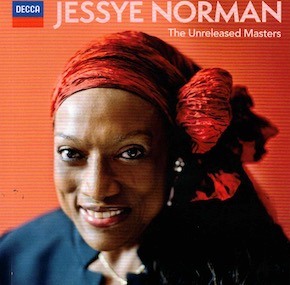 Decca have just released a 3CD set of previously unreleased recordings made by the late Jessye Norman between 1989 and 1998 with various orchestras and conductors.
The first is a series of extracts from Wagner’s Tristan und Isolde recorded in Leipzig in 1998 with Kurt Masur conducting the Gewandhaus Orchestra. Besides the Prelude there’s most of the Isolde/Brangäne scenes from Act 1 (Hannah Schwarz is Brangäne). Then comes the huge Act 2, Scene 2 duet; “Isolde! Geliebte! – Tristan! Geliebte!” etc, with Thomas Moser as Tristan, and finally, and inevitably, the “Liebestod”. It all sounds really good with the duet properly ecstatic and the “Liebestod” very moving. It’s a studio recording made in many takes so that challenging final scene doesn’t have to be sung after many hours on stage which no doubt contributes but it’s all very fine and a good record of Jessye in the role.
The 2021/22 winner of the Wirth Vocal prize at McGill’s Schulich Schoolof Music is Innu soprano Elisabeth Saint-Gelais. She performed in the RBA at noon on Wednesday, accompanied by Louise Pelletier. It was impressive. She has power to burn and a rather lovely voice and, not so common among young dramatic sopranos, considerable control across her registers. She also displayed considerable linguistic skill in French, German and Czech though I’m completely unqualified to comment on the quality of her Anishinabe.
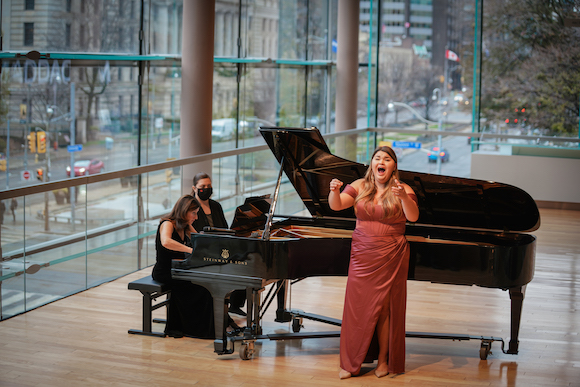
Yesterday the Ensemble Studio put on a really nicely curated tribute to Pauline Viardot. Viardot was a singer, pianist, composer and muse who was enormously influential in music circles in paris in the middle years of the 19th century. She came from a famous musical family and was the younger sister of Maria Malibran. Her own work is little performed today although the Royal Conservatory did her Cendrillon in 2016.

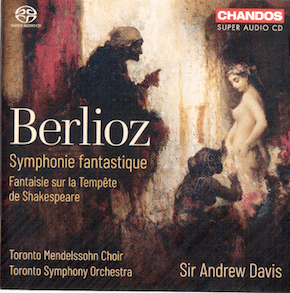 The Toronto Symphony have a new CD out. It’s a couple of Berlioz works recorded under the baton of Sir Andrew Davis at Roy Thomson Hall in September 2018. The first piece is the rarely heard Fantaisie sur la Tempête de Shakespeare for which the orchestra is joined by the Toronto Mendelssohn Choir. It’s an early piece inspired by one of Berlioz’ unrequited passions (like everything else by Berlioz!) and was considered daringly modern in its day. It’s said to be the first piece to introduce a harp to the symphony orchestra and it also includes piano four hands. It’s very colourful and rather brash which is territory that Sir Andrew excels in. There’s great clarity to both the singing and the playing.
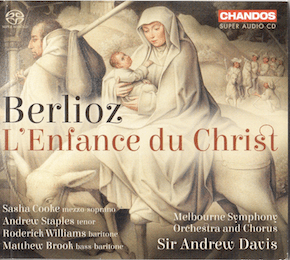 I got hold of the recent Chandos recording of Berlioz’ L’Enfance du Christ largely because I wanted to take a look at the Super Audio CD format. On that subject my thoughts are here. But it was also a chance to listen to a piece I was entirely unfamiliar with. I’m glad I did. It’s quite beautiful music; lyrical rather than dramatic, except perhaps in the early sections where Herod is having a hissy fit. I can see why it’s not done very often though. It calls for seven soloists plus chorus and a big orchestra.
 operaramblings