Get your tickets now

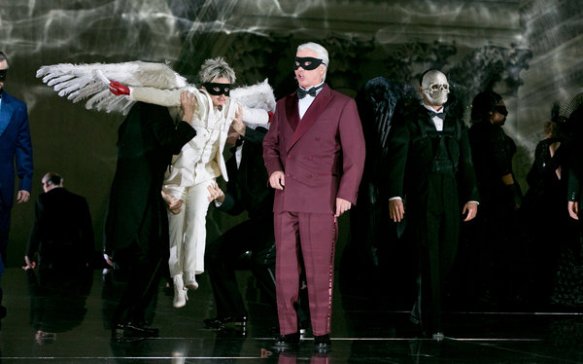
Photo Credit - Kira Perov 2005

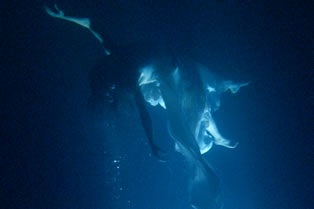
Photo Credit – Kira Perov 2005

Word on the street is that there are only “a few hundred” tickets left for the COC’s February run of the Peter Sellars/Bill Viola Tristan und Isolde.  It’s a fair bet that most of the available tickets will be for nights when Burkhard Fritz is singing rather than Ben Heppner.  If you want to see Heppner I’d plan on buying now rather than expecting something last minute to turn up.  I’d expect there to be horrific line-ups for the same-day nosebleeds and standing room tickets (and I don’t have the stamina to stand through Tristan!).

tito05Christopher Alden’s production of Mozart’s La Clemenza di Tito apparently isn’t selling so well, despite a stellar cast and a production that got very good reviews in Chicago.  This makes me a sad panda.  Unfashionably, perhaps, I regard Clemenza as one of Mozart’s best operas, perhaps his very best, so the chance to see it with a wonderful cast is one I would not miss.  My current plans call for me to see it twice; with the principal cast and with the Ensemble Studio, but I shall be sorely tempted to get in for an extra look earlier in the run than my current tickets!

Yet another Big COC podcast

The latest episode of the Big COC Podcast is up on iTunes. This one features Gianmarco Segato of the COC plus three bloggers; myself, Lydia Perovic of Definitely the Opera and Leslie Barcza of barczablog.  We talked about Henze and European modernism segging into the differences between modern opera in Europe and America.  And that led to a discussion of Adès’ The Tempest, American conservatism, the Met and it’s audience, parties at Christopher Alden’s place and much more.  Then it was on to Lydia’s new novel, Incidental Music(go buy it).  There was also an interview with Nina Draganić about the free concerts in the Richard Bradshaw Amphitheatre.  When we came back it was for a discussion about the difference about men and women, action and feeling in opera and, ultimately, why the soprano always gets a raw deal!  I really enjoyed recording this one.  It really felt like a conversation between good friends (which it was) and it’s not been edited down too much.  I think there may have been a segment on the Opera Atelier Der Freischütz that got chopped.

Another Big COC Podcast

A couple of weeks ago we recorded another Big COC Podcast.  It’s now available on the COC website and from iTunes.  This time the panel was myself, Wayne Gooding from Opera Canada magazine and Gianmarco Segato and Gianna Wichelow from the COC.

Topics covered included Robert Everett-Green’s Globe and Mail article on Il Trovatore and the persecution of the Roma, upcoming opera productions across Canada (mostly Verdi!), an interview with Marilyn Gronsdal on her Montreal remounting of Christopher Alden’s production of Der Fliegende Holländer; seen at the COC in 2010, and that hardy perennial, HD cinema transmissions of opera with especial emphasis on the Met.

COC’s Fledermaus succeeds on several levels

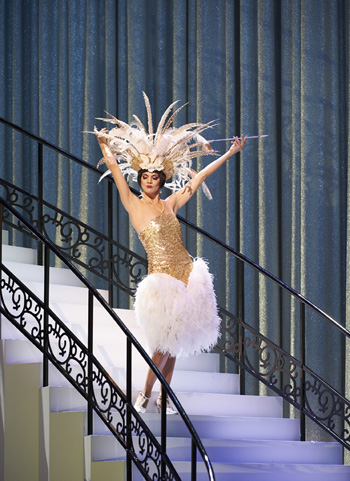
Christopher Alden’s recent productions in Toronto; Rigoletto and Der Fliegender Holländer, were controversial, rather cerebral affairs that delighted his fans but tended to puzzle, and even infuriate, the more conservative critics and opera goers.  His Die Fledermaus, which opened last night at the Four Seasons Centre, has something for everybody.  There are two main threads uniting the three acts.  The first is the piece as an allegory of Austrian bourgeois society from an insecure pre WW1 period through a period of unbridled hedonism in the 1920s to the beginnings of Fascism.  The second is a much more explicit depiction of Falke as the ringmaster of the whole circus.  He goes from manipulative Freudian psychiatrist in Act 1 to Orlofsky’s confidante in Act 2 to, bat costumed, sitting astride the giant watch that hangs above the stage; the only character aloof from the takeover of the drama by the sinisterly Fascistic Frosch. All this is strung together by prefiguring later elements in earlier scenes.  In Act 1 the party goers from Act 2 invade the scene via the fractured wall of Rosalinde’s bedroom as Gabriel imagines the delights to come.  A silent but frenetic Frosch appears on stage at various points in the first two acts although his identity isn’t apparent until the coup de theâtre that carries us into Act 3.  Additionally Alden does not shy away from bat imagery, including it’s darker overtones.  There are bat shadows on the backdrop during the overture, Falke first appears as a Dracula look alike, the ‘ballet’ are batgirls and we close out with Falke, again dressed as a bat, overseeing the denouement.  There’s a lot going on  and I shall be very happy to see this again and delve deeper (a recurrent theme with Alden productions).  Continue reading

Portents of Regie

Until very recently one of the few good restaurant options within easy walking distance of the COC offices and the Kitten Kondo (since only a couple of hundred metres separate them) was a pretty decent locavore resto called Veritas.  I’ve seen COC General director Alexander Neef in there more than once. Alas Veritas is no more.  It has been replaced by what looks to be a hideously trendy and overpriced bar called the Pacific Junction Hotel.  What’s a bit disturbing though is that this doubles the number of eateries in the ‘hood with Stiegl on tap (the other being the rather good, but also overly trendy , breakfast/brunch spot Le Petit Dejeuner.  Stiegl is, par excellence, the beer of Regie.  If beer features in a production by a controversial European director one can pretty much guarantee it will be Stiegl.  Is this an omen?  The 2012/13 COC season has Atom Egoyan, Peter Sellars, Robert Carsen and the Alden brothers directing 6 of 7 productions (surely enough to induce apoplexy in the National Post‘s Kaptainis).  Are the hop leaves predicting a further shift away from the Lotfi Mansouri aesthetic?  With this much Stiegl around can Herheim or Bieito be far behind?

Rigoletto revisited

Last night I went back to the Four Seasons Centre to take another look at Christopher Alden’s Rigoletto. I was up in Ring 5 this time so quite a different viewpoint and it was the opening night cast singing. I now have a better understanding, I think, of what Alden is driving at and some of the stage action that was just puzzling first time around made more sense. Certainly the role played by Giovanna (Megan Latham) makes much more sense seen as the count’s procuress. The interpretation of Sparafucile is also interesting; part commedia perhaps and reminiscent of the quack in L’Elisir d’Amore with a sinister twist. If we take as valid Alden’s assertion that Rigoletto’s separation of personal and public life is a delusion then having all the action played out in “public” makes a certain kind of sense, though then I have to ask why, uniquely, the scene where Gilda confesses to her father what we (and he) already know, that she has been debauched by the duke, has to be between the two of them is a bit of a mystery. So, all in all, I still think it’s an interesting and very beautiful but not quite “of a whole” production. I much prefer that the COC take some chances even if not everything comes off 100% and I shall look forward to Mr. Alden’s next production here.

Musically there wasn’t a lot to choose between this cast and the one I saw on Friday. Quinn Kelsey is a very powerful Rigoletto and he was a little more restrained in the acting department than Lester Lynch. All in all a very fine performance. Dmitri Pittas was solid as the duke but I think David Lomeli has a more Italianate sound. Ekaterina Sadovnikova is a rather different Gilda to Simone Osborne. Her voice is lighter coloured and perhaps more classically suited to this role and there were none of the top end insecurities that some commented on on opening night. She did seem a bit underpowered in the duets with Kelsey but was fine singing solo. Once again I was pleased/surprised by how good the sound is up in the nosebleeds.

Bottom line, I still think this is a production worth seeing. The house wasn’t full either night I went and, in particular, there were plenty of seats last night in Ring 5. I got a second row dead centre seat as a “rush” ($22) and there were still OK seats available for that price half an hour before curtain.

Lynch, Lomeli and Osborne rock Rigoletto

Last night was the second performance of the COC’s new Rigoletto and the first featuring the alternate leading role trio of Lester Lynch (Rigoletto), David Lomeli (Duke of Mantua) and Simone Osborne (Gilda). The rest of the cast was as on opening night.

Musically this was a really splendid evening. Everybody sang really well. I like Lester Lynch’s idiomatic playing of the title role and he managed to combine a not inappropriate amount of scenery chewing with being thoroughly musical. Lomeli lived up to the “dragged from obscurity by Placido Domingo” hype. I think there is a true Italian tenor emerging here. He nailed his arias with lovely ringing high notes and plenty of swagger. Osborne, on role debut, was lovely. Caro nome was one of the highlights of the evening and ,in general, she sounded very secure across some pretty tough music. The chemistry between the three was pretty good although the production maybe put more emotional distance between Gilda and Rigoletto than is sometimes the case. In any event the voices blended well and seemed well balanced. Among the other roles I was particularly impressed by Kendall Gladden’s Maddalena. She has a really smoky mezzo that created a pleasing contrast with the brighter voices. She’s a pretty fine actor too so it’s easy to see why she gets cast as Carmen! I also liked Philip Ens’ Sparafucile. He was a sinister presence and a genuine bass with a thoroughly solid lower register. All in all, the casting managed to combine very good individual singers into an ensemble that had a really good balance of tone/timbre. The orchestra and chorus were at their usual high standard and Johannes Debus kept things together very nicely and didn’t distract from the singing and I do think this is very much a singers opera.

The production and design (Christopher Alden and Michael Levine) was very decorative. All the action plays out in a lavishly panelled and furnished “gaming room” looking something like the smoking room at one of the better London clubs in the mid/late 19th century. It does duty for the duke’s court, Rigoletto’s home and Sparafucile’s inn. In a sense this creates a kind of unity; all of these spaces are misogynistic theatres of corrupt power and delusion. On the other hand it requires the audience to suspend disbelief more often and more willingly than usual. It’s an odd kind of secret that can be sung mezzoforte in front of the people it’s supposed to be secret from! The male dominated Victorian aesthetic seems to produce a kind of emotional coolness too. We never quite get enough emotional charge in the Gilda/Rigoletto dynamic to fully feel his loss (i.e. I didn’t cry at the end). The final scene though is splendidly and very effectively done.(*)

So summing up, I enjoyed the show.  Musically it is first rate.  The production was interesting but I don’t think the concept was quite able to carry the piece emotionally.  It’s not a disaster and there’s nothing to shock the traditionalist.  Maybe if I had seen Rigoletto a million times before I’d be more positive.  Go see the show and judge for yourself!

The production runs until October 22nd and there is a choice of the cast we saw or Quinn Kelsey, Dmitri Pittas and Ekaterina Sadovnikova as Rigoletto, the duke and Gilda.

(*)Spoiler follows… Continue reading

Opera 101 – Rigoletto

The second Opera 101 of the season took place at the Duke of Westminster last night. The panel were tenor David Lomeli, director Christopher Alden and designer Michael Levine. Once again the event was moderated by Brent Bambury. Alden kicked off with describing his overall concept for the production which he sees as being about how people balance their public and private lives in a world of constraining and essentially corrupt power structures. We got a fair amount about the history of the production which originated with a version in Chicago that got very mixed reviews. Michael Levine also talked about his view that people today see differently from people in Verdi’s time (the argument turns on the relationship between painting and stage aesthetics) and therefore he designs to meet our visual perceptive expectations. Inevitably at this point we got into the perpetual Opera 101 debate about it being all about the singing and can we have our traditional productions back please. It actually was almost a caricature of that debate with Alden saying that if he didn’t get booed he hadn’t done his job. Sometimes I almost (almost!) sympathise with the traditionalists. It’s obvious that the aesthetic Powers That Be really despise them. I suppose I do too really.

Gears changed a bit when emphasis turned to David Lomeli and his discovery as an “unknown” by Placido Domingo. Articulate as Lomeli was (far more articulate than Alden or Levine), it didn’t ring quite true. I think there are genuine discoveries of kids who knew nothing about opera growing up but I’m not sure that can be true for someone whose grandmother sang with Di Stefano and spent seven years as a professional singer at the opera in Mexico City. He was interesting and funny on how he reacts as a singer to different production concepts. As always, I think this boils down to a singer takes what they are given until/unless they become a superstar and then they get to pick and choose. He did do a neat demonstration of how an operatic tenor treats high notes versus how a mariachi singer does. He nearly blew the lid off the pub in the process.

I got to ask Christopher and Michael if there were more obscure or neglected works (rather than reinventing war horses) that they would like to bring to the stage. I was surprised but heartened that they both wanted to do new, contemporary work. Alden said there were a couple of younger American composers he was interested in but wouldn’t name names.