
UoT Opera’s spring production; Massenet’s 1899 opera Cendrillon, has been transferred to the Elgin Theatre with the MacMillan currently out of commission. They have made some sensible accommodations to the rather unfriendly Elgin acoustic. The orchestra is reduced to about thirty players and placed at floor level in front of the stage. Almost all the stage action takes place right at the front which helped significantly with voice projection.

Pandolfe & Servants
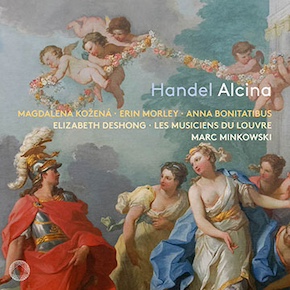 The new recording of Handel’s Alcina from Marc Minkowski, Les musiciens du Louvre and a rather starry line up of soloists is very good and quite interesting. It’s very complete. As far as I can tell all the ballet/dance music is included and so are all the Oberto scenes and all his arias. In all the staged performances I’ve seen (live or video) one or both are usually heavily truncated and I have seen versions where Oberto doesn’t feature at all.

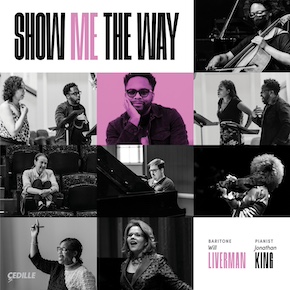 Show Me The Way is a new double CD from baritone Will Liverman, pianist Jonathan King and various collaborators featuring vocal works by female American composers. It draws on a wide range of influences from Ella Fitzgerald to Will’s mother.
 You might have noticed I’ve been expanding my horizons a bit recently. Saturday night was no exception. I was at The Toronto Sketch Comedy Festival at the Theatre Centre for a double bill of sketch comedy. I don’t think I’ve seen sketch comedy live since university so I really didn’t know what to expect.
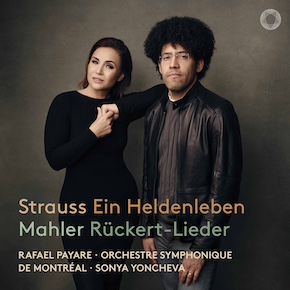 It’s an interesting idea for a CD to couple an exuberant early Strauss tone poem with a extremely introspective Mahler song cycle and that’s what L’Orchestre Symphonique de Montréal have done for their upcoming release with conductor Rafael Payare. I’m not especially familiar with Richard Strauss’ Ein Heldenleben Op. 40 but it sounds suitably Straussian and it gets a full blooded treatment from Payare with the solo violin part played quite beautifully by Concertmaster Andrew Wan.
 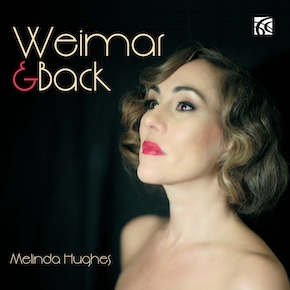 After discovering a rare Viktor Ullmann video, the Shoah Songbook concert and seeing Ute Lemper live I decided to go off and have a look for more music from Weimar, the Holocaust and resistance to Nazis; past and present. It was an interesting haul and included a 2018 album from English cabaret singer/comedienne Melinda Hughes.
 Opera Atelier have announced the line up for their 2024/25 season. As with other recent seasons there’s one show at the Elgin Theatre and one at Koerner Hall.
 Coming up later this month is Angel’s Bone; an opera with music by Du Yun and a libretto by the amazing Royce Vavrek. It’s a chamber opera for amplified voices and small ensemble. The plot concerns two angels who fall to earth and are ruthlessly exploited by otherwise unremarkable people. It’s a commentary on human trafficking and the exploitation of youth. There’s a really good looking cast and it will play at Harbourfront Centre March 22nd to 24th. It’s already attracted largely positive reviews in New York and Vancouver. More details including casting and ticketing
  operaramblings