 Jordan de Souza, late of the COC and Tapestry, continues to make news. Having recently joined the Komische Oper Berlin as Studienleiter, he will, from the 2017/18 season, be the Kapellmeister (but not GMD). I think (my knowledge of German musical semantics being imperfect) that this represents a step up from Assistant Conductor to Chief Conductor with a policy role but stops short of implying overall control of musical policy. Apparently the Komische is still looking for a GMD. For those who might be able to wring more out of it than I, here is the article from Musik Heute (auf Deutsch).
ETA: A kind German correspondent provided further information on the semantics of “Kapellmeister” as it generally applies in German houses (i.e. may not be 100% correct for the specific case of the Komische). So, Kapellmeister is basically the second resident conductor of an opera orchestra after the GMD, without (usually) being in any real sense an “assistant”to the GMD though possibly a “deputy”. Generally the Kapellmeister takes on a number of repertoire productions per season and perhaps also new productions and/or concerts.

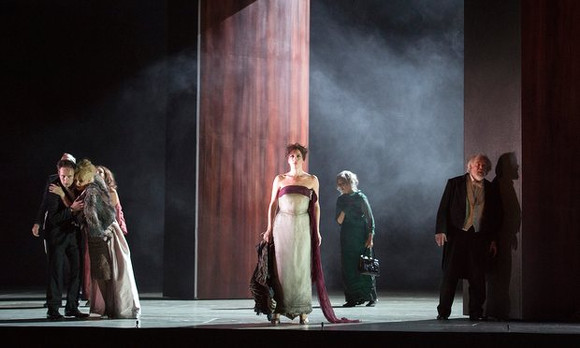
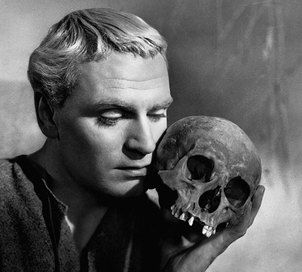 Just been checking out the Glyndebourne 2017 season announcement. Not that I’ll be going or anything but one production did catch my eye. There’s a new Hamlet opera from Brett Dean and Matthew Jocelyn to be directed by Neil Armfield and conducted by Vladimir Jurowski which sounds promising enough but look at this cast: Allan Clayton (Hamlet), Sarah Connolly (Gertrude), Barbara Hannigan (Ophelia), Rod Gilfry (Claudius), Kim Begley (Polonius), John Tomlinson (Ghost of Old Hamlet). There had better be a DVD.
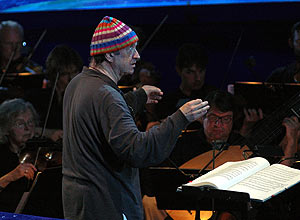 I woke up this morning to the very sad news that Nikolaus Harnoncourt had died. He was one of my favourite conductors of baroque opera and Mozart and, if I didn’t always think his ventures into the 19th century were fully successful, they were always stimulating. His partnership with the Zürich opera and its brilliant period instruments ensemble La Scintilla was as interesting as in work in Austria with Concentus Musicus Wien. He’ll be missed. There’s a very good obituary in the
 I took a quick look at the Metropolitan Opera’s recently announced 2016/17 and while for the most part it’s business as usual there’s maybe one surprise. There are 26 productions; 6 new, 20 revivals for a total of 225 performances. The first thing that struck me was how little Puccini there is. Only two Puccini works (La Bohème and Manon Lescaut) are being performed for a total of 23 shows (10.2%). There’s nothing pre Mozart and only one opera written post WW1; L’Amour de Loin which gets 8 performances (ETA: Apparently Cyrano dates from 1936 though you wouldn’t guess that to hear it. Still only 4 performances so it doesn’t affect the stats much). There are only two other works which could, at a stretch, be called “modern” stylistically; Salome and Jenůfa, but they were written in 1905 and 1903 respectively, and get only 6 performances each. Then there’ Rusalka (1901) and Rosenkavalier (1911) which are 20th century but not by any stretch “modern”. So, even on generous definitions of “modernity”, over 85% of the Met’s output is, essentially, 19th century.
 The Met has announced it’s 2016/17 cinema season. There are again ten productions with what seems now to be a settled mix of a smattering of the Met’s new productions and a bunch of war horses that have already been broadcast. For myself, I’ve pretty much had it with watching opera this way. There aren’t that many productions in the program that I have any interest in and the combination of far too common technical problems, cheesey scripted and rehearsed “interviews” and over long intervals make it all rather tedious. For the operas I want to see I’ll wait for the DVD release. Still for those who are still interested, here’s the line up.
  So today’s New York Times has an article apparently confirming the
 operaramblings