 My review of Matthias Goerne singing the orchestral version of Shostakovich ‘s Suite on Verses by Michelangelo Buonarroti is now published at myscena.org.
Michelangelo Sonnets
Reply

My review of Matthias Goerne singing the orchestral version of Shostakovich ‘s Suite on Verses by Michelangelo Buonarroti is now published at myscena.org.
 My review of the upcoming album Electric Fields from Barbara Hannigan and friends is now up at myscena.org.
Catalogue information: Alpha Classics ALPHA980
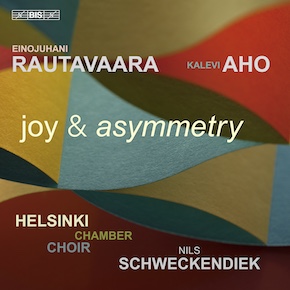 joy & asymmetry is a new recording from the Helsink Chamber Choir and their conductor Nils Schweckendiek. It consista of music by Finnish composers Kalevi Aho and Einojuhani Rautavaara, although by no means all the texts are in Finnish.
There’s some interesting music on the recording but a lot of it is relatively stately, layered, polyphony. That’s not exactly unusual for contemporary choral music and if it’s your thing there’s a lot to like her. I’ll admit though to finding much of it quite soporific.
 Fourteen years before Handel’s 1751 work Jephtha Maurice Greene produced a different English language oratorio on the same theme and with the same title. It’s now been recorded by the Early Opera Company.
Thje story is taken from Judges and concerns the recall of Jephtha from exile to lead the Israelite army against an Ammonite invasion (the people from the East bank of the Jordan not the cephalopods). Jephtha promises Jehovah that if he is victorious he will sacrifice the first creature “of virgin blood” he meets (shades of Idomeneo) which, of course, turns out to be his daughter. There’s no divine intervention and no happy ending.
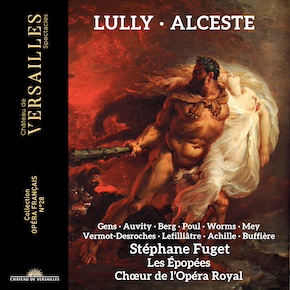 My review of the Chateau de Versailles Spectacles recording of Lully’s Alceste is now up at Opera Canada
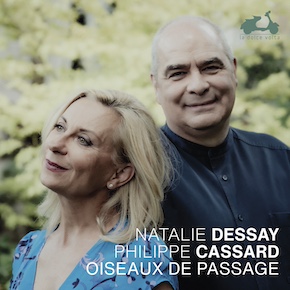 Few singers over the years have given me as much pleasure as Natalie Dessay. She and pianist Philippe Cassard have now announced their upcoming retirement from concert performance (Natalie retired from the stage a few years ago) and are about to release an album of their farewell tour material. It’s called Oiseaux de passage and it’s half an hour or so of bird themed chansons with some English language musical theatre numbers included for good measure.
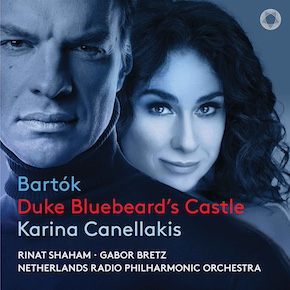 Bartók’s Duke Bluebeard’s Castle is a one act symbolist opera for two singers based on a French folk tale. It’s scored for a large orchestra and uses quite a lot of dissonance and it’s a famously tough sing for the singer (soprano or mezzo) singing Judit. It’s been recorded a lot. Wikipedia lists 32 audio or video recordings, not including this new one from Gabor Brertz, Rinat Shaham and the Netherlands Radio Philharmonic Orchestra conducted by Karina Cavellakis.
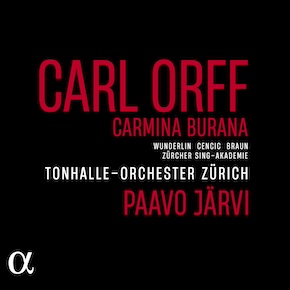 My review of the recent CD featuring Russell Braun with the Tonhalle Orchester Zürich is now up at La Scena Musicale. TL:DR it’s good!
Catalogue information: Alpha Classics ALPHA1031
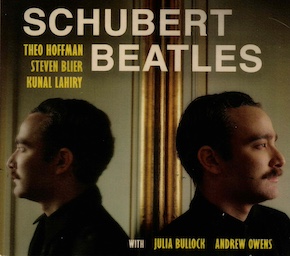 Once in a while I go out on a limb with recordings. Sometimes it’s great. I’m not as a rule particularly fond of “cross-over” material but I loved Emily D’Angelo’s freezing for example. So I took a listen to Schubert Beatles from the New York Festival of Song. Broadly speaking, it pairs Schubert Lieder with Beatles’ songs on a similar theme; Yesterday and Im Frühling for example. The Schubert is mostly presented pretty straight (except for guitar accompaniment on Du bist die Ruh). The Beatles songs are arranged, by Steven Beier, for various combinations of piano, violin, bass and guitar. The principal singer is baritone Theo Hoffman with tenor Andrew Owens and soprano Julia Bullock joining on some tracks. Continue reading
 operaramblings