
 A New Philosophy of Opera is a recent book by opera and theatre director Yuval Sharon. It deals with that thorny question “How do we revitalise opera?”. It contains a lengthy critique of the current opera world; repertory, performance practice, business model, and some pretty radical suggestions for ways forward. It’s focussed on the US but I think it’s pretty relevant to Canada too. It’s also worth pointing out upfront that Sharon’s way forward is not at all based on the German model. He’s actually quite critical of it as being almost as ritualistic, lifeless and elitist as the US model.
So let’s look at his critique of current practice. It can be summed up by the three adjectives in the previous sentence. So, inter alia: Continue reading
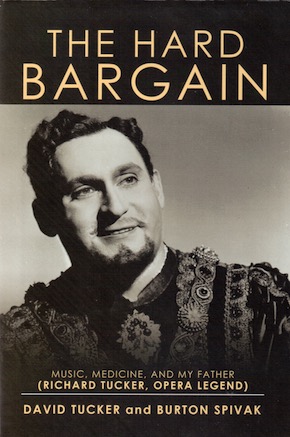 There are some unusual books coming my way these days. The latest is an autobiography (more or less) of David Tucker; the middle son of the late Richard Tucker; a fixture at the Met for thirty years until his death in 1975. I found it fascinating but I’m not entirely sure whether that’s because it’s a good book or because of the many places where it has a lot of personal resonance for me. Both I suspect. I also found myself having very ambivalent feelings about David (and perhaps even more so Richard) Tucker but I don’t think it’s the purpose of a reviewer of an autobiography to make moral judgements about his subject. The reader can do that for him/herself.
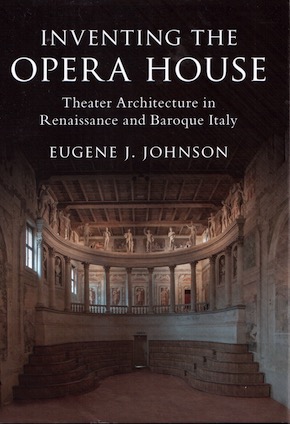 Inventing the Opera House: Theatre Architecture in Renaissance and Baroque Italy by Eugene J. Johnson is a scholarly but readable account of the prehistory and early history of the form we know today as an “opera house”. It’s fair to say that the road to the horseshoe shaped auditorium with ground floor seating and tiers of boxes looking over an orchestra pit to a deep stage was far from straightforward, perhaps even tortuous, and Professor Johnson lays out that journey in some detail.
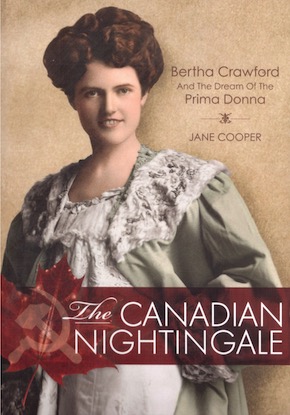 The Canadian Nightingale: Bertha Crawford and the Dream of the Prima Donna is a biography by Jane Cooper of early 20th century Canadian coloratura soprano Bertha Crawford who became, rather improbably, an “A” list opera star in Poland before returning to Canada to die in relative obscurity. It’s the story of an unusual life but it’s also the story of how opera and vocal music was impacted by war, revolution, depression, jazz and the cinema. It offers interesting insights into the Toronto (and wider) Canadian musical scene in the first quarter of the 20th century which was curiously similar to today in some ways and very different in others. There was neither opera nor a symphony orchestra in Toronto in that period so professional opportunities were few and far between but then, as now, most aspiring singers first professional gig was a section lead in a church choir and a main route to fame and fortune was to head for Europe. At least steamers had bigger baggage allowances than Air Canada.



 operaramblings