
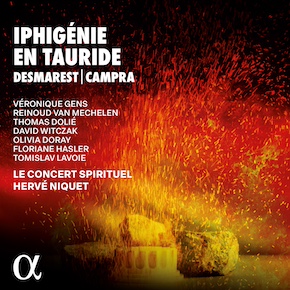
 Euripides’ Iphigenia at Tauris formed the basis for an opera almost a century before the more famous one by Gluck. Henri Desmarets; one of the more notable successors to Lully at Versailles/Paris began work on an Iphigenia opera to a libretto by Joseph-François Duché de Vancy in the 1690s but work was interrupted by Desmarets being exiled from France for marrying a minor without her father’s permission. Eventually the Académie Royale de la Musique entrusted the task of completing the opera to André Campra who teamed up with Antoine Danchet as librettist. The end result was a tragédie lyrique in five acts and a prologue that premiered in 1704 to some success. An even more successful revival in 1711 led to multiple productions across France and abroad before it was effectively replaced by the Gluck work in 1779. Continue reading
The other Iphigénie
1
 Opera Atelier have announced the line up for their 2024/25 season. As with other recent seasons there’s one show at the Elgin Theatre and one at Koerner Hall.
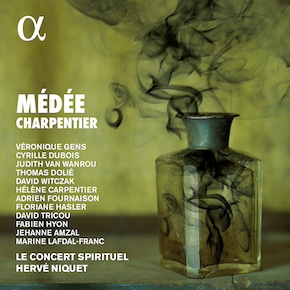 Cherubini’s Médée of 1797 is undergoing something of a revival at the moment albeit in an Italian version. But there’s an earlier and less known version of the same story with a libretto by (as opposed to based on) Corneille. It’s Charpentier’s Médée of 1693. It’s a tragédie lyrique with all the expected elements; an allegorical prologue in praise of Louis XIV, a classical subject, five acts, gods, spirits and demons and lots of spectacular theatrical effects. The Lully formula in fact.
  operaramblings