
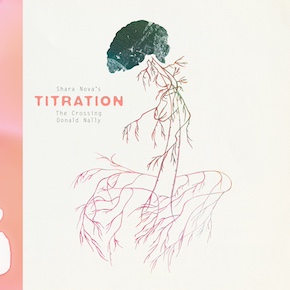
 Titration is a song cycle for unaccompanied choir by American composer Shara Nova. On the CD it is performed by The Crossing and their conductor Donald Nally. It’s an interesting and unusual, indeed quite unconventional, piece but it is oddly compelling and has won a fair bit of recognition including a Gramophone “Critics Choice” award this year.
It’s rooted in Nova’s reaction to her conservative upbringing in the American South and perhaps the key line of the text is “How do I keep on feeling in this mean, mean world?” The cycle is ung continuously. There’s no break between “movements”. It’s what I can best describe as “post-modern polyphony”. The interweaving vocal lines are essentially tonal but there’s a good deal of use of extended vocal technique; speech, humming, shouting, laughing, grunting, whooping and even growling and spitting. All this around a text which is as much about textures and patterns as explicit meaning.
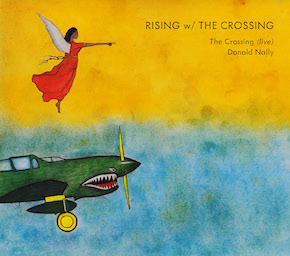 As I understand it the genesis of this recent CD from Philadelphia choir The Crossing and their conductor Donald Nally was members emailing each other clips of recordings from live concerts to keep their morale up during lockdown. I guess in that respect it’s got something in common with
 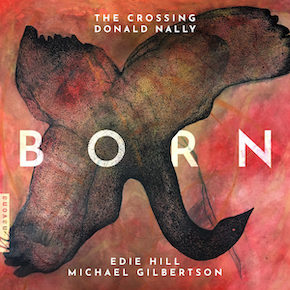 Born is the latest album from Philadelphia based choir The Crossing conducted by Donald Nally. There are three pieces on the album. Two works by Michael Gilbertson book end the line up. The first, Born, sets words by Wisława Szymborska translated by Stanislaw Baranczak and Clare Cavanagh. It deals in a very allusive way with the relationship between a man and his mother. The music is intricate but still sounds a bit “church choiry” for my taste. There’s nothing wrong with it. It’s well crafted and beautifully performed but not really my thing.
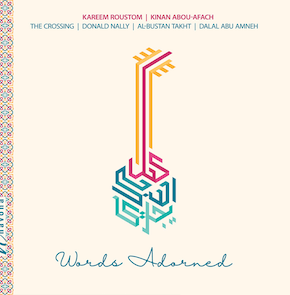 I’ve been listening to another new CD release by American choir The Crossing and their conductor Donald Nally. It’s called Words Adorned and contains two cycles by contemporary Arab-American composers setting really beautiful 11th century Andalusian texts.
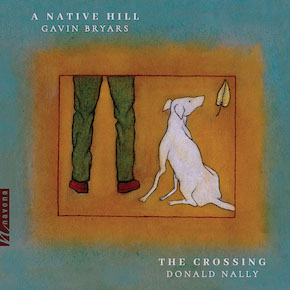 Gavin Bryars’ A Native Hill is a setting of sections from Wendell Berry’s 1968 essay of that title. It was written for, and recorded by, Philadelphia based choir The Crossing and their conductor Donald Nally. The essay was written by Berry shortly after moving back to Kentucky to farm. It deals mainly with how landscapes and the humans in them are shaped by each other in profound ways. It’s very local and specific and reminded me in a curious sort of way of WG Hoskins’ The Making of the English Landscape that came out a few years before the Berry essay.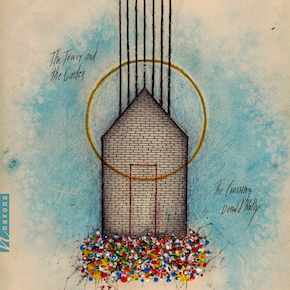
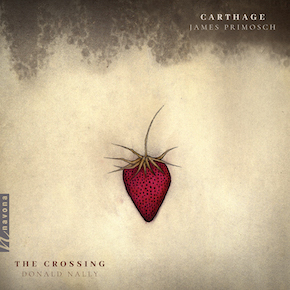 I’m never quite sure that unaccompanied choral music is quite my thing but The Crossing’s new recording of music by James Primosch caught my eye. It was the idea of the title track; Carthage, on prose by Marilynne Robinson from her novel Housekeeping, which employs the devastated city of Carthage as a metaphor for desire and imagination that drew me in. The image of once-fertile fields, salted and wasted, has haunted my imagination for decades and I wanted to see how it might play out in musical terms. I wasn’t disappointed.
 operaramblings