Fiddling with Nero

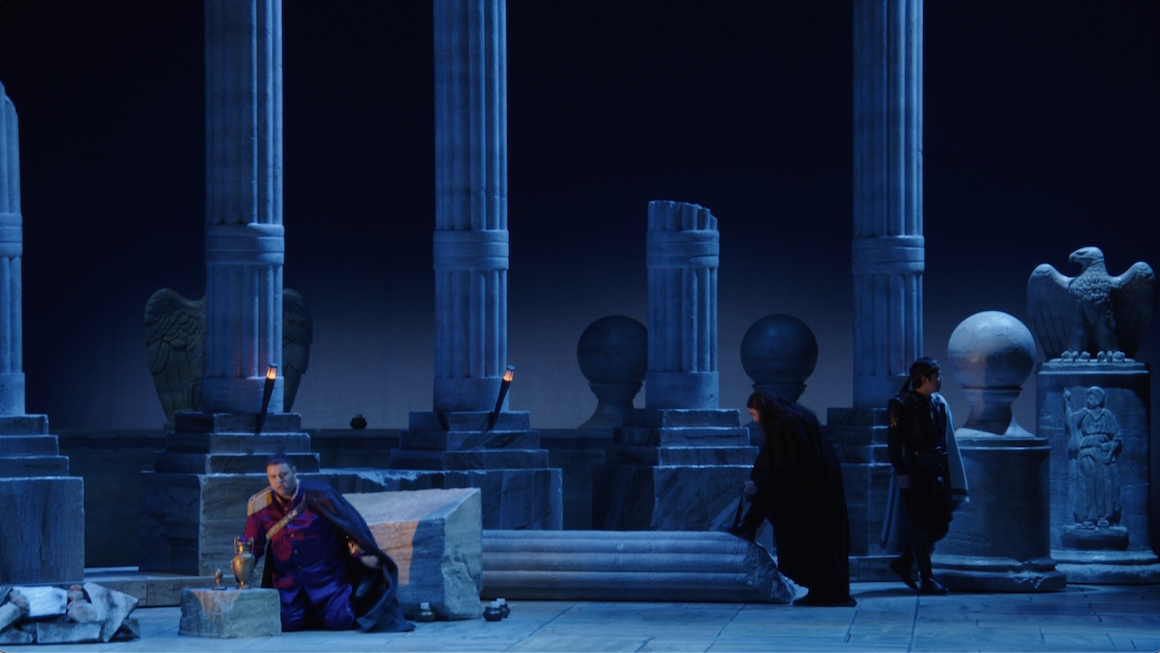
Arrigo Boito is better known as Verdi’s ibrettist on several well known operas but he did write a couple of his own.  Mefistofele is probably the better known of the two but it feels like the one he put pretty much heart and soul into is Nerone.  Now it’s a matter of some controversy whether he finished the opera or not.  Four acts were completed and the composer is on record, in 1911, as describing the opera as “finished” but there’s a prose summary of a possible fifth act which is generally regarded as so unstageable that the composer couldn’t possibly have made opera out of it.  In any event the version staged at Cagliari in 2024 and recorded for video is the four act version.
1.urn

Continue reading

Gory Guelphs and Ghibellines

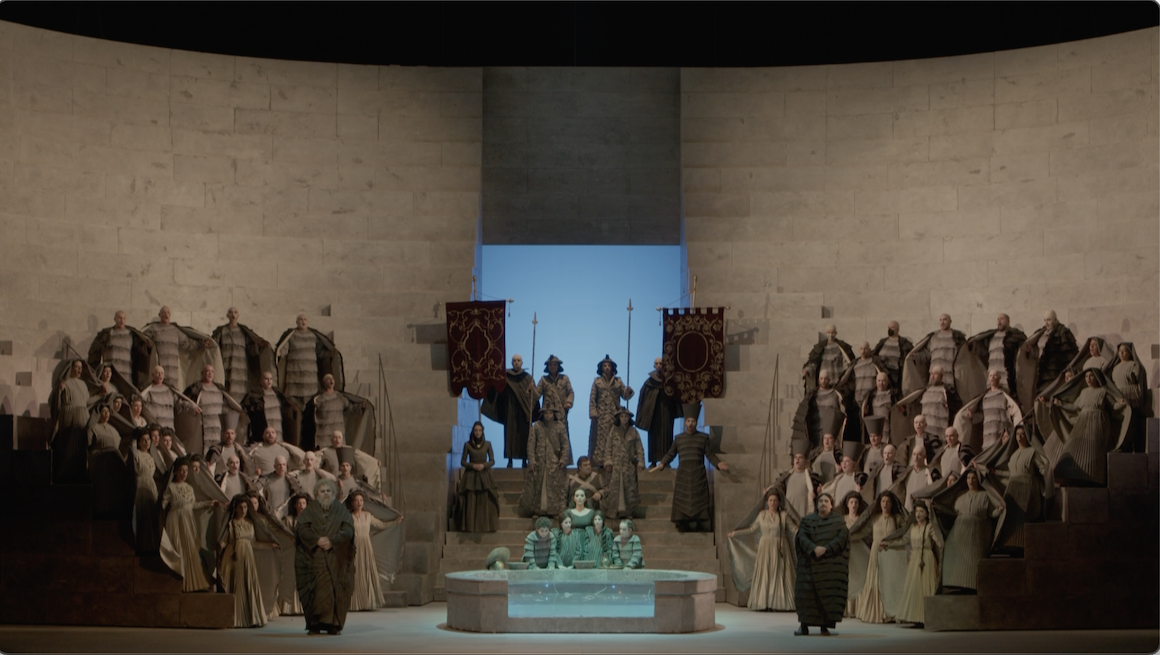
Throughout the history of Italian opera the long running feud between the Guelphs and the Ghibellines has provided composers and librettists with endless opportunities for pointless revenge killings and other assorted mayhem.  They werer still doing it in 1907 when Frencesco Cilea premiered his short three act opera Gloria.

1.fountain

Continue reading

Respighi’s Sleeping Beauty

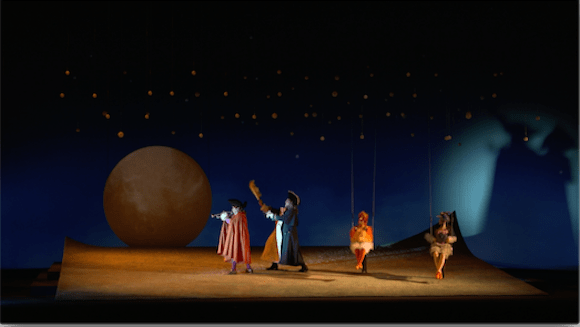
Resphigi’s La bella dormente nel bosco (libretto by Gian Bistolfi) is a take on the Charles Perreault fairy story.  It was originally written for a puppet theatre and later adapted for human performers.  Its heritage shows in it that it’s very much a numbers opera and it’s quite short.  The three acts come in at around eighty minutes.  Musically it’s a bit of a hodge podge.  It’s mostly quite atmospheric and colourful (similar to Resphigi’s better known orchestral works) with elements of parody.  One can sort of hear echoes of Debussy, Stravinsky and Strauss.  It finishes up with a cakewalk and a Broadway style finale which is decidedly odd.

1.birds Continue reading

La campana sommersa

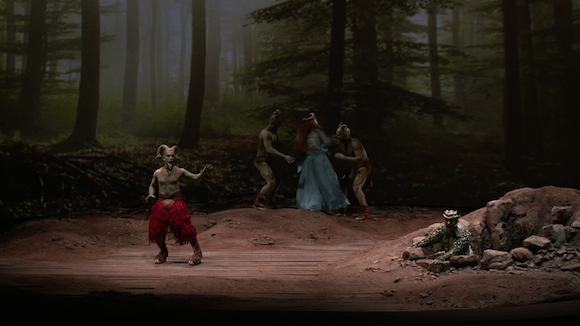
Respighi’s La campana sommersa is interesting in that it’s one of comparatively few post-Puccini Italian operas to get some sort of traction.  It premiered in Hamburg in 1927 and saw quite a few productions between then and 1939 including one at the Met in 1929.  Then it pretty much descended into obscurity before being revived in 2016 by a co-pro between Teatro Lirico di Cagliari (where the recording reviewed here was made) and the revived (more or less) NYCO (which used the Cagliari orchestra and chorus but American soloists).  It’s based on a symbolist poem by German poet Gerhart Hauptmann and concerns a bell; which has been hoofed into a lake by fauns, a master bell maker who thinks he is the pagan god Balder, a water sprite, Rautendelein, and assorted mortals, elves, witches, fauns and so on.  As with all these works no-one lives happily ever after.

1.faunsetc

Continue reading