Jurowski and Tcherniakov do War and Peace

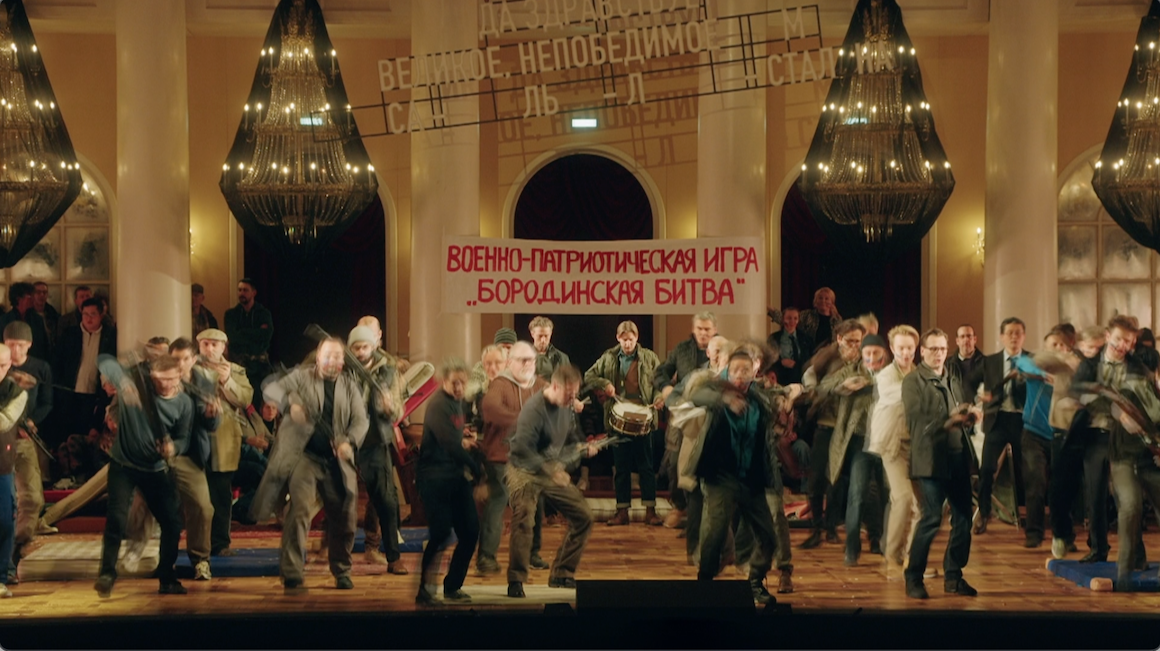
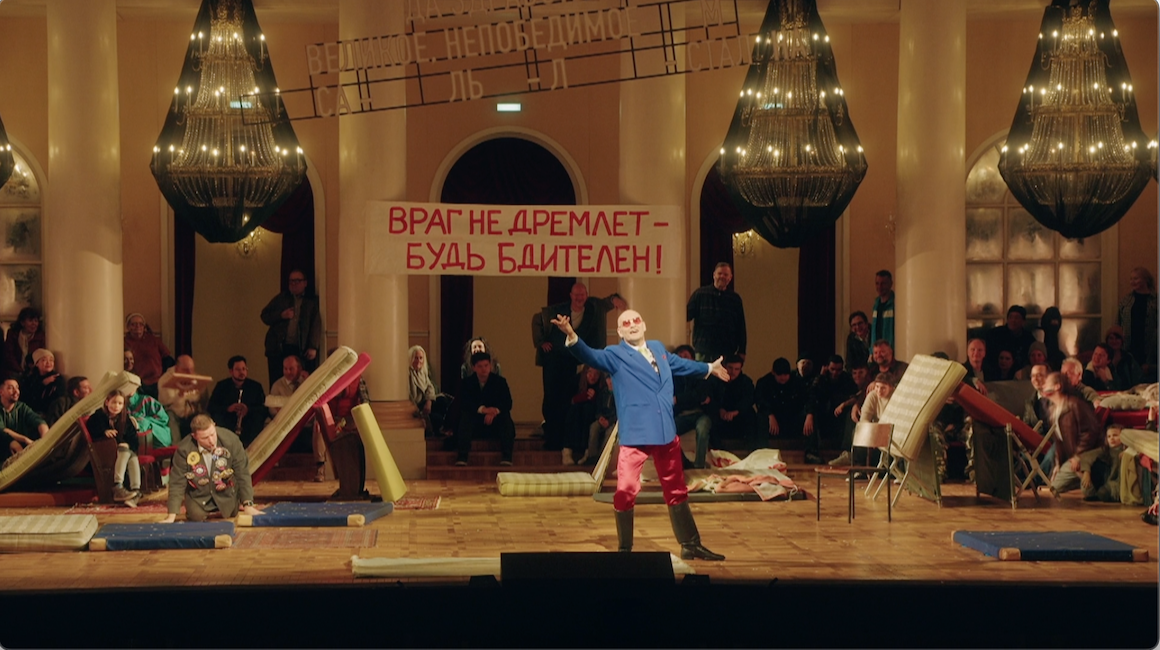
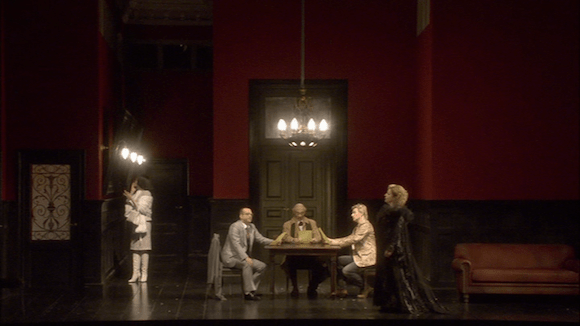
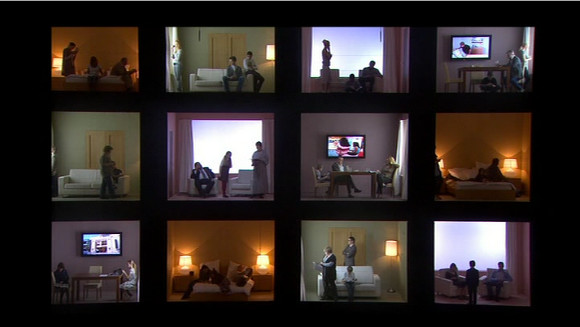
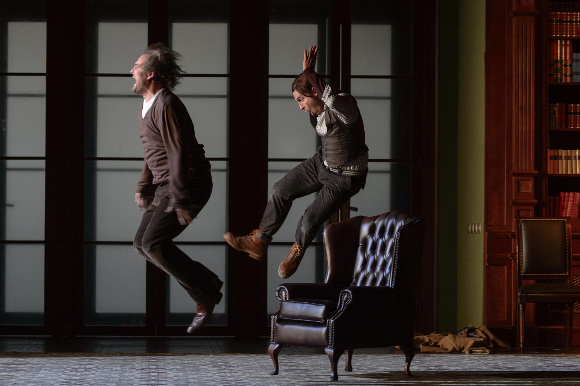
How does one do (if one does at all) a propagandistic Russian opera in the wake of the invasion of Ukraine.  Dmitri Tcherniakov and Vladimir Jurowski’s approach to Prokofiev’s War and Peace, filmed at Bayerische Staatsoper, is radical, complex and controversial.  See my full (and ridiculously long) review at La Scena Musicale.

Siegmund as Psychopath

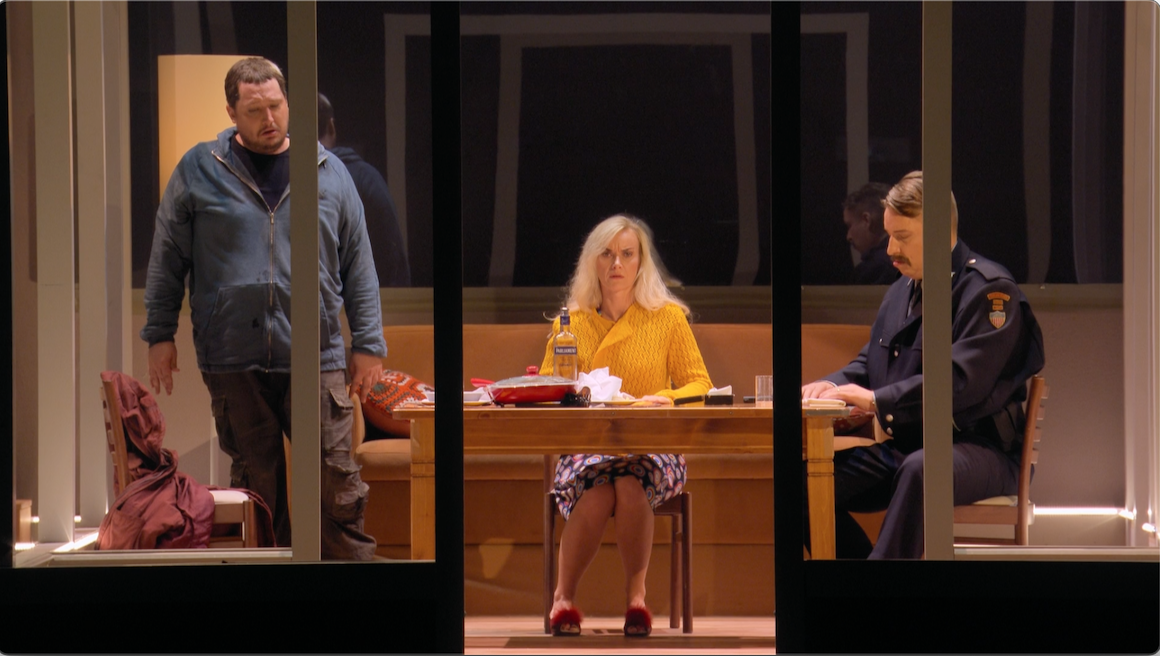
Following on from Das Rheingold, the second instalment of Dmiti Tcherniakov’s Ring cycle; Die Walküre, recorded at Staatsoper unter den Linden in 2022, has now been released on video.  We are sill in the ESCHE psychological research centre.  During the Prelude we see news footage of Siegmund’s escape from the programme he is in.  He staggers into Hunding’s staff apartment to find Sieglinde.  Hunding, when he appears, is some sort of armed security guard.  This illustrates the problems I have with this production.  The psychology of the Siegmund/Sieglinde/Hunding trio works well but the back story of Wälse, Sieglinde’s forced marriage etc makes no sense at all.  Oh, and Wotan seems to be watching everything that goes on.
1.hundingsapt

Continue reading

The Rheingold Research Centre

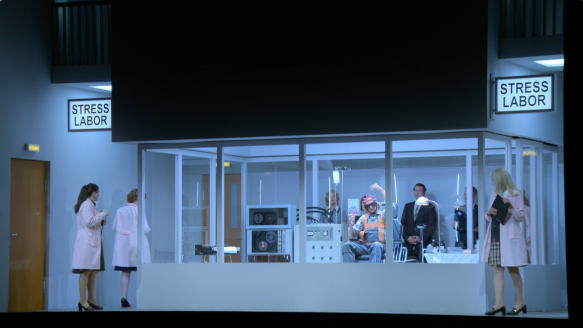
It’s pretty difficult to judge whether or not a high concept production of Wagner’s Ring cycle is going to work or not just from Das Rheingold but I thought Dmitri Tcherniakov’s production for Staatsoper unter den Linden recorded in 2022 was pretty promising.  His world is a large research complex designated ESCHE for reasons that aren’t clear.  The time period seems to be 1970s or thereabouts.  The research is essentially psychological and the characters are variously executives, scientists and experimental subjects.

1.stresslab

Continue reading

Tcherniakov’s Holländer

Dmitri Tcherniakov directed Der fliegende Holländer in Bayreuth in 2021 where it was recorded.  It’s no surprise given (a)Tcherniakov and (b)Bayreuth that it’s not a straightforward production.  I’m not sure I have fully unpacked it and there isn’t anything in the disk package to help (just the usual essay telling the reader what he/she/they already know/s).

1.prologue

Continue reading

The Snow Maiden

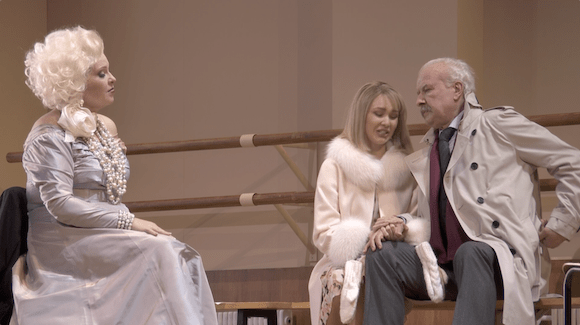
Rimsky-Korsakov’s The Snow Maiden is a rather odd opera.  It’s set in some sort of idyllic pre-Christian Russia where the tsar is approachable, just and benevolent and the people spend most of their time drinking and having sex.  Into this world comes Snow Maiden, the fifteen year old daughter of Winter and Spring.  Her parents have various things to do and so decide to park the girl with the local peasantry.  Various romantic complications ensue involving a rather nasty, rich merchant Mizguir and the mysterious Lel, who may be a shepherd but likely isn’t mortal either.  The mating behaviour of the locals confuses Snow Maiden as she is incapable of falling in love.  Eventually Spring grants her that faculty and she gives herself to Mizguir, while really wanting Lel, but the rays of the sun on the first day of summer melt her. The natives ignore her death and get on with singing and dancing.

1.winterspring

Continue reading

Tcherniakov’s Khovanshchina

Mussorgsky’s Khovanshchina is a bit of a weird opera.  It’s ostensibly based on a series of not entirely related events that unfolded during the succession crisis following the death of Tsar Fyodor III (which took about 12 years to play out) into a story that takes place in a day.  It’s complicated by the fact that key players in the story; the Tsars Peter and Ivan and the Tsarevna Sofia don’t actually appear because the Russian censorship would not allow members of the dynasty to be portrayed on stage.  Perhaps unsurprisingly Tcherniakov isn’t much interested in the details of the history and uses it to make some, not always entirely obvious, points about modernity vs tradition, personal power and the nature of religious cults.

1.opening

Continue reading

Il Trovatore meets Huis Clos

Dmitri Tcherniakov is an interesting and controversial director.  He’s not afraid to take a very radical approach to a work and that method tends to produce uneven results.  At it’s best, as in his Berlin Parsifal, it’s extraordinary and sometimes; his Wozzeck for example, interesting but perhaps not exactly revelatory, and,again, sometimes; as in his Don Giovanni, polarising.  That said he never does anything merely to shock or show off.  There’s always a logic to what he does and that’s certainly true of his quite radical version of Verdi’s Il Trovatore filmed at Brussels’ La Monnaie in 2012.

1.room

Continue reading

Shattering Parsifal

Dmitri Tcherniakov’s 2015 production of Wagner’s Parsifal recorded at the Staatsoper in Berlin in 2015 left me emotionally drained as I don’t think I’ve ever been after watching a recording.  I can only imagine what it must have been like to experience this live.  The combination of the production, exceptional singing and acting and Daniel Barenboim’s conducting is quite exceptional.  It’s not going to be easy to unpack it all coherently but here goes…

1-ritual

Continue reading

Wozzeck in Moscow

In 2010 Berg’s Wozzeck was produced in Russia for the first time since 1927.  The production, at the Bolshoi, was directed by Dmitri Tcherniakov.  Few people familiar with his work will be surprised to learn that Tcherniakov does not see Wozzeck as a  down trodden and impoverished soldier.  In fact he doesn’t see him as downtrodden and impoverished at all (unlike, say Calixto Bieito who transplants the action to a chemical plant but leaves the power relationships pretty much intact).  Rather, Wozzeck is a sort of 21st century salaryman leading a life of modest prosperity but crushing boredom with Marie and their son in a city inhabited entirely by other such families.  What’s missing is anything that resembles sensation or “life”.

1.calendar

Continue reading

More thoughts on Don Giovanni

So, back at the Four Seasons centre last night for a second look at Tcherniakov’s production of Don Giovanni, this time from the Third Ring.  I’ve also been thinking and talking a lot about this production both with people who love it and people who don’t.  There’s not a lot of middle ground.

dg9

Photo Credit: Chris Hutcheson

Continue reading