
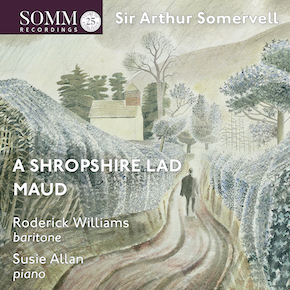
 I was browsing the latest Naxos marketing material and was really intrigued by what claimed to be a disk of Tennyson and Housman settings by Sir Arthur Sullivan. It sounded too good to be true and it was. The music was by Sir Arthur Somervell; whose Housman settings I had previously encountered.
The longest work on the disk is called Maud and consists of settings of thirteen of the poems from Tennyson’s monodrama that was extremely popular in the late 19th century. I don’t get Tennyson. I get that he was popular (but then so were Dickens and cholera) but it’s an aesthetic; morbid and sentimental more than dark, that just doesn’t do it for me. Somervell’s settings are not inconsistent with the mood of the text but they are, frankly, dull and predictable. There’s an attempt to elevate the music above the level of contemporary parlour ballads but Somervell doesn’t seem to have either the melodic or rhythmic invention to really pull it off.

 operaramblings