Another lunchtime with Kaija Saariaho

Kaija Saariaho

Today’s concert in the RBA consisted of more works by Saariaho performed by members of the COC orchestra and the Studio Ensemble. Both the the composer and General Director, Alexander Neef, were there. The four works performed were most definitely not “easy listening”. To me they seemed firmly in the tradition of modern continental European composition in the same sort of mould as Henze or Berio. The pieces were all very dense with complex tonality and dissonance and placing great demands on the performers.
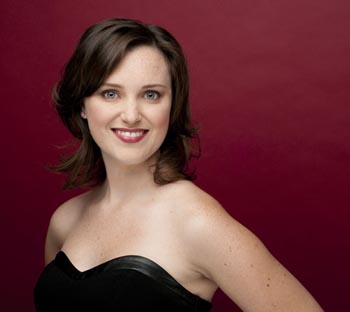


Jacqueline Woodley - Photo by Helen Tansey

First up was Changing Light described by the composer as a dialogue between soprano and violin. It’s a setting of a text by Rabbi Jules Harlow and was commissioned in the wake of 9/11. It may be a dialogue but the instrument doesn’t support the singer in any way. The violin is in a world of comples slides while the singer has some very tough intervals and the sustained, loud, high notes that characterize much of Saariaho’s vocal writing. That said in some ways this was the most conventional and accessible piece on the program. The performance by soprano Jacqueline Woodley and violinist Marie Bérard was first rate.

Mireille Asselin

Next came Mirage. This a setting for soprano, piano and cello of an English translation of a text from Mazatec healer and shaman Maria Sabina. It’s a rewriting of a piece originally written for soprano, cello and orchestra. The composer described this version as “more intimate”. It’s an uncompromising piece. Much of the piano part is played directly on the strings (rather than the keys) and the keyboard part is furiously virtuosic. The cello part is no easier with complex slides and atonality. The writing for soprano demands some characteristically difficult singing with something akin to Sprechstimme and some phrases that are whispered into the piano, using the piano as a reflector/amplifier. It’s quite a compelling piece. Again the performance was excellent. Jenna Douglas was on piano with Olga Laktionova on cello and Mireille Asselin singing.

The third piece seemed to me even more demanding. Lonh is a longish setting for soprano with electronic tape of fragments of medieval Occitan poetry by Jaufré Rudel. It requires an array of vocal techniques; singing, semi-singing, modulated speech, whispers, the works really. It’s quite haunting and the electronic tape which combines nature noises, bird sounds and fragments of spoken Occitan is very atmospheric. This was another fine performance by Jacqueline Woodley. We were told that this was composed as a “study” during the process of conceiving L’Amour du Loin so I guess it serves as an introduction to that sound universe.

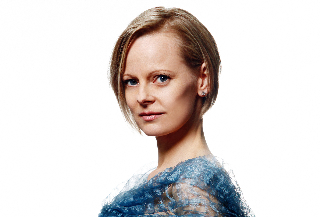
Rihab Chaieb

The final piece was an early work for mezzo and soprano; From the Grammar of Dreams to texts by Sylvia Plath. It was described as “tenser” by the composer and to my ear sounded most influenced by the fashionable idiom of the 1960s and 1970s. It uses just about every vocal technique in the book and interweaves fragments of two different Plath poems; Paralytic and The Bell Jar. The composer tells us that dreams are “non linear” and that’s certainly reflected in the piece. Rihab Chaieb and Mireille Asselin were the singers and I thought their voices blended really well. The mix of Mireille’s very bright soprano with Rihab’s much darker tone was very pleasing.

I was really impressed with everyone on show today. It’s hard to express in words just how difficult this music is to perform. Here we had young singers and, I think, equally young instrumentalists putting on a truly impressive show. In particular, I was intrigued to see how much Mireille has come on. I first heard her sing a couple of Servilia’s arias from La Clemenza di Tito and my impression was of a perfectly competent light lyric soprano but nothing special. The last couple of times I have heard her she seems to have grown quite a bit musically and her performances today were top notch.
Lunchtime with Kaija Saariaho

Today’s lunchtime concert in the Richard Bradshaw Amphitheatre was of a series of works by Finnish composer Kaija Saariaho whose opera L’Amour de Loin opens on Thursday at the Four Seasons Centre. The composer was in attendance and introduced each of the pieces.

First up were four songs for soprano and piano on texts by the Finnish poet Leino. These were performed by Carla Huhtanen and Adam Sherkin. We were told that the texts were essentially untranslatable but the English versions we got were good enough to see how the mood of the music fit the piece, if not to make any real judgement of the relationship between words and music. I found the music evocative and quite complex but not difficult to listen to. It’s certainly well beyond being mere mood music. They are quite intense pieces and place pretty heavy demands on both pianist and singer. In particular the soprano has many loud, sustained high notes to cope with and some awkward intervals. Huhtanen managed this with comfort. I can’t comment on her Finnish though I guess I can say, given that the last time I heard her sing was in Serbian, that odd languages don’t seem to worry her. Sherkin seemed well in control at the keyboard.

Next up were two contrasting piano pieces played by Sherkin. Both demanded some rather athletic playing. The first, Prelude, I found the more meditative of the two. I zoned out at times (but in a good way). The second piece, Ballade, I found myself getting more analytical about. The composer explained that it was a more narratively structured piece and I did get that sense. Sherkin was really good on both pieces.

The final contribution was Tag des Jahrs for choir and electronics. It’s a setting of four poems by Hölderlin on the theme of the seasons. This was performed by the Elmer Iseler Singers who, besides the electronic tape, got “help” from a concrete saw on University Avenue. For me this was the least successful piece. The music was quite evocative but occasionally seemed to be slipping into mood music territory. It probably wasn’t helped by the performance. I thought the German diction was distinctly sub-standard. They might as well have been singing in Finnish.

I’m glad to have heard some of Saariaho’s music ahead of seeing L’Amour de Loin next week and it’s always good to hear the composer’s thoughts on works of this type. There’s another concert of vocal works by Saariaho on Thursday. Here’s the programme. I shall try to be there.

Zodiac Trio

Yesterday’s free concert was given by the Zodiac Trio. They are a young group consisting of Kliment Krylovsky (clarinet) Vanessa Mollard (violin) and Riko Higuma (piano). The programme was titled Music from a Silenced Nation: Soviet Composers and it was presented, appropriately enough, on the greyest, dreariest day of the season so far. They brightened it up considerably. The programme opened with a virtuosic rendering of Stravinsky’s L’Histoire du Soldat followed by the first movement of Denisov’s Sonata for Solo Clarinet. This latter is a very strange work for its time and place. It experiments with quarter tones and is generally the sort of thing that would get one sent to the gulag. Next came the Allegretto from Shostakovich’s Sonata for Violin and Piano, Op 134, composed for David Oistrakh. This piece places huge physical and technical demands on the players which Mollard and Higuma really came through on. The final item on the programme was Galina Ulstvolskaya’s Trio. This I must listen to again. Why is this woman not better known? She was a pupil of Shostakovich and her work has many of the qualities that make her teacher so great. It was played beautifully with special props to Higuma who was required to get a very wide range of effects out of the piano. They encored with an uncredited tango of considerable bravura.

I would say that the Zodiac Trio are exceptionally committed to what they do and show great musicianship and serious musical erudition. Go see them if you get a chance.

Nimm sie hin denn, diese Lieder

Today’s free lunchtime concert in the Richard Bradshaw Amphitheatre was given by Canadian bass, Robert Pomakov and the Gryphon Trio (Annalee Patipatanakoon – violin, Roman Borys – cello, Jamie Parker – piano).

First up we got Parker and Pomakov performing Beethoven’s An die ferne Geliebte.  Pomakov has a big voice as I knew from having heard his Monterone twice this month at the Four Seasons Centre.  I was impressed by how well he could scale back his volume and even more impressed by the wide and appropriate range of tone colours he deployed.  He doesn’t sound entirely secure at ppp but for a voice of his type he was pretty good!  Next the Gryphons gave us the Elegia from Arensky’s piano trio.  I don’t know this work at all but they sounded very accomplished and musical.  The finale was Mussorgsky’s Songs and Dances of Death in Gary Kulesha’s arrangement for voice and piano trio.  This time Pomakov could let rip with all his considerable power accompanied with equal fervour by the Gryphons.  The whole thing was very impressive and very loud!

The scary thing is that Pomakov has only just turned thirty and already has this huge sound.  Apparently he’s had it for a while because he’s sung in twenty COC productions going back ten seasons. I did check out Youtube to see if I could find Pomakov and there is one clip of him singing the Russian National Anthem at the World Cup of Hockey in 2004. Here it is.

And so it begins again

Today was the opening concert of the season for the free concert series in the Richard Bradshaw Amphitheatre at the Four Seasons Centre. As has become standard practice it was a recital by the artists of the COC Studio Ensemble. All the members sang except for Ambur Braid who was ill and Ileana Montalbetti is singing in Elektra in Rome at the moment. I have to say it was great to be listening to live, unamplified singing again after a summer of mostly DVDs. I was most interested to hear newcomer Philippe Sly who I had not heard before. He sang one of the Count’s arias from Figaro. He has a very pleasant voice with plenty of power though I think he lacks a bit of variety and drama. He’ll learn that quickly enough in the Ensemble Studio program. The other newcomer was Mireille Asselin, who I had heard before. She sang a rather weird aria from Poulenc’s Les Mamelles de Tiresias. No lack of drama or humour in her performance! The other standouts for me were Adrian Kramer and Simone Osborne. Adrian sang “Mein Sehnen, mein Wähnen” from Die tote Stadt. His diction and acting are superb and he managed an absolutely gorgeous floated pianissimo on the final “Zurück”. Simone gave us one of Norina’s arias from Don Pasquale. She just gets better. She has quite a powerful, rich voice with really strong, sweet high notes. The progress from even a year ago is obvious. She can act too. There is no question that she is one to watch on the opera scene. Fortunately, that’s exactly what I will be doing in ten days time when I shall see her role debut as Gilda in the COC’s production of Rigoletto. The season is off to a good start.

Les adieux

Today’s lunchtime concert at the Four Seasons Centre was the farewell recital for three departing COC Ensemble Studio members; Michael Uloth (bass), Wallis Giunta (mezzo) and Anne Larlee (piano).

Michael started the show with Brahms’ Vier Ernste Gesänge, accompanied by Liz Upchurch. The piece is a bit of a downer but it was nicely, expressively sung. A bit of an odd choice for this sort of recital though I thought. Wallis picked a fairly eclectic mix of songsranging from Gretchen am Spinnrade to Send in the Clowns via some rather odd Spanish pieces but all very stylishly sung.

Perhaps surprisingly, the two of them had managed to find a couple of duets for mezzo and bass; As-tu souffert? from Thomas’ Mignon and Iradier’s El Arreglito, which apparently, was what gave Bizet the idea and most of the music for the Habañera in Carmen. Both pieces were really good though it has to be said that Wallis acted Michael (admittedly suffering from a bad neck) off the stage.

Michael is off to the young artists programme at Seattle Opera and Wallis is joining the Lindemann Young Artists program at the Met in New York. I expect Wallis to do really well. She has a more than adequate voice, can act, is good looking and has tremendous stage presence; in short, the modern opera package.

News is that their replacements will be soprano Mireille Asselin and baritone Philippe Sly.

Ensemble Studio – end of season concert

Yesterday lunchtime was the last opportunity to see all the members of the COC Ensemble Studio before the season ends and some of them move on. It’s always interesting to see the Ensemble members as they are growing as singers so fast and, invariably, one hears a new and interesting side of someone that one hadn’t heard before. The programme material ranged from the 16th to the 20th century but it was all Italian and predominantly art song rather than opera. For me, the highlights were Ambur Braid singing a madrigal by Giulio Caccini; I think she’s so much better when she’s being lyrical rather than bravura, and, real eye opener, Rihab Chaieb singing Rossini’s Anzoleta avanti la regata with beautiful control, real feeling and rich, dark mezzo tone. I’ll be seeing Rihab tonight as one of the ugly step sisters in La Cenerentola and Ambur as Amore in Orfeo ed Eurydice next week.

Margisons, père et fille, at the RBA

We went to a lunchtime concert at the Four Seasons Centre. It was an interesting mix. The local tenor Richard Margison performed with his 19 year old daughter, Lauren, and pianist Christopher Mokrzewski. Margison is an opera singer of international stature currently singing The Tenor/Bacchus in the COCs production of Ariadne auf Naxos. Lauren, at 19, is already a well established performer and recording artist in a more popular vein. They both do crossover. Richard sang in a rock band and in folk clubs for ten years. Lauren was the youngest child ever to sing in the Canadian Opera Children’s Chorus and is currently enrolled in the Classical Vocal Performance programme at University of Toronto.

In the first half of the programme Richard powered through art songs by Scarlatti, Duparc and Beethoven and Lauren did a pretty good job with a couple of Schubert songs. She’s musical and accurate but a little tentative and underpowered, but then at her age one wouldn’t expect anything else. Then they switched to more popular rep. Richard sang a Gordon Lightfoot song, Moon River and You’ll Never Walk Alone, the latter sounding rather odd to one who used to live across the road from Anfield! There was a definite element of a battleship navigating a kayak slalom course but he did sound a bit less operatic than many singers would have done. Lauren also did a couple of similar songs plus a duet with her dad. She sounds utterly comfortable and mature way beyond her years in this rep.

In the intro to the concert we had been told that Lauren had chosen to sing Nessun Dorma at her audition for the Children’s Chorus way back so it was no surprise that Richard picked that as an encore. Calaf is one of his signature roles. He practically blew the roof off the Richard Bradshaw Auditorium. All in all, another fun, free concert.

Musical plans for the immediate future include an Ensemble Studio concert in the RBA tomorrow lunchtime, La Cenerentola at the Four Seasons Centre on Friday night and the MetHD broadcast of Die Walküre on Saturday.

Multiple short operas at the RBA

This was a fun concert. Six members of the COC Studio Ensemble presented, more or less fully staged, three very short operas to piano accompaniment. First up was Ana Sokolovic’s Dring, Dring which was performed by Ileana Montalbetti, Rihab Chaleb, Neil Craighead and Chris Emms. It consisted of the singers weaving intricate patterns while making telephone noises and short “wrong number” type conversations in multiple languages. I quite enjoyed it. It’s the first thing by Sokolovic I’ve heard and i was interested as I’m planning on attending the premiere of her new opera in June. Next, the same cast did Barber’s A Hand of Bridge. It’s a melodic little piece about repressed middle class fantasies. I was a bit distracted by the stage direction which appeared to have been done by someone who had never seen, let alone played bridge but then I’m fussy that way. The highlight was definitely Neil Craighead’s recitation of his character’s fairly bizarre sexual fantasies. Finally, Adrian Kramer and Jacqueline Woodley performed Menotti’s The Telephone; a piece about a man who can’t propose to his girlfriend because she is always on the telephone. Performed by the Ensemble’s two best comedians this was predictably funny and very well sung. Liz Upchurch, as ever, was a first class accompanist on the piano.

Singing style

Yesterday’s free “concert” at the Four Seasons Centre was a bit different. It was an illustrated talk entitled 110 Years of Singing on Record: An Introduction to the Evolution of Style. It was illustrated with a number of recordings played over the speaker system in the RBA and two records played on a 1914 Victor VI acoustic gramophone; an instrument that produced surprisingly good sound.

The title was overly ambitious. We didn’t get any sense of evolution and, since the most recent recording was from 1983, the “110 years” bit was something of a misnomer. The basic premise seemed to be that there was a distinct shift in singing style between the first and third quarters of the twentieth century; which I think is probably true. Demonstrating using a pretty wide variety of voices and repertoire was rather less than convincing though. Still more peculiar was the (implicit) idea that nothing has changed since the 1970s. To give one example, sure one can demonstrate that Renata Scotto used a great deal more vibrato than Nellie Melba but what singer today would use as much vibrato as Scotto? In a slightly different vein, to argue that Peter Pears phrasing a song more dramatically than Karl Erb is purely a matter of singing style when Ben Britten is at the piano is rather missing the point of that particular partnership.

The Victor gramophone was truly a thing of beauty though.

That horn is laminated mahogany and all the fittings are gold plated.