
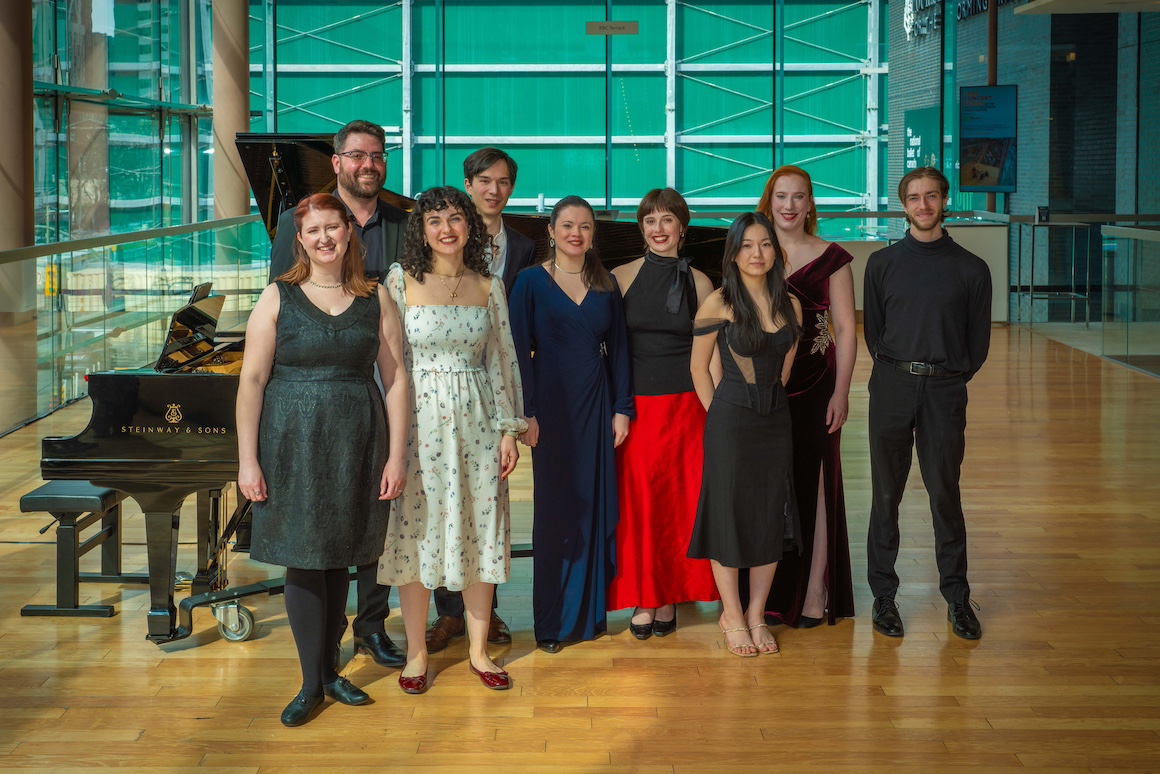
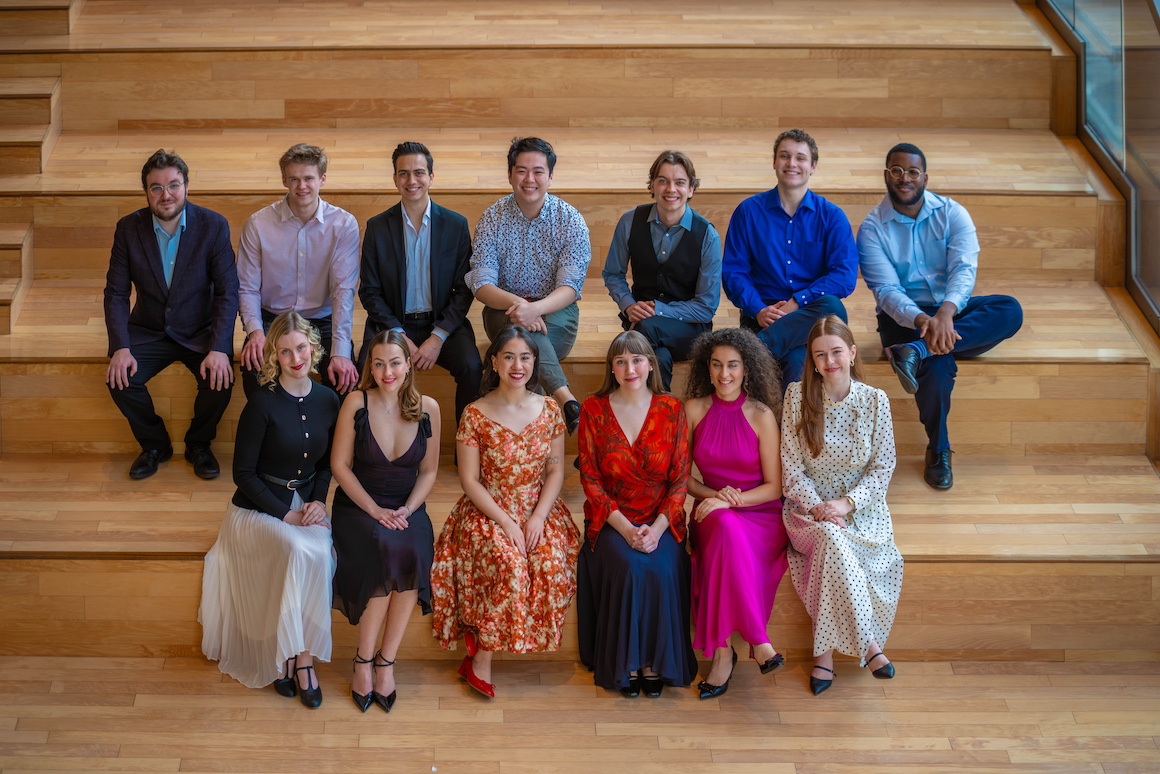
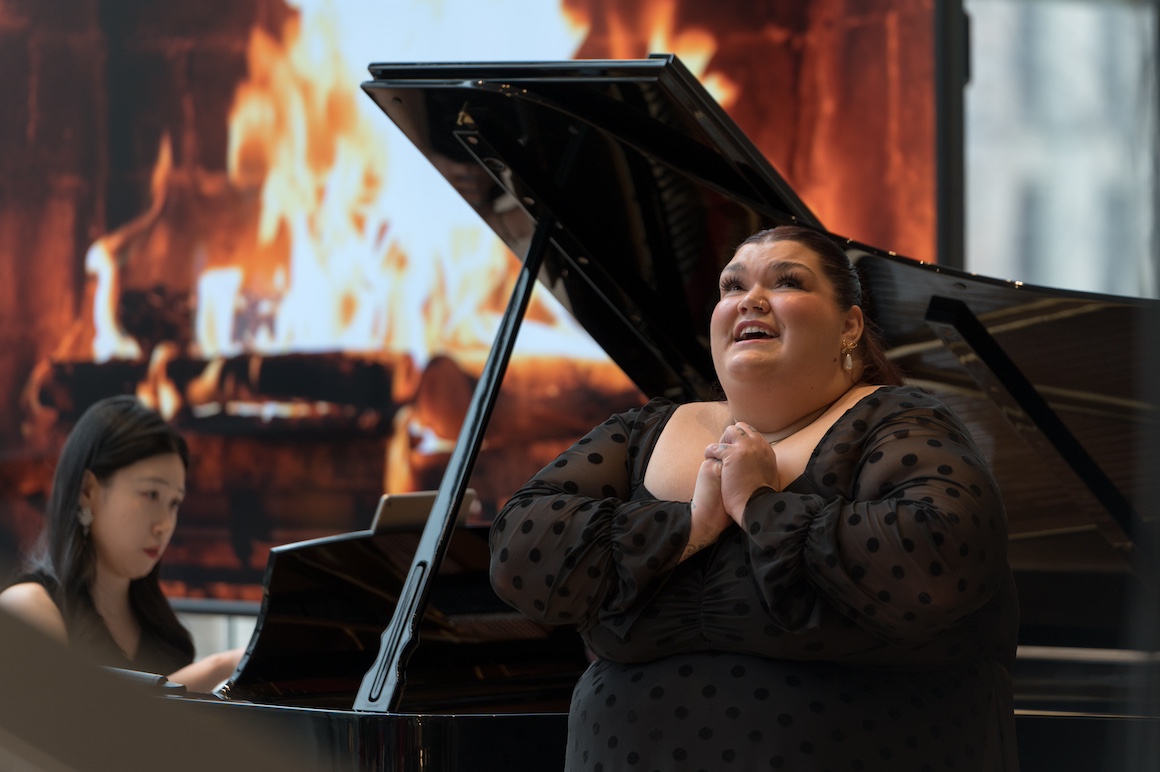
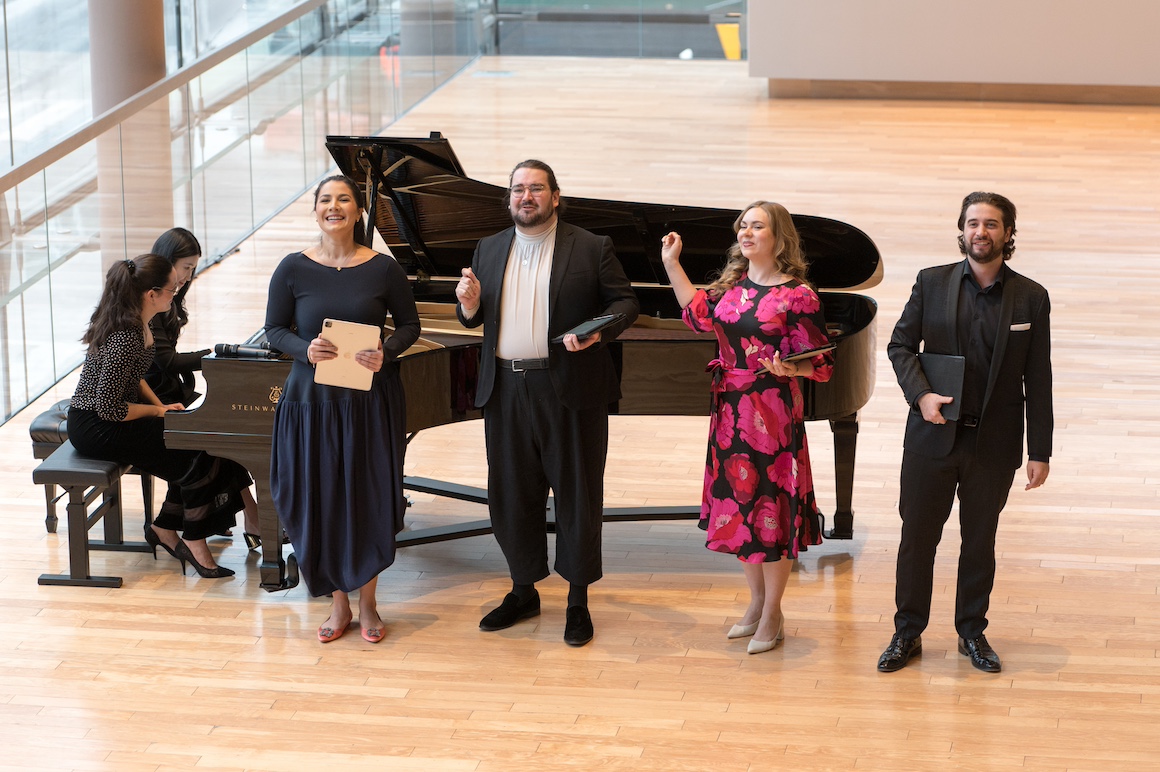
Tuesday’s concert in the RBA was given by students from the France-Canada Academy of Vocal Arts currently being hosted by the UoT Faculty of Music. The music was a range of mélodies, all in French, by French and Canadian composers.
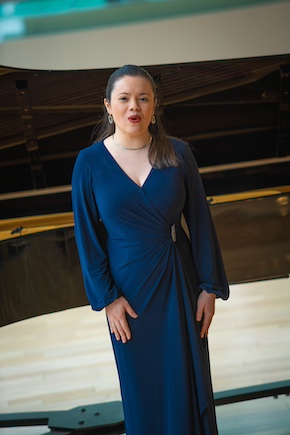 Soprano Mélina Gerbith and pianist Olivier Seuzaret performed first. Achille Fortier’s ici-bas was followed by Francis Poulenc’s Trois poèmes de Louise de Vilmorin. The Poulenc seemed particularly well suited to Mélina’s rather bright soprano. There was plenty of scope to be playful and she did show off some interesting colours lower in the voice.
Mezzo-soprano Aimée Harness accompanied by Zhilin Xiao gave us Maurice Ravel’s “La flûte enchantée” from Shéhéazade and Poulenc’s Miroirs brûlants. Aimée sang with really good diction and was appropriately dramatic in the Poulenc while maintaining excellent control. Really nice.
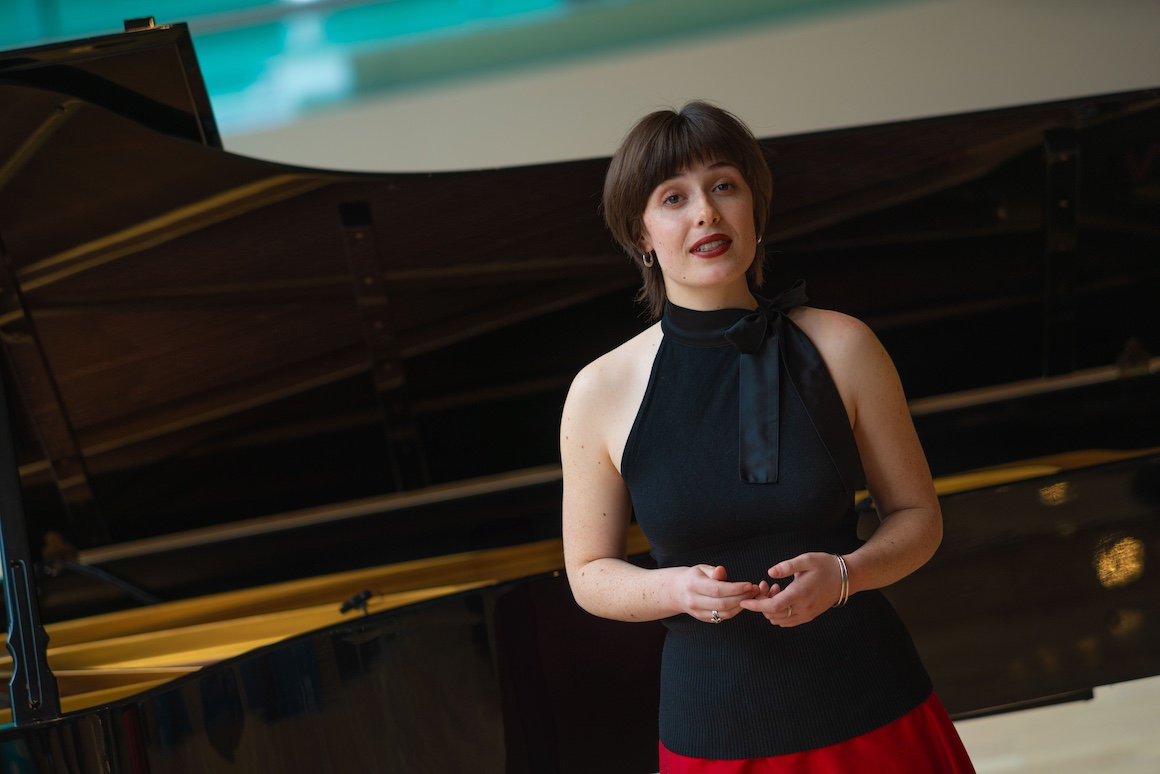
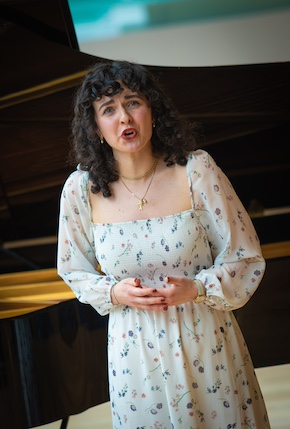 Next up were mezzo Taline Yeremian and pianist Rebeca Lluveras Matos with quite a varied set. Auguste Descarries’ En sourdine and Jules Massenet’s Les mains are quite solemn pieces and were sung in quite a bright tone but with some gravitas. I thought though that Yeremine sounded more at home in the much livelier “Villanelle” from Hector Berlioz’ Les nuits d’été, which was sung with appropriate vivacity. All in all, a nicely contrasted set of songs.
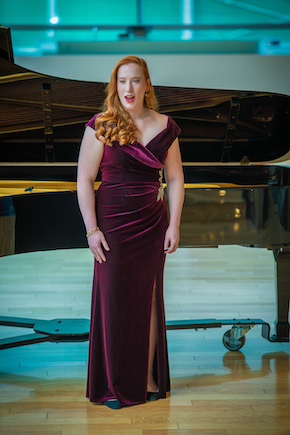 And so on to soprano Marion Germain accompanied by Ludovic Rochon. It was a nicely contrasting set. The two songs from Jacques Hétu’s Les Clartés de la nuit were very different. “Thème sentimental” is quite pastoral and sat nicely for Marion’s bright soprano. “Les corbeaux” is much darker and more dramatic and she brought out those qualities very well too. The set closed with Henri Dutilleux’ San Francisco Night which was also pretty dark and gritty and sung with pleasing restraint..
Last to sing was our third mezzo Kyrsten Chambers-Jones accompanied by Brock Tjosvold. Lots of contrast again in two songs from Poulenc’s Cinq Poèmes de Pierre Ronsard. “Le tombeau” is essentially a meditation on death and got treated appropriately. “Ballet”, on the other hand, is pretty playful, even cheeky, and Kyrsten changed up accordingly. She finished up with two songs from Keith Bissel’s Quatre chansons sur des poèmes du vieux français. “D’un vanneur de blé, aux vents” feels quite “Amertican” in some ways and it has a lovely melody sung quite beautifully. “Sonnet pour Hélène” is also rather beautiful but it’s also darker and more dramatic allowing Kyrsten to show off quite a bit of well controlled power.
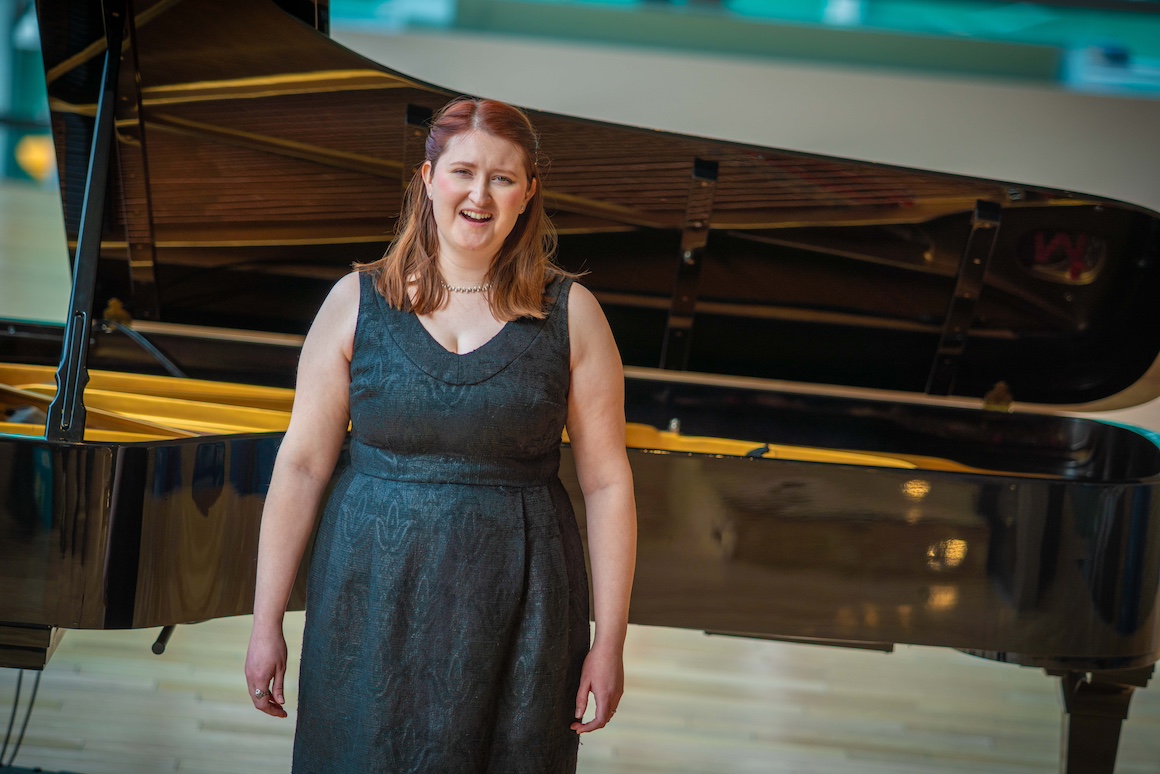
All in all an enjoyable hour of well chosen songs performed really rather well.
Photo credit: Karen E. Reeves

 operaramblings