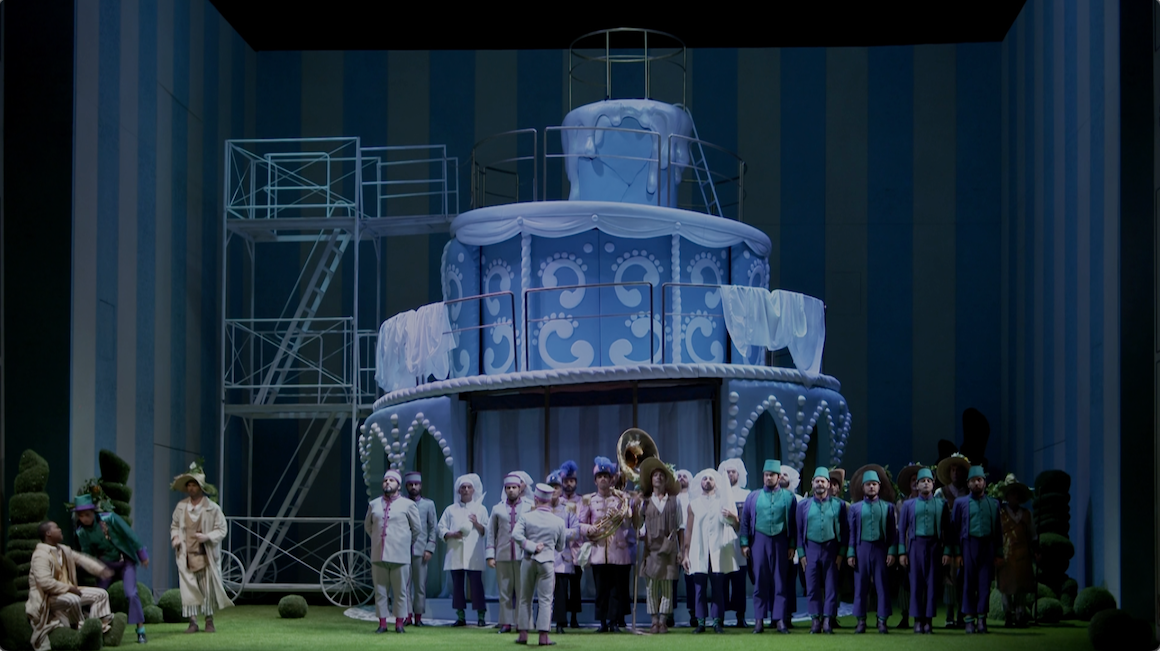
Having your cake…

Rossini’s Adina was written in 18i8; two years after Barber of Seville, but wasn’t premiered until 1826 in Lisbon, after which it pretty much disappeared.  It’s a bit difficult to see why it fell out of favour, unless it’s because at 90 minutes or so it was considered too short, because it’s a pretty classic Rossini comedy with a silly but amusing plot and enjoyably frothy music.
Continue reading

Le siège de Corinthe

Le siège de Corinthe is a 1826 reworking, for Opéra de Paris, of Rossini’s earlier Maometto II so besides, of course, being in French it is restructured as a three act tragédie lyrique with a substantial ballet in Act 2.  The plot is straightforward enough.  It’s the mid fifteenth century.  Mahomet II is besieging Corinth but unknown to him the king, Cléomène’s, daughter Palmyra is the girl he fell in love with during an incognito trip to Athens.  Cléone has promised Palmyra to his top warrior Néoclès.  After Corinth falls Mahomet promises clemency to the Greeks as long as Palmyra marries him.  She agrees and is cursed as a traitor by her father.  The marriage doesn’t happen for various reasons and Palmyra flees to the camp of the once again revolting Greeks.  When they are defeated for a second time she commits suicide rather than submitting to Mahomet.

1.bottles

Continue reading

Duelling tenors

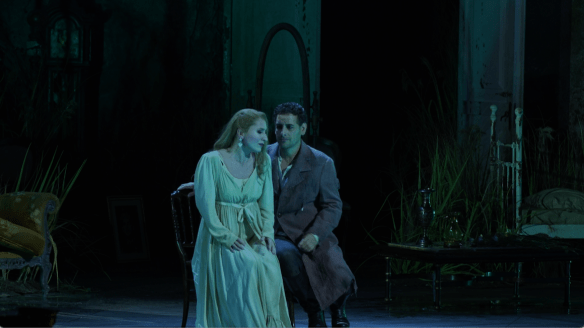
Damiano Michieletto’s production of Rossini’s La donna del lago filmed at the Rossini Festival in Pesaro in 2016 has some odd features but at least it’s not as all around annoying as the Met production the year before.

1.elenauberto

Continue reading

Il Turco in Pesaro

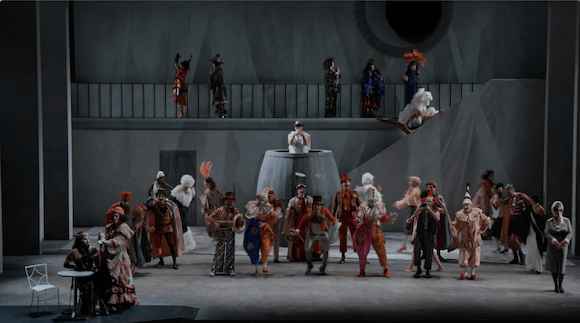
Rossini’s Il Turco in Italia isn’t performed (or recorded) all that often despite being well constructed and amusing in a thoroughly silly way.  Perhaps it’s just too difficult/expensive to cast?  It requires a bass or bass-baritone of great flexibility plus a top notch Rossini soprano and two tenors with genuine high notes plus several other soloists.  Who knows?  Anyway it was given at the Rossini Festival at Pesaro in 2016 and recorded for video.

1.gypsies

Continue reading

Duelling tenors

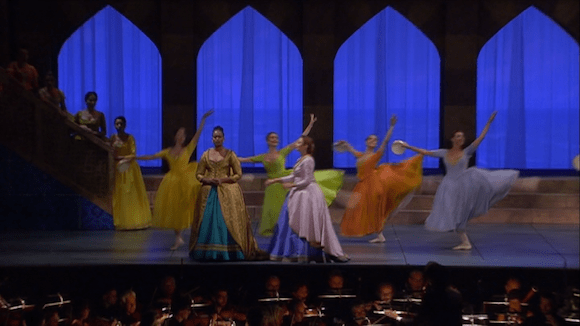
Rossini’s Ricciardo e Zoraide isn’t performed all that often but it has appeared a number of times at the Pesaro Rossini Festival.  In 2018 it got a new production there from the creative team of Opera Atelier with a rather starrier cast than is usual in their Toronto productions followed by a DVD/Blu-ray release.  It’s actually not too hard to see why the piece isn’t done more often despite its many good qualities.  It requires four tenors; at least two of which need to be absolutely top notch Rossinians and a soprano of equal quality.  None of the roles are easy.  It’s also a bit mixed dramatically.  The libretto is a rather convoluted crusader story set in Africa.  Agorante has captured Zoraide and wants to make her no.2 wife.  No.1 wife Zomira is unimpressed.  Ricciardo disguises himself to try and rescue Zoraide.  Zoraide’s father shows up.  Agorante is about to have essentially everyone executed when the crusaders, led by Ernesto, rush in and everybody makes up.  There are some really effective scenes and others that just seem to drag on.  Musically it’s pretty good though.  It’s never less than well crafted and at times; the first half of act 2 especially, there’s some great music including a crackerjack tenor duet, a fantastic display aria for soprano and some really good ensembles.

1.ballet

Continue reading

Rossini… with goats

Rossini’s Aureliano in Palmira is a rarity for a whole host of reasons.  There’s no definitive edition.  Many of the extant scores have much easier versions of the main arias for the tenor titular character.  Quite a bit of the music was reused for Il barbiere di Siviglia, often in ways that seem quite odd after hearing it in its original context.  Finally, the plot is a bit thin.  Not that that usually worries bel canto aficianados.

1.temple

Continue reading

Guillaume Tell

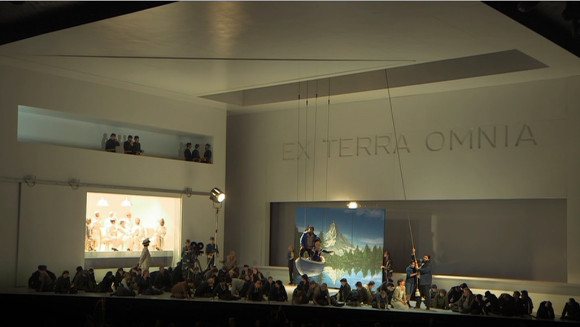
Rossini’s last opera, Guillaume Tell, was written for Paris and is an extremely ambitious piece of great musical sophistication.  It’s also very long.  Performed uncut, a rarity, it runs something like four hours including ballets.  It’s also hard to cast with the role of Arnold Melcthal in particular making unusual demands.  It’s a high tenor role combining the flexibility needs of a typical Rossini role with something much more heroic.  The soprano role of Mathilde has some of the same issues; signature Rossini coloratura is combined with the sort of dramatic heft one might more associate with early Wagner.

1.boat

Continue reading

Ciro in Babilonia

Ciro in Babilonia is an early work by Rossini composed for the lenten season when only works on biblical/religious themes were permitted.  This doesn’t really fit that description.  Sure, the story of Belshazzar and the writing on the wall gets a brief look in but it’s almost interpolated in the story, from Herodotus, of Cyrus’ capture, together with wife and child, by Belshazzar.  It’s a tale of arrogant kingship, religious faith and marital devotion.  Typical opera seria stuff really.  It’s a bit thin plot-wise though which probably explains its relegation to obscurity.  This first modern production was created at Caramoor, then translated to the Rossini festival at Pesaro, where it was recorded in 2012.

1.caption Continue reading

Adelaide di Borgogna

Adelaide di Borgogna is one of those rather odd “serious” Rossini works where bel canto collides with opera seria.  The plot is fairly accurately based on an episode from 10th century history and is most definitely not a comedy.  The form has progressed well beyond a succession of da capo arias with multiple ensemble numbers and quite a few choruses.  But there’s a throwback to an earlier tradition in the use of high voices for heroic male roles though it seems that by 1817 castrati were rather rare and the crucial role of Ottone, the German emperor, was from the beginning sung by a female contralto.

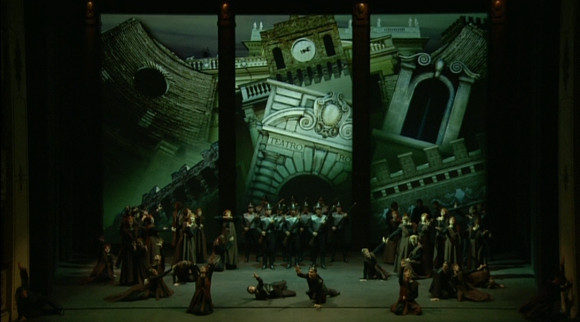
1.teatro Continue reading