Don’t look down

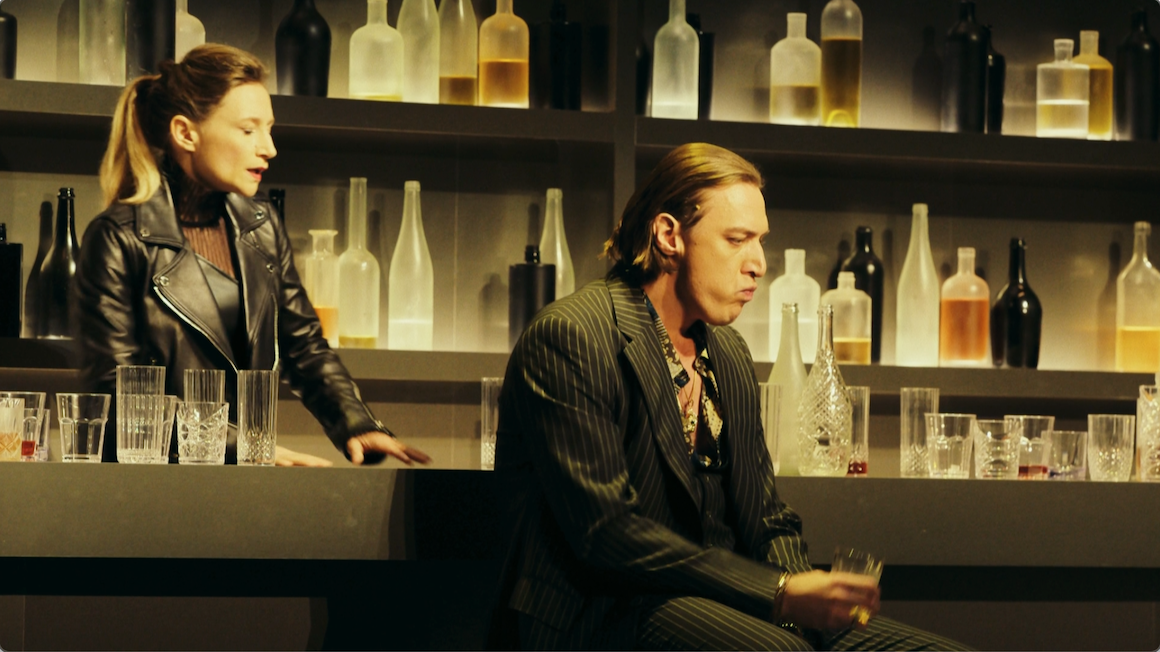
Duncan Macmillan’s play People, Places and Things opened last night at Coal Mine Theatre.  It premiered in London in 2015 and has now been adapted to relocate the setting to Toronto and to customize the movement elements to the small, intimate space at Coal Mine.  It’s a play about addiction, addiction treatment, theatre and how we construct and cope with “reality” (whatever that is).  It’s long, intense, disturbing and, ultimately, very thought provoking.

Continue reading

Almaviva’s gangster gang

Martin Kušej’s production of Mozart’s Le nozze di Figaro at Salzburg in 2023 came 20 years after he had last directed a Mozart opera at Salzburg.  My reviews (and follow up pieces) of his productions of Don Giovanni (2002, revived 2006) and La clemenza di Tito (2002) are probably two of the most commented on on this blog.  So I’m interested to see where this goes.

1.figarosusanna

Continue reading

Does anybody do dance like Opéra de Paris?

The title of this review of a 2022 recording of Rameau’s Platée is prompted by the fact that I’ve rarely seen this much high quality dance included in an opera production.  It’s really spectacular.  But back to basics.  Platée is a comic opera of 1745.  The production filmed in 2022 is by Laurent Pelly and was making its fifth run at the Palais Garnier.  There’s an earlier video release of the 2002 run.

1.prologue

Continue reading

The Beauty of Innuendos

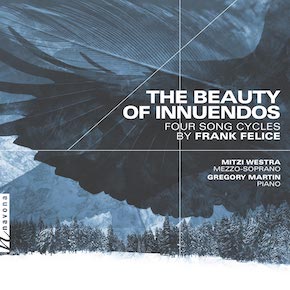
NV6488_The-Beauty-of-InnuendosI think a lot of my motivation for listening to The Beauty of Innuendos was a desire to learn what on Earth the composer, Frank Felice, meant by “consonant adiatonicism”.  I’m still not sure I really know.  In any event there’s some enjoyable music on the record though I did find it a bit of a mixed bag.
There are four “song cycles” on the record.  The first is Four Songs of Jennifer Haines which sets four texts about the poet’s break up with her (female) lover in the wastes of Montana, thus creating a new genre of High Plains lesbian break up song.  I wasn’t much enamoured of this piece.  It’s workmanlike but neither the texts nor the melodic, largely tonal setting really did it for me.

Continue reading

Odysseus and the Sorceress

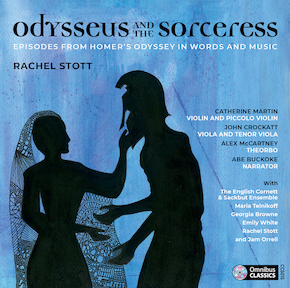
odysseusThis is a really unusual CD.  It combines readings; both in the original Greek and in English translation of some of the best known passages in Homer’s Odyssey with music for period instruments composed by Rachel Stott.
The short passages of Greek are read by Maria Telnikoff and the more extensive English sections by Abe Buckoke in a variety of accents, most of which are hard to place.  Somemartin,crockett,, of the text is accompanied by a combo of renaissance flute, alto sackbut, viola damore and aeolian harp.

Continue reading

Decades – the 1930s

The TSO’s Decades project has now reached the 1930s; very much home ground for me musically.  Last night’s program explored different aspects of the music making of the period, including serialism, in a varied show of why this is not “music to be scared of”.  It was also Sir Andrew Davis’ first appearance in his role of interim music director and supreme leader for life of the TSO.

Continue reading

Tanya Tagaq at the TSO

Last night saw the opening concert of the TSO’s New Creations Festival.  It opened with a sesquie by Andrew Staniland; Reflections on “O Canada” After Truth and Reconciliation.  Sesquies are two minute “fanfares” composed to commemorate Canada’s 150th.  Staniland’s version was a bold attempt to deal with the immensely complex subject of reconciliation between Canada and its native peoples and, of course, one can’t do that in two minutes in any medium.  Reflections was an interesting stab though.  It was structured as a very quiet canon for high strings in a minor key using the principal theme of O Canada and ending with an overblown fanfare in the winds.  You can apply your own political interpretation.

tanya-tagaq

Continue reading

Innocence/Experience

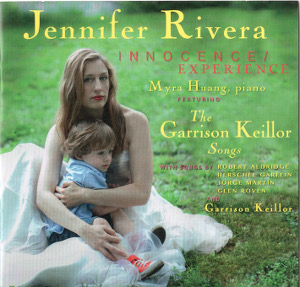
innocenceAmerican mezzo-soprano Jennifer Rivera, with pianist Myra Huang, has recently released a CD of songs by contemporary American composers titled Innocence/Experience.  There are four , fairly contrasting, sets of songs by different composers.  The first group are settings of texts by Garrison Keillor with music by Robert Aldridge.  The texts are predictably sentimental and the music is rather retro.  It sounds like it might have come from a musical comedy in the 1940s.  It’s not inappropriate for the texts but seems a little out of time.  It suits Rivera’s voice though.  Her strength is definitely in the lower register where there is a pleasing smokey tone.

Continue reading

The Seven Deadly Sins

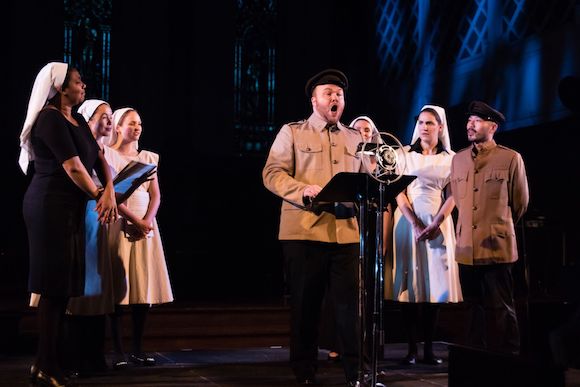
yesNew kids on the block , The Friends of Gravity, presented their first show last night at St. Bartholomew’s Anglican Church on Dundas East.  It was a silent film themed take on Weill’s Die Sieben Todsünden.  Stephanie Conn sang both Anna I and Anna II in front of a film screen showing black and white film clips shot by Scott Gabriel for the show, replacing the ballet of the original.  The Family, who pop up mostly to criticize the Annas were sung by Charles Fowler, Christopher Wattam, Bryan Martin and William Lewans.  Scott Gabriel conducted his own arrangement of the score for a six piece band including accordion and ukulele.

Continue reading