Searing Kat’a Kabanová

The searing intensity of this 1988 Glyndebourne recording of Janáček’s Kat’a Kabanová overcomes a rather indifferent DVD transfer to great effect.

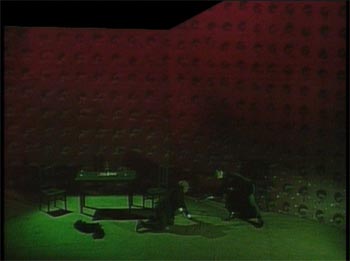
The production by Nikolaus Lehnhoff focuses on the inner emotions, or lack of them, of the principal characters especially Kat’a and the Kabanovicka. This focus is greatly aided by the simple but colourful semi-abstract sets that bring to mind Chagall or Kandinsky in their bold use of colour. The execution of the concept is first class. Nancy Gustavson, in the title role, gives a quite breathtaking portrayal of a mental breakdown, especially intense in the confession scene. She also sings quite superbly. Felicity Palmer as her mother in law is as chilling as one could possibly wish, nowhere more so than in the final scene as she walks away from Kat’a’s body. The Varvara, Louise Winter, the facilitator of Kat’a’s fatal affair, brings some real charm to what would otherwise be pretty unrelentingly grim.
The men have less to do and the only real stand out is bass Donald Adams as Dikoj. His scene with Palmer is oddly compelling in a revolting sort of way. The other men are perfectly adequate but it’s the women who carry the show here. The other real star is the LPO under Andrew Davis. This is a hell of a score and Davis, wonderfully supported by his players, makes the most of it. I just wish the sound quality had been better.

The production for DVD is adequate. Helped by the small stage of the old theatre at Glyndebourne video director Derek Bailey lets us see what is happening and only in Act 3 does he get a bit close up happy. All in all it’s not a bad job for a 1988 TV broadcast. The picture is tolerable. It’s 4:3 with hard English subtitles. As all 100 minutes of the opera are crammed onto one DVD5 it’s perhaps surprising it’s as good as it is. Sound is Dolby 2.0 and again “adequate” is as good as it gets. There are no extras or documentation beyond a chapter listing. The european release on a different label may be a little less Spartan.

Technical reservations aside, this is well worth seeing.

The eternal enemy of righteousness

Michael Grandage’s lack lustre Don Giovanni at the Metropolitan Opera made me very curious to see his very well reviewed 2010 production of Britten’s Billy Budd for Glyndebourne. It is now available on DVD and Blu-ray so I did just that. It’s as good as the Don Giovanni wasn’t.

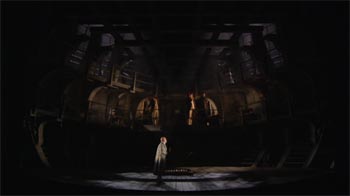
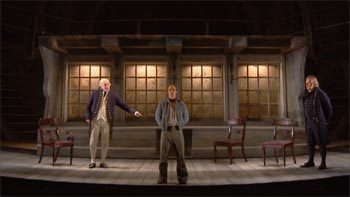
The set design suggests the interior of a warship of the period (1797) which gives scope for galleries around and behind the main stage area. By changing the lighting and sliding panels into place, it easily becomes anywhere desired on the ship. It’s very much an ‘interior’ setting which is appropriate as the sea is as absent in Billy Budd as it is present in Peter Grimes. Having created a working stage arrangement, Grandage focuses on the Personenregie. What’s striking about this production is how the director works the relationship between the characters and the development of the characters as individuals. Claggart is chilling. Vere lacks, in the last analysis, moral courage but his distaste for Claggart and his manifestations is palpable. Billy radiates simplicity and innocence. The lesser parts too are fully developed, not just filler. Dansker really foreshadows what is to come.

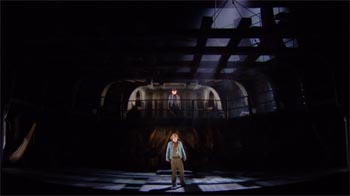
Along with this Grandage contrives some truly striking images. In the prologue “old” Vere appears almost disembodied until the ship materialises around him and the action proper starts. Towards the end of Act1 there”s a striking picture of Billy and Claggart in the centre of the picture; Billy on deck,

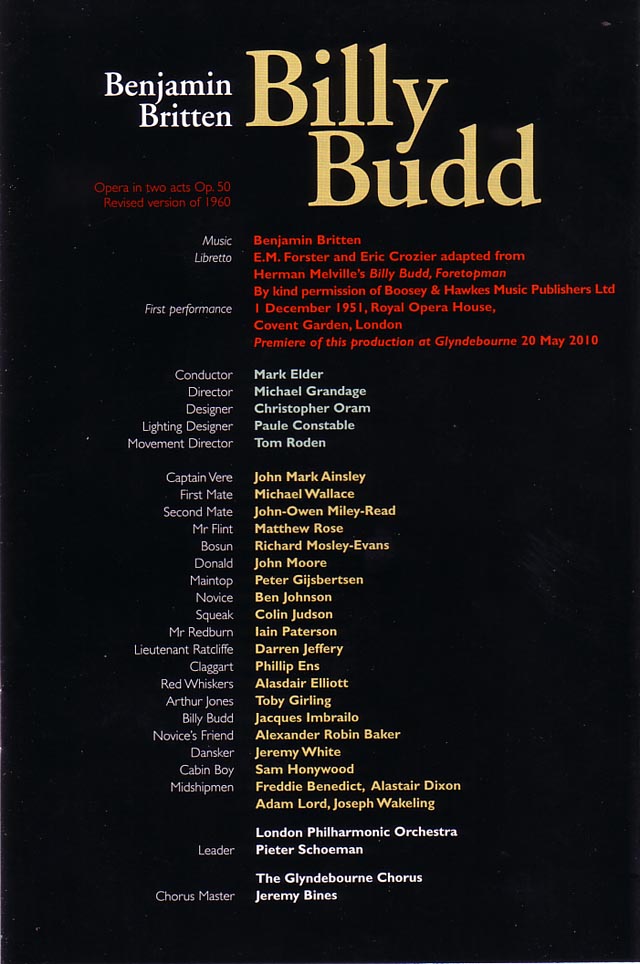
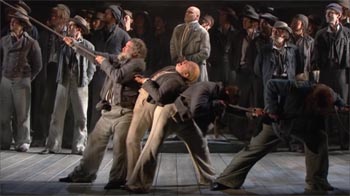
Claggart above him at the quarter deck rail. In the final scene the men hauling on Billy’s rope could be straight out of Rodin. Needless to say it takes considerable acting skill across the company to pull all this off. Grandage gets this from a solid cast of anglophone singers led by John Mark Ainsley as Vere, Jacques Imbrailo as Billy and Phillip Ens as Claggart. There are lots of quite important supporting roles so here’s the full cast:

Musically too, this is a treat. The real stars here are the London Philharmonic and conductor Mark Elder. The orchestral playing is taut and incisive and shows off a really good score to fine advantage. The singing is glorious too. Clearly this is a work where the needs of the drama trump pretty singing but in the places where beauty is possible we get it. In the prologue one could easily mistake Ainsley for Pears as he floats the high notes. Imbrailo has a gorgeous voice and there’s some fine singing from many others.

The technical team for this production is essentially the same as for The Fairy Queen and the results are equally good. François Roussillon lets us see the stage and only goes close up where it makes sense. This time I watched the DVD rather than the Blu-ray presentation (two DVD9 discs). It’s not quite as good as Blu-ray. The 16:9 anamorphic picture is very good but even on my less than state of the art TV it’s not quite as good as the 1080i Blu-ray. The sound difference is even more marked. The DVD sound is DTS 5.1 and is clear and well balanced but it comes up short on spatial depth compared to DTS-HD Master Audio. (There’s also LPCM stereo). There are English, French, German and Spanish subtitles, decent documentation and a few short extras on the first disc.

I recommended this unreservedly for both die hard Britten fans and those willing to explore but get the Blu-ray version if you can.