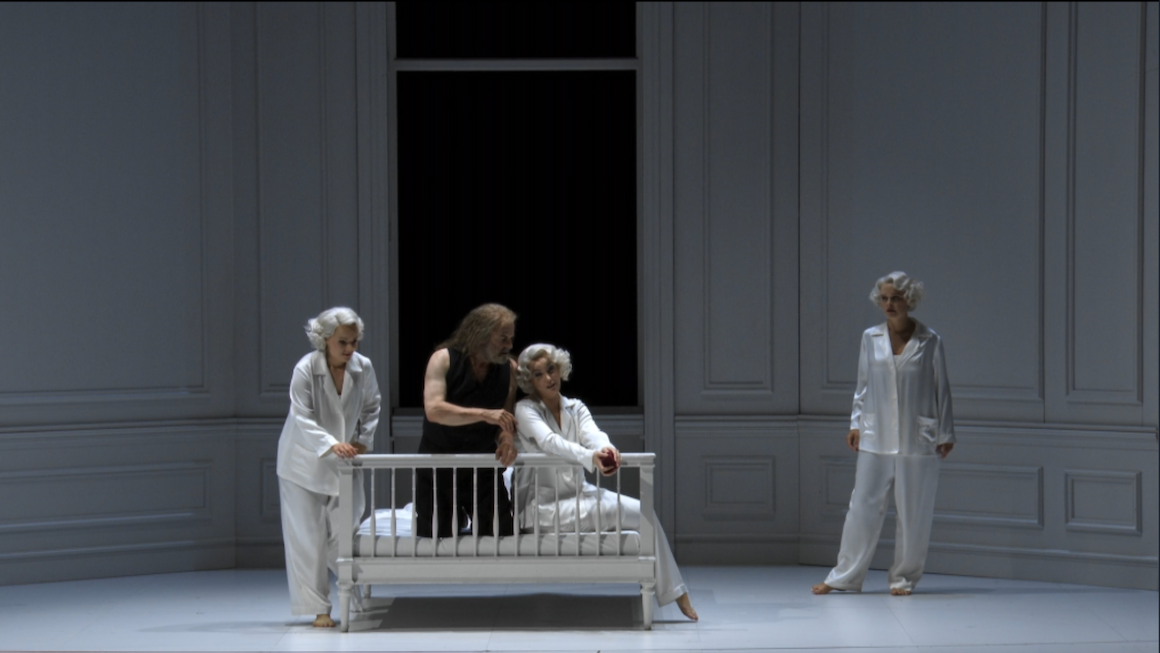
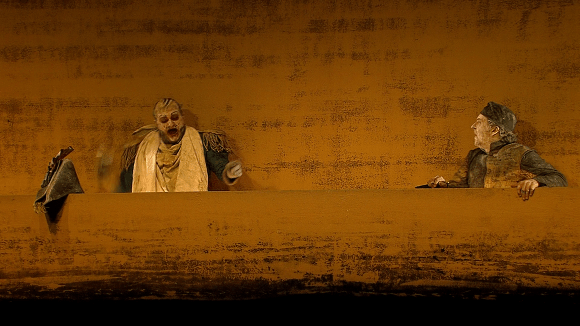
Final thoughts on the Zürich Ring

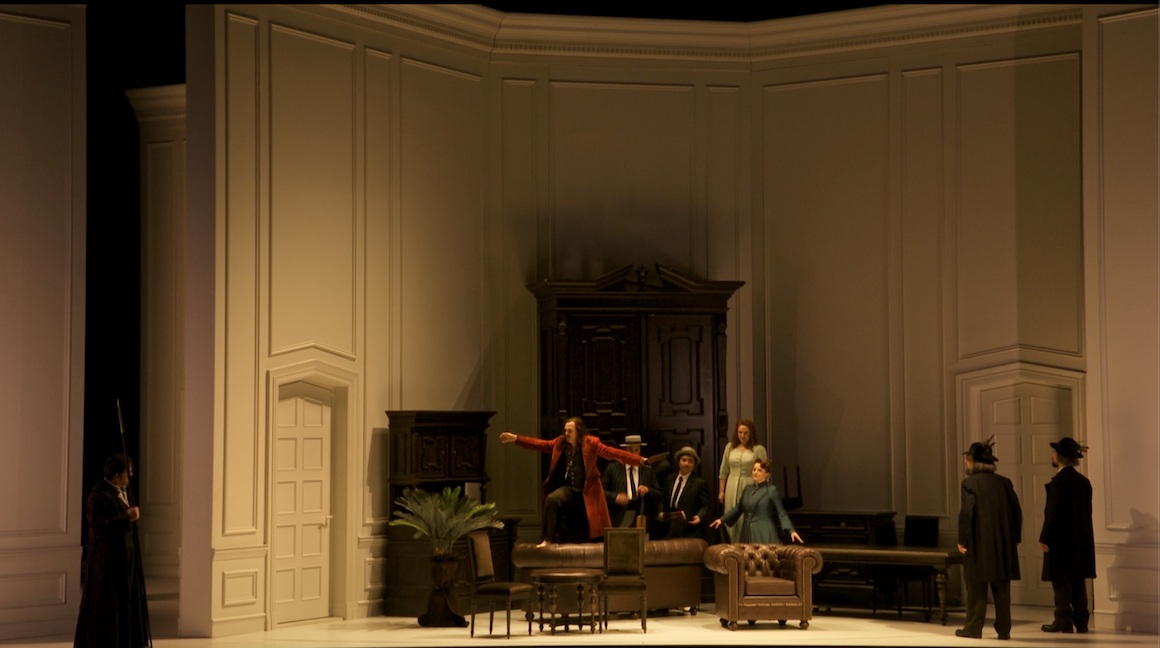
Overall I rate this cycle very highly.  Andreas Homoki’s production is unusual in that it’s really not conceptual and is often very literal.  That’s rare in Wagner productions in major European houses.  But it’s also not cluttered up with superfluous 19th century “stuff”.  When a thing is essential, it’s there as described.  If it’s not essential more often than not it’s omitted.

Continue reading

Zürich Ring – Götterdämmerung

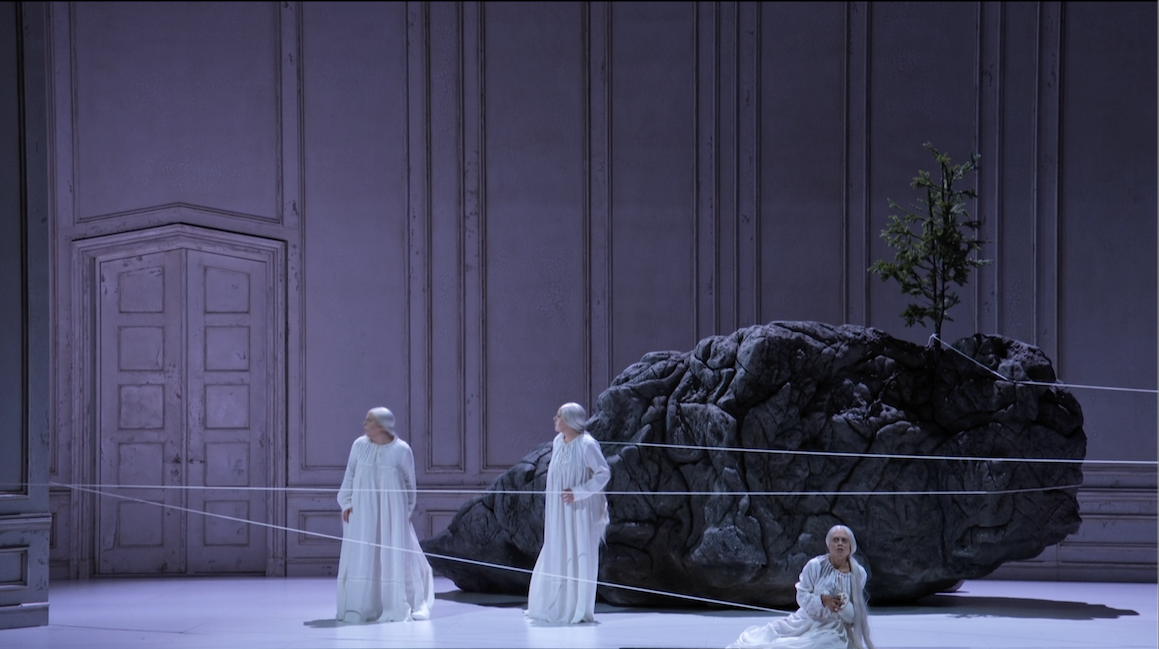
And so to the final instalment… We open with the Rock but now the background room; while still the same 18th/19th century mansion, looks a bit the worse for wear with peeling and cracked paint. The Norns, predictably, are all in white.  It’s all pretty conventional but done well.

Continue reading

Zürich Ring – Siegfried

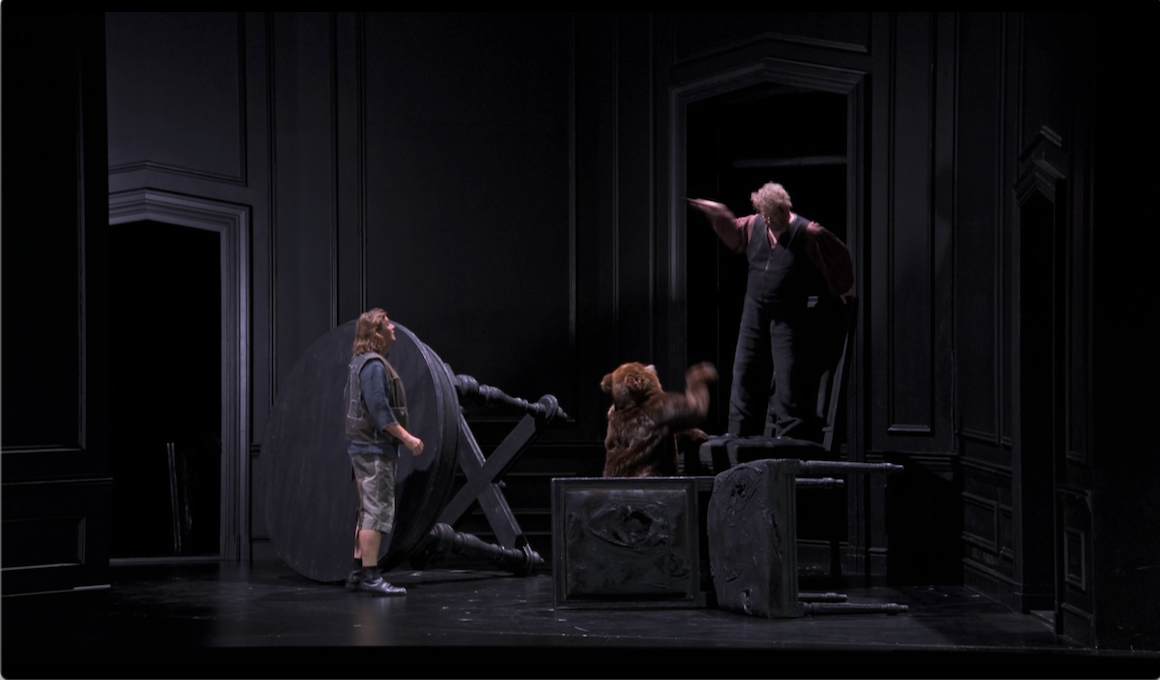
Siegfried has been described as the scherzo of the Ring cycle and Andreas Homoki seems to have at least partly run with that.  There are quite a few places, including some less obvious ones, where he seems to be going for laughs.  The obvious ones are obvious enough.  You can’t really have a bear in the first scene without it being comic but there were also times when Wanderer was camping it up a bit.  We’ll come back to that.

Continue reading

Zürich Ring – Die Walküre

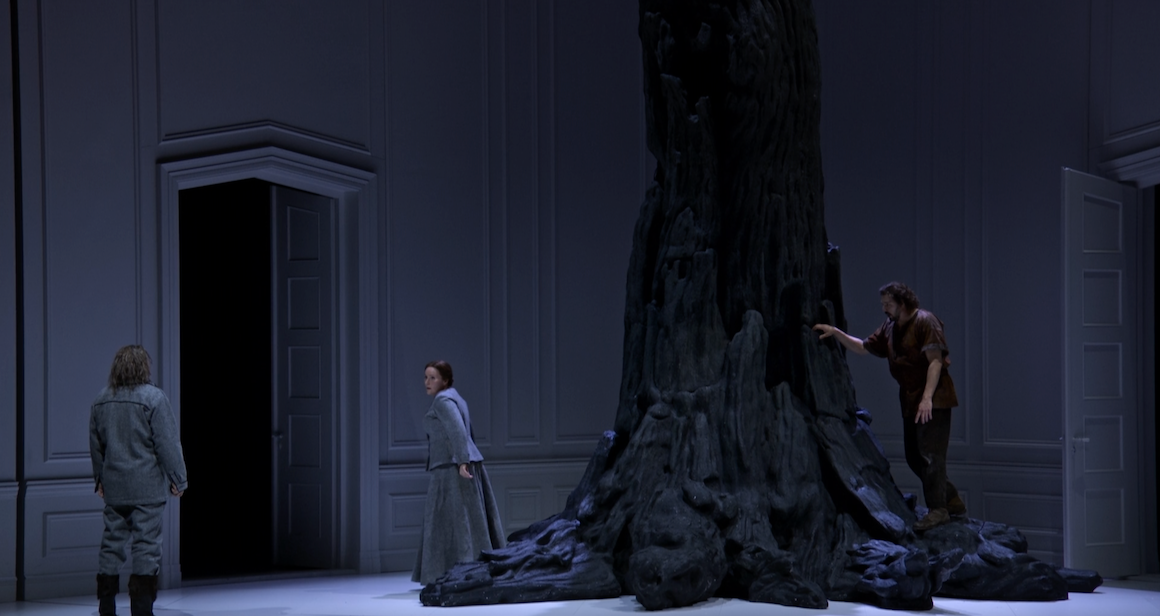
Continuing on from Das Rheingold we come to Die Walküre.  There’s a lot of continuity with the earlier work.  It’s basically the same rotating set though in some scenes one of the “rooms” becomes a forest.  Another thing we see is characters who aren’t canonically “there” appearing in scenes.  So right at the beginning, when Siegmund and Sieglinde meet, Wotan is lurking and doing things like handing drinks to Sieglinde.  We’ll see more of this with Hunding’s henchmen appearing in various places, Wotan and the henchmen appearing when Sieglinde is describing her wedding and the Valkyries showing up at the start of Act 2.

Continue reading

A new Ring from Zürich – Das Rheingold

A new production of Wagner’s Der Ring des Nibelungen is always a bit of an event and all the more so when it’s in the city where the work was composed.  Andreas Homoki’s production premiered and was recorded for video at Opernhaus Zürich in 2024.  I’ll be working my way through the whole cycle but here are my initial thoughts based on Das Rheingold.

Continue reading

Butterfly at Bregenz

Puccini’s Madama Butterfly is an opera I really have trouble with.  Done “straight” it’s just a horrible mixture of cultural appropriation and just plain ick.  It does have some good music though and opera companies insist on doing it roughy every five minutes so it would be really nice to find a production that worked dramatically.  The lake stage at Bregenz is just about the last place I’d expect to find that so I was pleasantly surprised that Andreas Homoki’s 2022 production is maybe the most interesting I’ve seen.1.arrival

Continue reading

Not all smiles

I’m never quite sure what I really think about an operetta like Lehár’s Das Land des Lächelns.  I quite like the music, even if it can be a bit cheesey but I’m put off by the casual cultural appropriation (though it’s not nearly as bad as Puccini!).  I’m not sure what the best directorial approach is either.  Does one play it for froth?  Does one try and mine some deeper meaning?  Interestingly Andreas Homoki’s approach for his Zürich production filmed in 2017 is to play it straight and let whatever is there appear or not.  It works rather well.  It;s a typically lavish Zürich production with lots of colour and movement and he creates some spectacular visual effects.  But he also allows for a sinister element to appear in the Chinese scenes.  It may be over-interpreting but I think one can see shades of proto-Fascism here.  It’s reinforced by the score that really has some rather sinister elements that I hadn’t noticed before.  I think there’s even a nod to Siegfried’s Funeral March.  All in all, quite interesting without being wildly unconventional.

1.vienna

Continue reading

Wozzeck as puppet theatre

Wozzeck is a tricky piece for a director.  There seem to be two possible approaches.  One can find a character for Wozzeck himself that resonates with contemporary audiences and treat the piece more or less realistically.  That’s the approach taken by both Bieito and Tcherniakov.  Alternatively one can run with the overtly expressionist aspects of the piece and present it in a more abstract way as Peter Mussbach did.  Andreas Homoki’s 2015 Zürich production takes the second route.  The piece is presented as if the characters are puppets in a puppet theatre in a sort of ultra-grim version of Punch and Judy.  It’s visually quite arresting and there are some very well composed scenes.  To give just one example, immediately after Wozzeck has decapitated Marie the chorus appear as nightmarish Maries while Wozzeck sits nursing the severed head.  That said, the concept does pall and maybe hasn’t really got the legs, absent any other real directorial ideas, to carry the piece for two hours.

1-wozzcap

Continue reading

Eine Frau von Heute

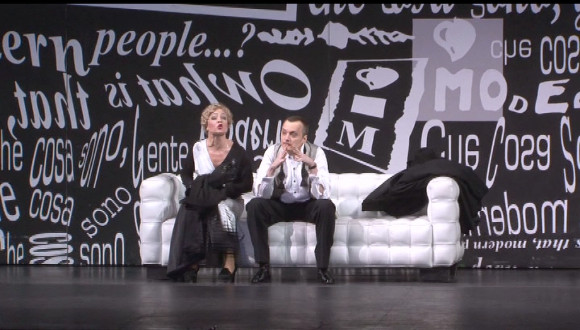
I don’t usually associate Arnold Schoenberg with comedy but he did write a one act comic opera Von Heute auf Morgen which premiered in 1929.  It was an attempt to cash in on the vogue for satirical operas on modern themes characterised by Brecht and Weill and , if a bit slight and lacking Brechtian punch, it works well enough.  A bourgeios husband and wife have returned from an evening out where they have met an iold friend of the wife who has become something of a femme fatale.  There’s also a singer, inevitably a tenor, involved.  The husband is rabbiting on rather gormlessly about the charms of the “other woman” so his wife decides to teach him a lesson.  She apes the manners of a “modern woman”, neglects their child, plans assignations etc.  There’s a long phone conversation inwhich the “friend” and the singer invite them back to the bar.  By now the husband is beginning to realise what he stands to lose.  The wife realises she has won.  The other couple show up and there’s a “modern” vs. “traditional” quartet after which the “moderns” leave in disgust and the husband and wife revort to bourgeois domesticity.
1.couch Continue reading