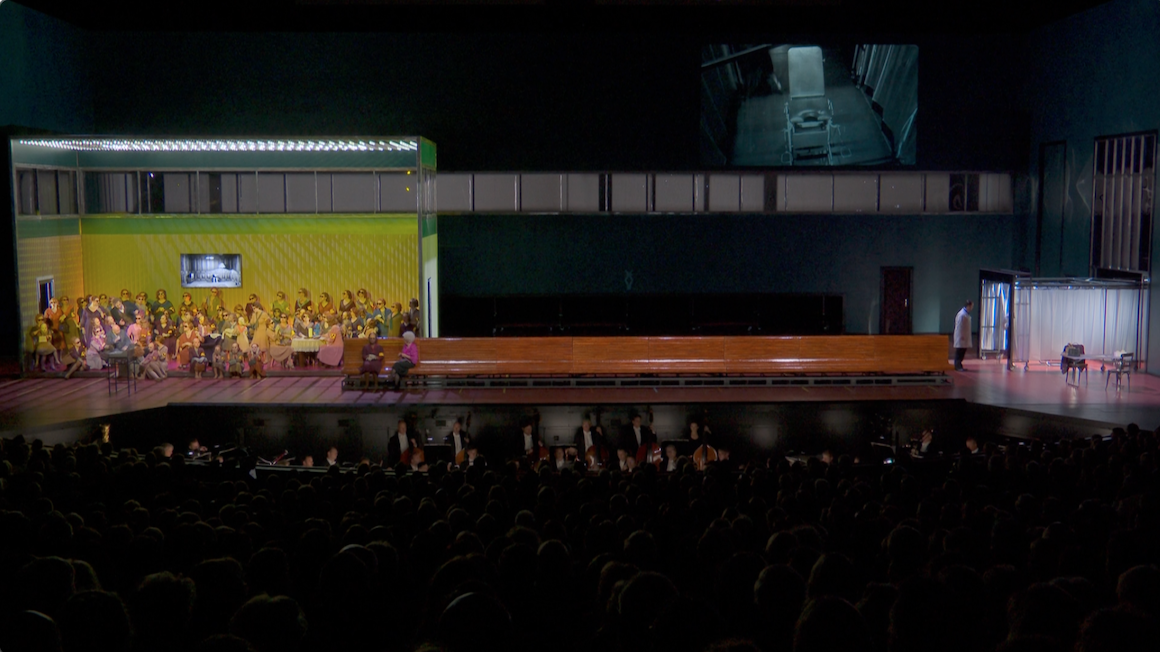
I don’t think I’ve been as frustrated by a video recording of an opera since I watched the 2007 recording of Unsuk Chin’s Alice in Wonderland. This time the culprit is a recording of the 2024 production of Prokofiev’s The Gambler at the Salzburg Festival. It’s a Peter Sellars production set in the Felsenreitschule and it’s fascinating on many levels. The problem is that, as is wont, Sellars directs the video too and he seems to think people watch opera videos on their phones. There’s been a welcome trend since the advent of HD cameras to, generally, show as much of the stage action as possible and ration extreme close ups. Sellars takes the opposite approach and it drives me nuts. Not only do I feel that I’m missing a lot; especially in the cavernous Felsenreitschule, but I just don’t need to know how fast Asmik Gregorian is moving her tongue when she’s going for fast vibrato.
Tag Archives: grigorian
Butterfly by the book
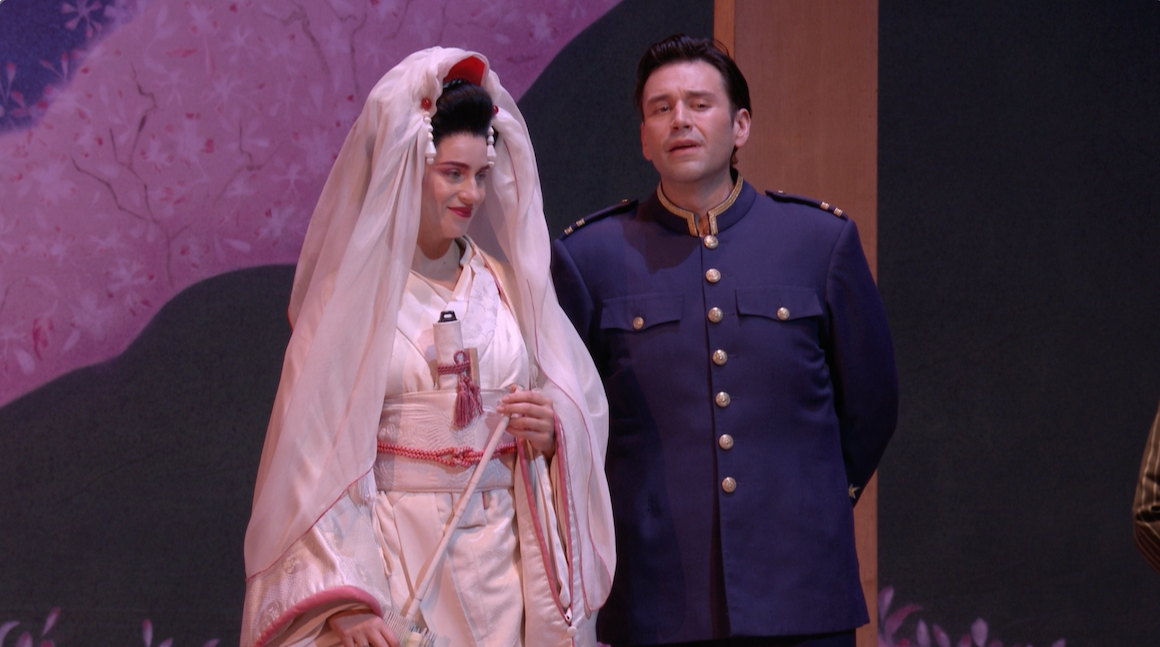
The production of Puccini’s Madama Butterfly recorded at Covent Garden earlier this year is a remount of the 2003 production by Moshe Leiser and Patrice Caurier directed this time by Daisy Evans. It’s about as conventional as a Butterfly production can be. There’s the odd bit of visual interest like a shedding cherry tree in the finale but mostly it’s standard operatic Japanese bar, perhaps, the cut and colour of Pinkerton’s suit in Act 3.

A fascist Macbeth
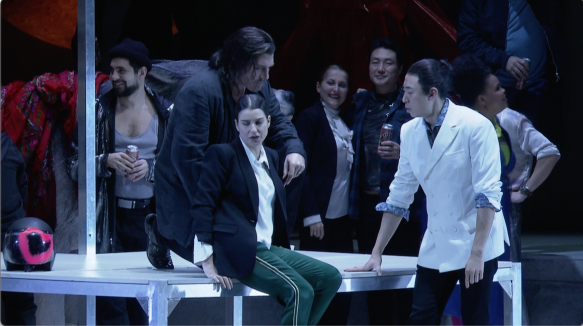
Krysztof Warlikowski’s production of Verdi’s Macbeth; recorded for video at Salzburg in 2023 is certainly not short of ideas. Whether it all hangs together is another matter. There seem to be two main ideas in play. We are in a 1940s-ish fascist state with party armbands and so on. This gets more explicit as the piece develops. On top of this there’s a foregrounding of Lady Macbeth as the real driving force of the drama coupled with the idea that what’s driving her is her inability to provide an heir. For example, she’s clearly the one being crowned after Duncan’s murder and babies are a recurrent visual motif.

Asmik Grigorian as Rusalka
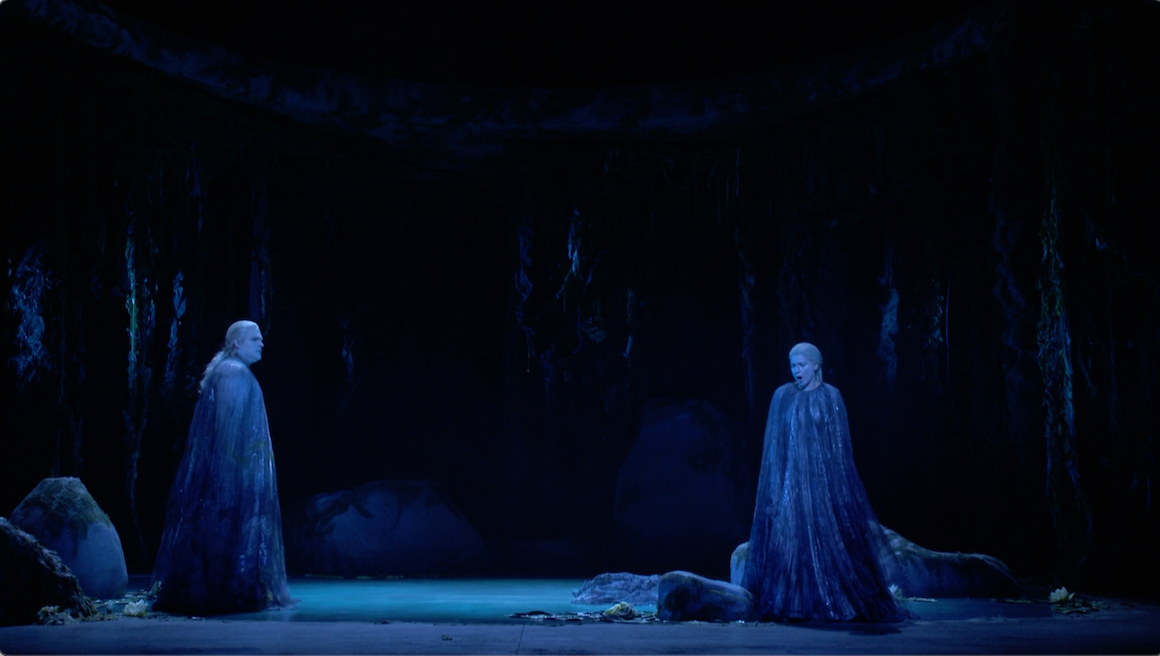
Dvořák’s Rusalka is pretty well served on video but the latest recording has a very strong cast and I was intrigued. It was recorded at the Royal Opera House in 2023 and features, among others, Asmik Grigorian in the title role and Sarah Connolly as Ježibaba.

The Enchantress
The Enchantress (sometimes translated as The Sorceress) is a rather infrequently performed 1887 opera by Tchaikovsky. It got a production in Frankfurt in 2022 with an interesting cast. Asmik Grigorian plays the title character; Kuma or Nastasya, and Iain MacNeil, late of this parish, is Prince Nikita. It’s the first time I’ve come across him since he moved to Germany.

Eight Last Songs
It’s an interesting idea for a CD; couple the well known (and original) orchestral version of Richard Strauss’ Vier letzte Lieder with the less well known piano version (the first three songs are arranged by Max Wolff and Im Abendrot by John Gribben). It’s exactly the sort of bold, slightly off the wall idea one might expect from Asmik Grigorian. So how well does it work?
I’m just not convinced by the piano version; where Gregorian is partnered by Markus Hinterhäuser. The vocal part, especially when compared with Strauss’ other songs for voice and piano just seems to be written for singing with an orchestra. It’s not as intricate and subtle as some of the other songs and with piano it seems a bit one dimensional and over dramatic. It’s not helped on this record by very slow tempi (for example, the piano version of Im Abendrot here runs 8m44 versus 7m16 for the orchestral version) and a “boomy” acoustic. The singing is OK but the overall effect is ponderous.
Il Trittico with Asmik Grigorian
It’s quite rare nowadays to stage all three Il Trittico operas in one evening and it will probably get rarer as financial pressures force shorter shows. Nonetheless it was done in Salzburg in 2022 in productions by Christof Loy. The USP was having Asmik Grigorian sing all three principal soprano roles so, not unreasonably, the usual order was switched up with Gianni Schicchi coming first and Suor Angelica closing things out. Unsurprisingly, and as intended, the evening increasingly became the Grigorian show as each opera succeeded the previous one.

Dissonance
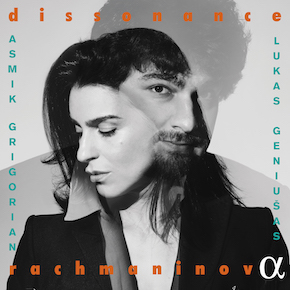
Dissonance is a new CD of Rachmaninov songs from Lithuanian pair Asmik Grigorian and Lukas Geniušas. Regular readers will know Ive been getting quite excited by Ms. Grigorian’s opera performances so I jumped at the chance to hear her sing art song; especially paired with Geniušas who is more of a concert pianist than an accompanist.
The result is very pleasing. The songs, drawn from throughout Rachmaninov’s career are quite varied. There’s definitely a bias towards fin de siècle tristesse and, indeed, some of the songs sound quite French but there is plenty of contrast though. The song that opens the recital and gives it its name; Dissonance Op.34 No.13 is long and has a very assertive piano part played boldly by Geniušas. They Answered Op.21 No.4 is a rather dramatic call and response number based on a poem by Victor Hugo. What Happiness Op.34 No.12 is actually a bit demented, putting heavy demands on both singer and pianist while Let Us Rest Op.26 No.3 sets the closing lines of Chekhov’s Uncle Vanya and is achingly beautiful.
Fuoco Sacro
Fuoco Sacro is a film by Jan Schmidt-Garre. It’s subtitled “A Search for the Sacred Fire of Song” and was inspired by Schmidt-Garre’s passion for Italian singing of a slightly earlier era rekindled when he heard Ermonela Jaho on his car radio. This led him to explore how certain singers create something more than “just singing”. In the film he does this by following the lives of three singers; all women (he clearly doesn’t believe that men have this elusive “sacred fire”) and all very different. They are Ermonela Jaho (of course), Barbara Hannigan and Asmik Grigorian. Now these are all singers about whom I have strong opinions and that may colour my view of the film. You have been warned. What follows concentrates on what I think the film tells us about its three principals. The film does this more by show than tell with lots of performance and rehearsal footage as well as interviews.

In this vale of tears
In May of this year I reviewed a recording of Janáček’s Jenůfa from the Staatsoper unter den Linden that impressed me enough to get onto my all time favourites list. I really did not expect to come across another as good for a very long time, let alone one that is, perhaps, even better within a few months but I have. It’s the 2021 recording from the Royal Opera House and it’s really fine.