
 Mr. Emmet Takes a Walk is the latest in the series of rereleases of works by Peter Maxwell Davies performed by the Manchester ensemble Psappha. The work premiered in 2000 and was recorded in 2005 and it’s the composer’s penultimate work for the stage. (FWIW I’ve heard five of PMD’s stage works but never seen one performed).
The libretto, by David Pountney, describes what goes on in Mr. Emmet’s head as he prepares to commit suicide by having a train run over his head. It’s a series of blackly comic episodes including. negotiating a deal with Hungarians in a Japanese hotel, a sinister encounter with a heating engineer, a cabaret act and more. The scenes are interspersed with pre-recorded lists of “things to remember” including “things to dislike” like Americans and New Labour. Like other PMD pieces the instrumentalists are sometimes incorporated i the stage action.
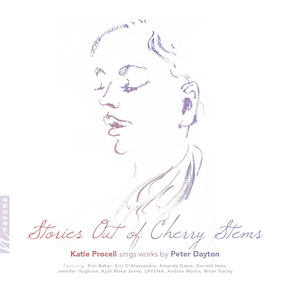 Stories Out of Cherry Stems is a recording of four works for soprano and various accompaniments written by American composer Peter Dayton for soprano Katie Procell. There four works are:
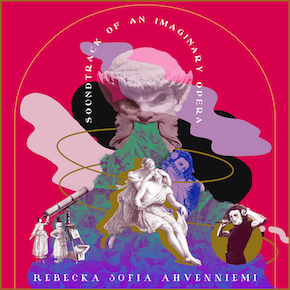 So continuing my exploration of music by contemporary female composers I listened to Rebecka Sofia Ahvenniemi’s Soundtrack for an Imaginary Opera. Ahvenniemi is both a composer and a philosopher who is inviting us, in this work, to reflect on opera as a social construct as much as text and music. There’s lots of information on what she’s getting at plus all the texts at
 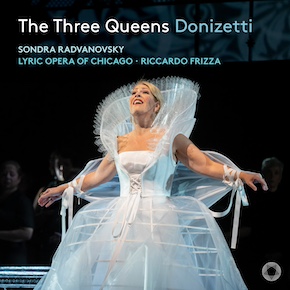 Donizetti’s three “Tudor Queen” operas; Anna Bolena, Maria Stuarda and Roberto Devereux (of which, despite the title, the real star is Elizabeth I) are often seen as a sort of trilogy and have occasionally been performed as such with a single soprano starring in all three. It’s a feat Sondra Radvanovsky managed at the Metropolitan Opera in the 2015/16 season. It’s not particularly surprising then that she should have been sought after by Lyric Opera of Chicago to star in a show featuring the final scenes of each opera which was recorded live at the Lyric in December 2019.
 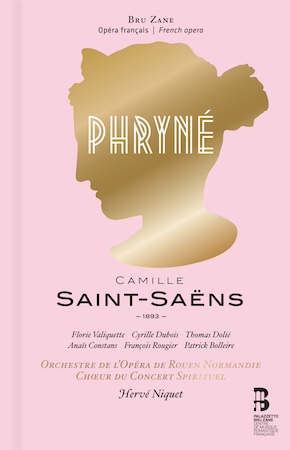 The latest release in the CD/book series from the Palazetto Bru Zane is Saint-Saëns’s 1893 opéra comique, Phryné, loosely based on an incident in the life of the famous 4th century BCE courtesan. It’s a two-act piece lasting about 65 minutes. The original was given with spoken dialogue, but as so often with this genre, recitatives (here added by André Messager in 1896) have been used in this recording, as they were in most contemporary performances.
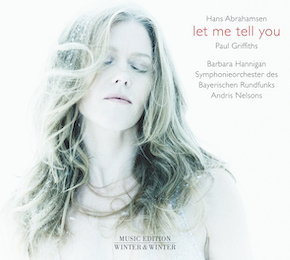 Hans Abrahamsen’s let me tell you is a work for orchestra and soprano setting text arranged by Paul Griffith from Ophelia’s lines in Hamlet. It was written for and dedicated to Barbara Hannigan who recorded it in 2015 (I think) with the Symphonieorchester des Bayerischen Rundfunks and Andris Nelsons.
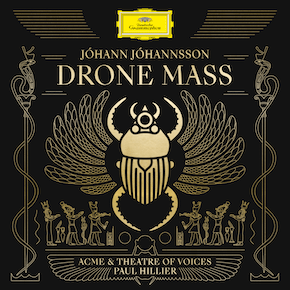 So continuing my exploration of somewhat off the wall contemporary Icelandic music I come to Jóhann Jóhannson’s “oratorio” Drone Mass. The inspiration and textual base is the gnostic “Coptic Gospel of the Egyptians” discovered in 19435. These appear to be very obscure texts and Jóhannson really just uses syllable combinations from them to create a series of vocalises. These are then set for string quartet, eight member choir and electronics.
 Miss Donnithorne’s Maggot is a sort of companion piece to Peter Maxwell Davies’
 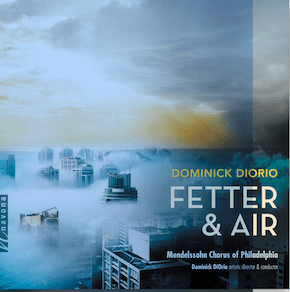 Fetter and Air was originally created by composer Dominick DiOrio and sound engineer Justin “JG” Geller as an eight channel public soundscape/display in Philadelphia. It’s now been remixed to stereo and released as a CD. It’s a kind of COVID memorial. Members of the Mendelssohn Chorus of Philadelphia separately recorded their reactions to the pandemic and DiOrio set some of it to music. The result was 562 audio files which were then mixed down into a single twenty-seven minute track.
 There’s no shortage of pandemic inspired music out there but I figured I wanted something that more closely evoked the sheer madness of life in Ontario right now. So, I turned to a 1969 piece by my fellow Manc Peter Maxwell Davies. It’s his Eight Songs for a Mad King inspired by that nutty old Hanoverian George III. The genesis of the piece is quite complex. It involves a music box, once owned by the king but by 1968 in the possession of the historian Steven Runciman. Once used by the king in an attempt to teach bullfinches to sing, it provides the inspiration for the eight “tunes” that make up the Eight Songs. The libretto is largely drawn from the king’s own words and other contemporary sources.
 operaramblings