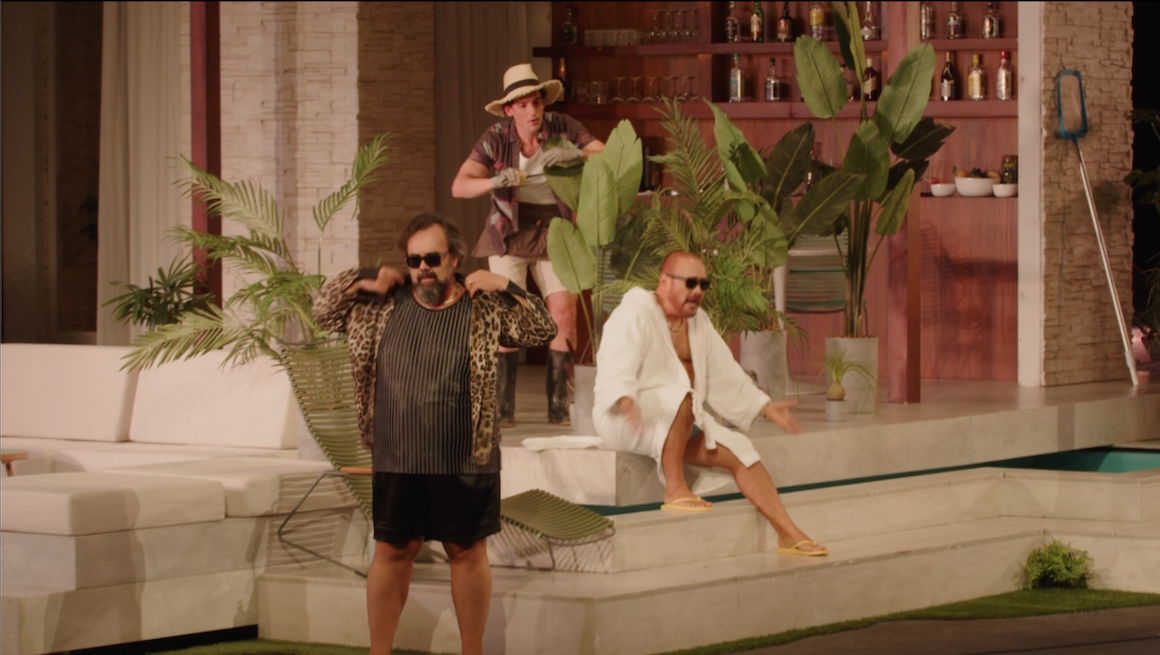
The production of Donizetti’s Don Pasquale recorded at the 2024 Donizetti Festival in Bergamo is lively colourful and, generally, well done. Amélie Niermayer’s production is essentially contemporary with a heavy emphasis on class difference between the relatively upscale Pasquale clan and the Malatestas who are shown as some sort of Italian equivalent of “Essex man”. Doctor Malatesta has tattoos and wears a heavy gold chain and when we first see Norina she’s in braids, a T shirt, fishnets and also sports tattoos. Her taste doesn’t improve much after the “wedding”. In contrast, Ernesto is more stylish and less of a dweeb than in other productions I’ve seen.
Tag Archives: bergamo
Dancing with Death
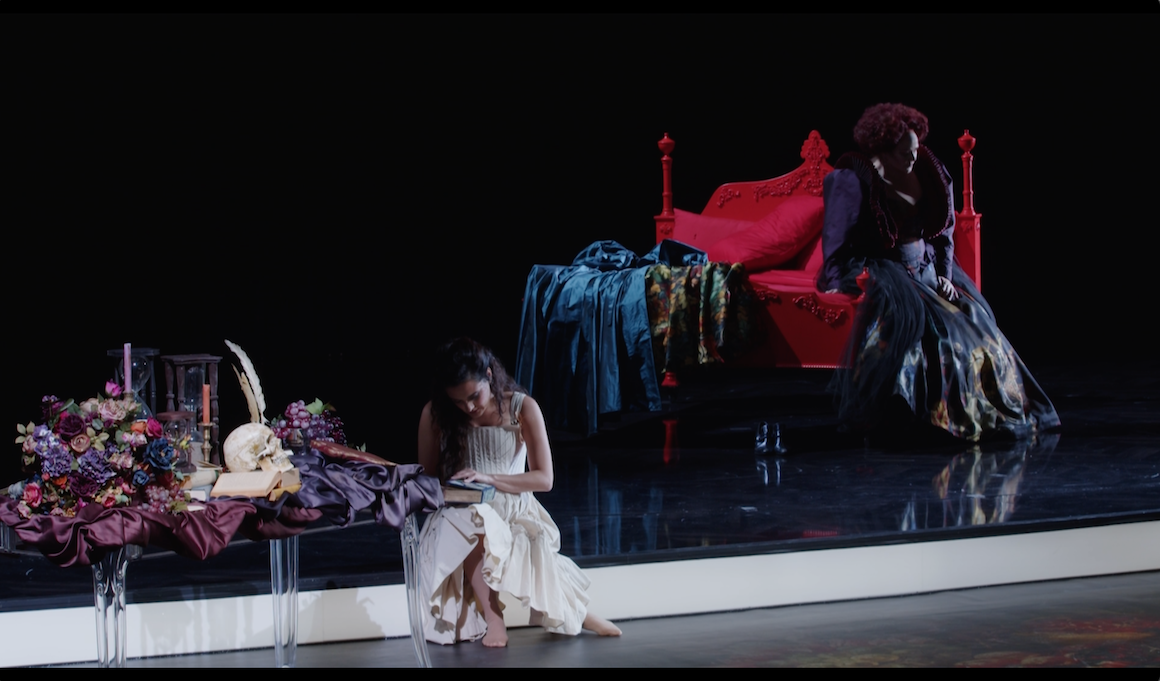
Stephen Langridge’s production of Donizetti’s Roberto Devereux recorded at the Donizetti Festival in Bergamo in 2024 is heavy on death symbolism. The general look of the sets is fairly abstract with a sort of light box with a gallery and a few bright red elements; the throne, the Nottinghams’ bed and so on, but there are skulls and other memento mori everywhere. Costuming is sort of operatic Tudor but Elisabetta’s dress is a print that includes skulls and she’s doubled by a human size, identically dressed, Death puppet. As seems to be the fashion, much of the time only the front of the stage is lit leaving characters lurking in the gloom upstage.
Zoraida di Granata
Zoraida di Granata is an early serious opera by Donizetti. It’s set in Muslim controlled Granada in 1480. The city is under siege by the Spanish and the usurper Almuzir is in control and wants to marry Zoraida, daughter of the former king, but she’s in love with Abenamet, leader of the aristocratic and warlike Abencerrages. Almuzir makes Abenamet commander in chief of his army and entrusts him with a sacred flag. If he returns victorious and with the flag he gets Zoraida but if he loses the flag he’ll be executed as a traitor. Naturally Almuzir has arranged for his sidekick, Ali, to betray the flag to the Spanish. The victorious hero is going to be executed but Zoraida promises to marry Almuzir if he spares Abenamet. Then the lovers meet secretly and after the statutory rowing about Zoraida betraying him Abumet exits. But Ali has overheard the conversation and gets Zoraida sentenced to death for treason. Only a knight showing up to defend her in trial by combat can save her (that again!). Of course it’s Abenamet in disguise and he beats Ali who fesses up. The clan want to kill Almuzir and Ali but Abenamet forgives them and in return gets the girl.
Lucie de Lammermoor
Lucie de Lammermoor is Donizetti’s reworking of his Scottish opera for a smaller, non-subsidised Paris theatre. It’s not just a translation. Some scenes are rearranged and minor characters are pruned leaving only six in the cast plus chorus. Donizetti also incorporated what had become performance practice in Italy, substituting an aria from Rosmonda d’Inghilterra; “Que n’avons nous des ailes”, for “Regnava del silencio”. Otherwise the plot is much the same.
Wot, no cakes?
I understand that the mission of outfits like the Teatro Donizetti is to “rescue” forgotten operas but, frankly, some of them ought to remain forgotten. I would put Donizetti’s Alfredo il Grande in that category. It premiered in Naples on 2nd July 1823 and closed after one disastrous performance not to be seen again until a run in Bergamo in November 2023 which was recorded for video.
L’aio nell’imbarazzo
L’aio nell’imbarazzo (A tutor in a jam) is a Donizetti comedy that was popular in its day; both in its original version and revised as Don Gregorio. It’s now received a new scholarly edition that attempts to get back as far as possible to the original. That edition was used for a production directed by Francesco Micheli at the Teatro Donizetti in Bergamo in 2022 and filmed for video release.

Commedia meets Busby Berkeley
The annual Donizetti festival in Bergamo makes a point of resurrecting less well known Donizetti operas. In 2022 Chiara e Serafina; Donizetti’s first commission for La Scala, got the treatment. It’s got some very decent music if you like early Donizetti. The Sestetto in Act 2 is particularly well constructed and it’s generally tuneful and allows the singers to strut their stuff.

Rosmonda d’Inghilterra
One thing the Donizetti Festival in Bergamo is noted for is unarthing Donizetti rarities. The 2016 edition was Rosmonda d’Inghilterra; a dramatically rather slight piece based on the story of Henry II’s mistress, generally known as “The Fair Rosamund”. In the opera version Rosmonda is locked up in a tower by her lover Edegardo who has promised to marry her except he’s really Henry II (Enrico) and Leonora (Eleanor of Aquitaine) is going to have something to say about that. Complicating matters; Enrico’s page Arturo is in love with Rosmonda and her dad, Clifford, is the king’s principal counsellor and not at all happy about his daughter carrying on with a married man. Clifford’s plan to save the family’s honour is to have Arturo take Rosmonda off to Aquitaine and marry her. Rosmonda’s is to retire to a convent (as, apparently, the historical Rosamund did) . Enrico’s is to divorce Leonora (given Enrico’s problems with the church this seems highly implausible but, hey, bel canto) and make Rosmonda his queen. Leonora isn’t having any of this and shows up at the tower and kills Rosmonda. Finito. Along the way there’s lots of very workmanlike Donizetti music which sounds pretty much like most Donizetti operas.