I spent three hours earlier today listening to three panel discussions about the issues involved in presenting Puccini’s Madama Butterfly. The overall event was titled Grappling with Madama Butterfly Today: Representation, Reclamation, Re-imagination. They were three very different panels as we shall see. But first some context. The event was co-presented by Confluence Concerts, Amplified Opera, the Canadian Opera Company, the Faculty of Music at the University of Toronto, and the Humanities Initiative at the Munk School of Global Affairs and Public Policy at the University of Toronto. One of the “triggers” for the event was the planned revival of Madama Butterfly at the COC (now to be done as an “on-line” event of some description) though one might have listened to the discussions without actually realising that.
The first panel consisted of COC boss Perryn Leach with soprano Teiya Kasahara, soprano Jaclyn Grossman and Boston Lyric’s Jessica Johnson Brock. I expected it to tackle the problematic nature of Madama Butterfly head on, as indeed the other two panels did, but it didn’t. It got sidetracked into essentially blind alleys about whether the work should be performed at all and whether one should always cast Asians in Asian roles and such. I got the strong feeling that no-one involved wanted to touch the issue of why, in 2022, the COC had planned to present a thoroughly unreflective, indeed deeply racist and sexist, production of the work. And that in the context of a season of three problematic operas presented in equally unambitious productions. Indeed, so unambitious that Leech’s deputy has described Mozart’s The Magic Flute as a “whimsical comedy”. Brigid Brophy must be gyrating in her crypt. Why was the discussion so anodyne? I think it comes down to power dynamics. Perryn Leech advanced views that I think can be summed up as “as long as we present enough new work (preferably short stuff on small stages) and do a few token events like this one it’s OK to give the bougie donors their fix. Even if that fix is racist and misogynist. Nobody challenged this. After all, if you are a young woman trying to make her way in the deadly world of opera why would you call out the most powerful person in Canadian opera?

Continue reading →

 This is not intended as a a political blog though, art being what it is, it sometimes is. That said, these are not normal times and sometimes a political stand has to be taken. We stand in solidarity with the people of Ukraine and condemn in the strongest terms the current aggression by the fascist regimes in Moscow and Minsk as well as their enablers and supporters in the United States and elsewhere.
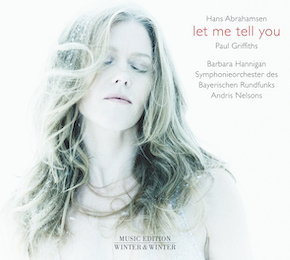 Hans Abrahamsen’s let me tell you is a work for orchestra and soprano setting text arranged by Paul Griffith from Ophelia’s lines in Hamlet. It was written for and dedicated to Barbara Hannigan who recorded it in 2015 (I think) with the Symphonieorchester des Bayerischen Rundfunks and Andris Nelsons.
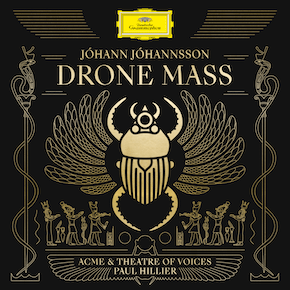 So continuing my exploration of somewhat off the wall contemporary Icelandic music I come to Jóhann Jóhannson’s “oratorio” Drone Mass. The inspiration and textual base is the gnostic “Coptic Gospel of the Egyptians” discovered in 19435. These appear to be very obscure texts and Jóhannson really just uses syllable combinations from them to create a series of vocalises. These are then set for string quartet, eight member choir and electronics.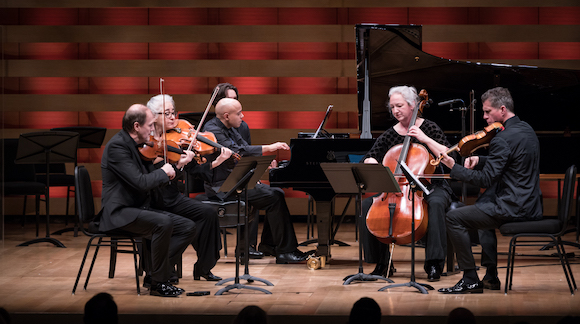
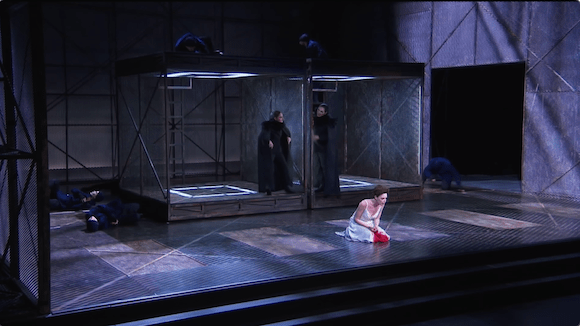
 Here’s a quick list of new (relatively) and upcoming web content (the obvious Youtube channel unless otherwise specified):
 operaramblings